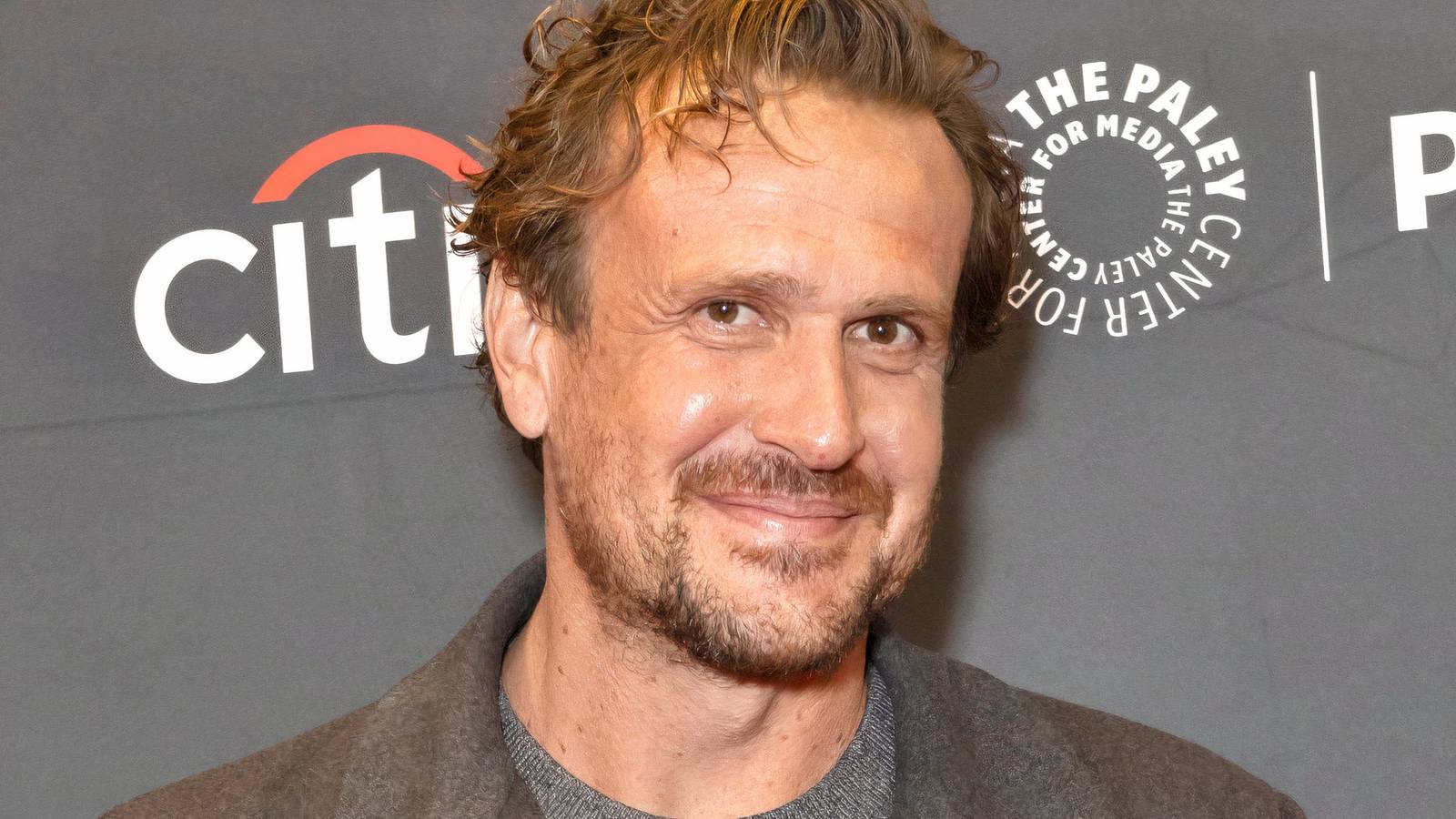
Jason Segel has long been Hollywood's go-to for lovable, awkward everymen, but his upcoming film Over Your Dead Body promises a sharp turn into darker territory. In that bloody comedy-thriller, Segel plays a husband plotting to kill his wife, only to have his plans disrupted by unexpected thieves. It's a far cry from the charming schlubs of How I Met Your Mother or Forgetting Sarah Marshall.
Yet this isn't Segel's first foray into complex, dramatic roles. Years before he earned acclaim for his emotionally layered work on Apple TV+'s Shrinking, he delivered one of his finest performances in The End of the Tour. Directed by James Ponsoldt and co-starring Jesse Eisenberg, the 2015 film follows author David Foster Wallace during the final stop of his Infinite Jest book tour, as he's profiled by a Rolling Stone journalist.
The film never found a wide audience outside literary circles, which is a shame. The End of the Tour is an intimate, quietly powerful story about two writers and their complicated friendship. Anchored by Segel's performance, it delves into loneliness, insecurity, fame, and the crushing pressure of being hailed as a genius.
Jason Segel's Dramatic Range Shines in 'The End of the Tour'
When The End of the Tour was released, Segel was still best known for broad comedies. Few expected him to tackle a role as nuanced as David Foster Wallace, the celebrated author whose suicide in 2008 shocked the literary world. Instead of playing Wallace as a tortured genius, Segel captures the contradictions that made him so compelling: funny and self-aware, yet paranoid, insecure, and deeply uncomfortable with the attention from Infinite Jest's success.
Segel portrays Wallace as a man craving connection while pushing people away, unsure of who to trust or how authentic he appears. This performance feels even more significant now, as Segel has continued to prove his dramatic chops. His work on Shrinking balances humor and sadness, while Over Your Dead Body leans into unlikability—a major shift for an actor known for his every-guy charm. The End of the Tour was the moment Segel revealed the actor he could become.
The Complex Relationship Between Wallace and Lipsky
The End of the Tour isn't a traditional biopic. There are no sweeping montages or flashbacks. Instead, it focuses on the five days Wallace spent with journalist David Lipsky (Eisenberg) during the final leg of his book tour. This stripped-down approach makes the film so effective. Wallace isn't presented as an untouchable genius but as someone deeply mistrustful of the attention surrounding him. He worries that every interview chips away at his authenticity, even as he benefits from fame.
Eisenberg, in one of his strongest performances, plays Lipsky as an admirer who envies Wallace's success. Lipsky sees the cult of personality around Infinite Jest and craves that recognition for himself. Wallace, meanwhile, insists that fame hasn't made him happy, speaking about loneliness and the disconnect between image and reality. This creates an uneasy dynamic: Lipsky wants access, while Wallace wants control over how he's seen. Their relationship navigates the strange alliances between interviewer and subject.
Ponsoldt gives those scenes room to breathe, letting the tension simmer. He handles their budding friendship and seeds of distrust with the same open emotion he brought to episodes of Shrinking. Their conversations about TV, celebrity, addiction, and loneliness become a negotiation, giving the film its power.
Why This Performance Stands Out
Many biopics try to summarize an entire life, but The End of the Tour does the opposite. By focusing on a single relationship and a brief period, it captures something larger about Wallace than a cradle-to-grave story could. The film is framed by Lipsky learning of Wallace's suicide, and that tragic fate hangs over every scene. Segel never leans too hard into the tragedy, but he lets the sadness linger beneath Wallace's jokes, creating a heartbreaking character without overstating it.
It remains one of Segel's finest performances and a rare biopic more interested in understanding its subject's humanity than in myth-making. For fans of dramatic storytelling or character-driven dramas, this is a hidden gem worth seeking out.