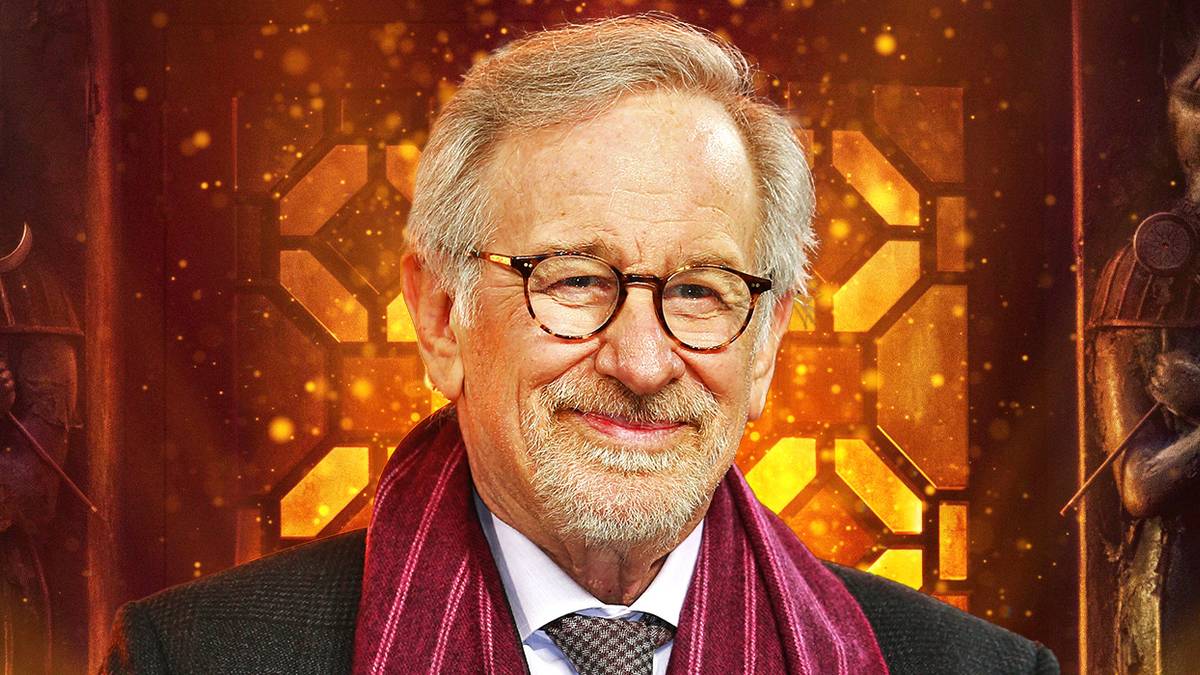
Steven Spielberg's Disclosure Day sees the legendary filmmaker return to science fiction, a genre that saw him cement his legacy as the innovator of the Hollywood blockbuster. During the promotion for the film, he reflected on his movies of the past, with one of those films being A.I.: Artificial Intelligence, his love letter to friend and fellow visionary Stanley Kubrick.
2001's A.I.: Artificial Intelligence, the unfinished passion project Stanley Kubrick left behind, became Spielberg's next film after he walked away from Harry Potter to complete his friend's vision. While it proved divisive at the time, it remains one of the director's most ambitious and accomplished works. It is also one that has increasing relevance as A.I. becomes a looming presence in our lives.
Loss Motivated Steven Spielberg to Look to the Future
The end of the '90s saw Spielberg at the peak of his powers. That decade had seen him change the direction of blockbuster cinema once again with the boundary-pushing Jurassic Park, as well as securing Oscar success with wartime classics Schindler's List and Saving Private Ryan. Having already directed several defining films, all eyes were on his next move. He was initially set to direct the adaptation of Harry Potter, but the passing of Kubrick in 1999 led to a conversation that changed his mind.
"I was at the funeral at his home," he told Turner Classic Movies. "Christiane [Kubrick] and Jan Harlan, her brother, approached me about taking over from Stanley, as Stanley had intended, and directing the movie." He chose to move away from the Potter franchise, being replaced by Chris Columbus, who had worked with him many times via Spielberg's production company, Amblin.
Despite being in the movie business for over 30 years at that point, there was one territory Spielberg had never explored — the future. His sci-fi movies, such as Close Encounters of the Third Kind and E.T., had contemporary stories with futuristic elements, but offering a vision of the future was uncharted territory for him at that point. Fortunately, A.I. was a project he knew intimately, as it was discussed in his first meeting with Kubrick.
'A.I.: Artificial Intelligence' was Stanley Kubrick's Labor of Love
Spielberg had spoken to Kubrick about the film for years, first discussing it on the set of The Shining. Based on the 1969 short story Supertoys Last All Summer Long by Brian Aldiss, Kubrick toyed with the project for years, unsure how to approach the project that had both the warmth of a child's perspective and the cold existential questions of where the human race is going. In the mid-1980s, he even asked Spielberg to direct it, with him producing, as the director recalled him saying: "I somehow feel that the audience will accept your sensibilities about this subject matter over mine."
The collaboration eventually fell through, as Spielberg felt the film was better suited with Kubrick as director, although tragedy would eventually lead him to the role. Stanley Kubrick died in 1999, just days after submitting his final cut of Eyes Wide Shut. In an act of friendship and tribute, Spielberg agreed to take on A.I., resulting in one of the truly unique films of his career.
'A.I.' Remains Spielberg's Most Ambitious and Increasingly Relevant Film
Released during the summer of 2001, A.I.: Artificial Intelligence follows David (Haley Joel Osment), an android programmed to love unconditionally, who finds himself adrift when his human family abandons him. He embarks on a quest to become "real", convinced that he will find the love he needs. The journey takes him across a dystopian, futuristic landscape and through many years, seeking the answer to what it is that makes someone human.
The film remains a standout in Spielberg's filmography because it is perhaps the first film he made where his voice wasn't the only one telling the story. The purpose of the project was to realize Kubrick's vision, and so it combines the 2001: A Space Odyssey director's icy futurism with Spielberg's sentimental core. With those styles combined, it's a film that traverses genre, tone, and philosophy, asking deep questions of its audience while still delivering a big-screen spectacle.
As time has gone on, it has also become increasingly relevant. The fear of A.I. replacing human creation, the anxieties around the ethics of what we are racing to create, all run deep within this futuristic Pinocchio interpretation. When what is "real" becomes increasingly hard to discern, films like A.I.: Artificial Intelligence allow us to examine our own path.
We'll never know what Kubrick would have made of the final product, but A.I.: Artificial Intelligence is celebrated to this day as a fascinating experiment between two masters. It's the closest we will ever get to a collaboration between two men who helped define different areas of cinema, showing that even the most celebrated filmmaker can be stretched when given the right inspiration.