When Helen Lyle first hears the name Candyman, she doesn't scream. She doesn't run. She simply... drifts. That's what makes Virginia Madsen's performance in the 1992 horror classic so unsettling. Her stillness feels invasive, like watching someone slip away into a nightmare they can't wake from. And as it turns out, that eerie detachment wasn't just acting—it was real.
Director Bernard Rose had a radical idea. He didn't want Helen to react to fear the way horror heroines usually do. He found the screaming in most horror movies unconvincing, a theatrical panic that reminded audiences they were watching a performance. So he went looking for something else: a fear that collapses inward instead of exploding outward. His solution? Hypnosis.

According to reports from the film's production, Rose arranged for Madsen to visit a professional hypnotist before filming began. The hypnotist taught Rose a verbal trigger—a phrase he could use to guide Madsen back into an altered state on set. The performance didn't start when the camera rolled. It started before she even reached her mark.
Once hypnotized, Madsen described losing her sense of the set entirely. The crew's presence faded, the lights blurred, and her pupils dilated. Her surroundings stopped feeling fixed and became otherworldly. She didn't have to imagine isolation—it arrived on its own. That detachment became part of Helen's emotional landscape, narrowing the gap between actress and character until it no longer mattered which one the camera captured.
The experience unsettled Madsen in ways she didn't expect. At one point, she couldn't remember an entire day of filming. That loss of time forced her to reconsider how far she was willing to go. She admitted the process “pissed her off a little bit” and opted not to continue with hypnosis for the rest of production.
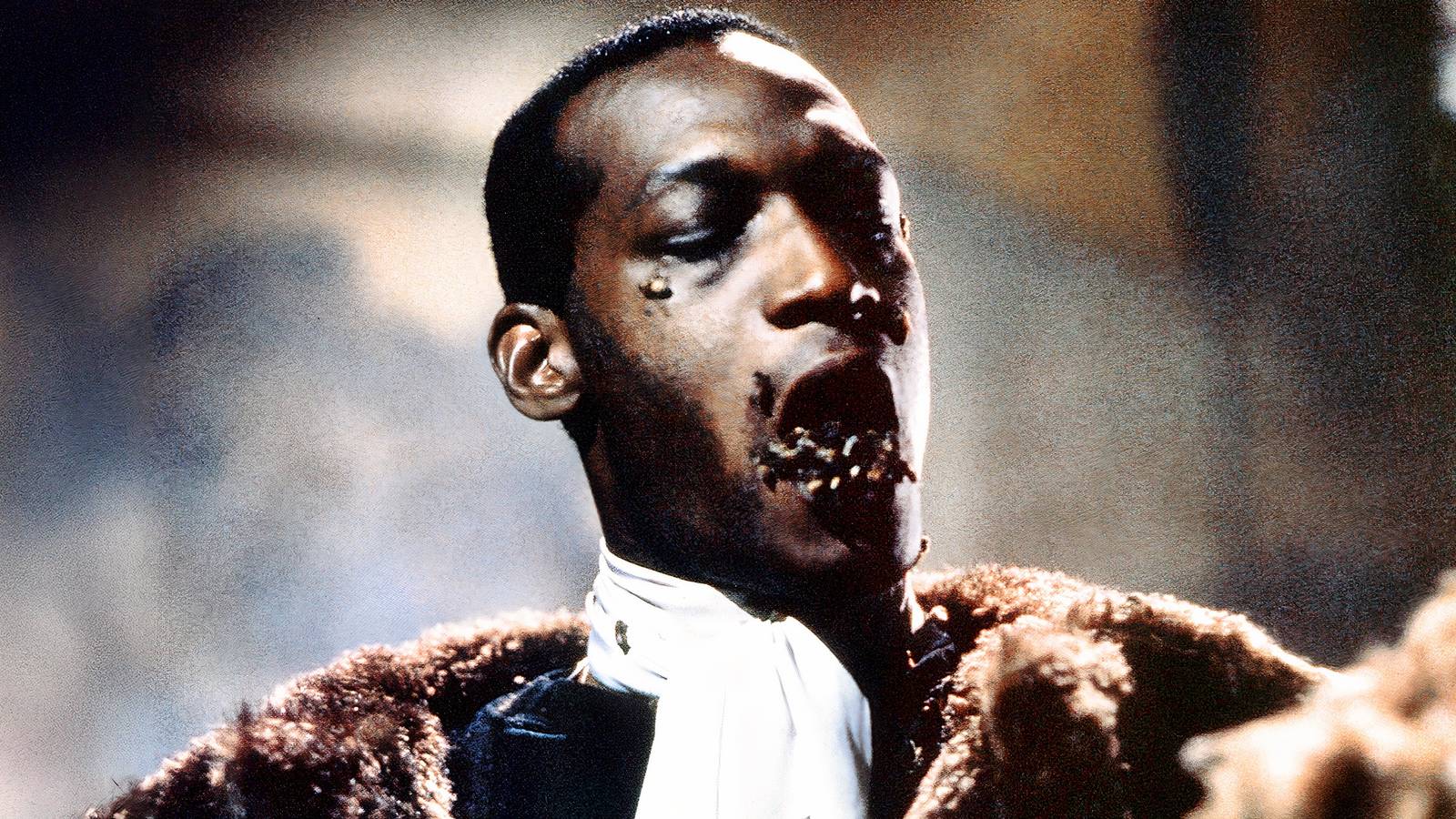
Tony Todd, who played the title character, watched the transformation happen in real time. In an interview with The Guardian, he explained that Rose would pull Madsen aside before their shared scenes and guide her back into trance. That altered state changed how they interacted. Todd described it as creating a deeper connection between actor and character. The usual barrier between rehearsal and reality thinned. Their scenes stopped feeling constructed and instead unfolded as they went.
That's why Helen never feels like a typical victim. Candyman doesn't stalk her with a chainsaw like Leatherface or chase her like Jason. He enters her mind first, slowly eroding her identity. He appears in mirrors, speaks in a hypnotic voice, and frames her for murder by manipulating her reality. Madsen's hypnosis reinforced that progression. Helen's reactions weren't exaggerated—they were delayed. She didn't scream because something inside her had already disengaged. The camera captured absence instead of resistance.
For fans of horror that lingers, Madsen's performance is a masterclass in vulnerability. It's also a reminder of how far actors will go to bring authenticity to their roles. If you're looking for more cult classics that push boundaries, check out our piece on Karl Urban's 'Dredd', which also earned its cult status through bold creative choices. And for more on why certain horror films remain terrifying, see Why These 10 Classic Horror Movies Are Still Terrifying Today.
The trance wasn't a visible special effect. That's why viewers are still unnerved by Madsen's performance. By the time the Candyman reached for her, she was already somewhere else—and the audience went with her.