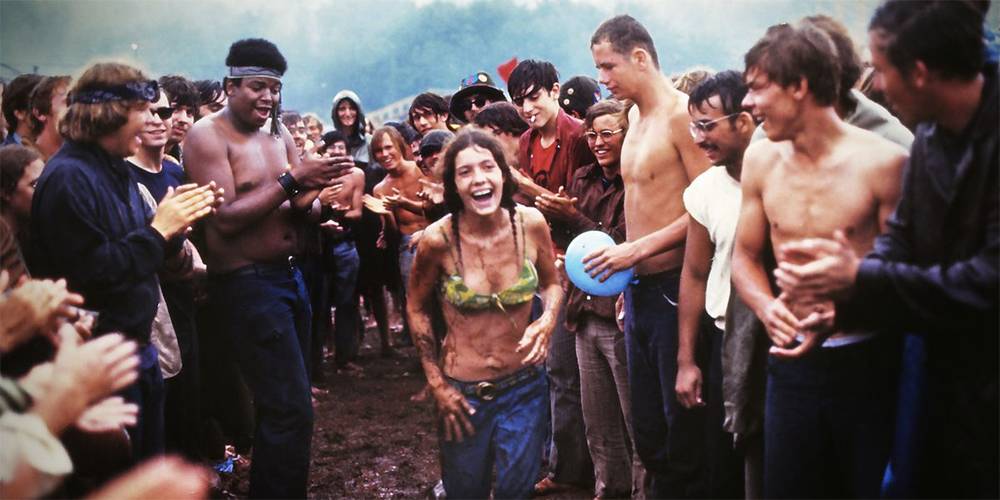
As the first rays of sunlight crept over the sea of half a million exhausted but euphoric festivalgoers, a woman in white fringe and bell-bottoms stepped barefoot onto the stage. "Alright, friends, you have seen the heavy groups," Grace Slick announced. "Now, you will see morning maniac music. Believe me, yeah. It's a new dawn." With that, Jefferson Airplane launched into what would become the defining performance of Woodstock 1969.
Woodstock remains the gold standard of music festivals, a three-day celebration of peace and counterculture that birthed countless legendary moments. Santana wowed the crowd before their debut album dropped. Jimi Hendrix turned "The Star-Spangled Banner" into a psychedelic anthem. Pete Townshend smashed his guitar. But among these iconic acts, Jefferson Airplane's chaotic Sunday morning set stands apart as the festival's most surreal and unforgettable highlight.
The Long Wait for Morning Maniac Music
Originally slated to headline Saturday night, Jefferson Airplane didn't take the stage until around 8 a.m. Sunday. Woodstock's famously loose organization—plagued by rain, shoddy infrastructure, and a laid-back attitude—meant delays were inevitable. But the band was committed to playing, come what may. After a night of smoking, drinking, and waiting, they sought a pick-me-up—and accidentally ingested LSD just 15 minutes before their set. Undeterred, they walked onstage as the sun rose over the crowd.
That accidental trip infused their performance with an otherworldly energy. They ripped through hits from their 1967 album Surrealistic Pillow, including "Somebody to Love" and "White Rabbit," hypnotizing the audience. The album, a cornerstone of the San Francisco Sound and the Summer of Love, was their first to feature Grace Slick's haunting vocals. (Fun fact: Jerry Garcia of the Grateful Dead allegedly coined the album's title and was credited as "Musical and Spiritual Advisor.")
Grace Slick's Own Doubts
Despite the performance's legendary status, Slick later admitted she wasn't thrilled with her vocals. "If you've been up all night smoking, your voice is not spectacular," she said. "Your attention span, a bunch of things, are not working as well as they should." Yet, given the circumstances—LSD, exhaustion, and a crowd of half a million—the set was a triumph.
Jefferson Airplane's Woodstock moment remains a high point, but the band's story took a darker turn just months later. At the Altamont Speedway Free Festival in December 1969—billed as "Woodstock West"—violence erupted. The Hells Angels, hired as security, became increasingly aggressive. During Jefferson Airplane's set, singer Marty Balin jumped offstage to intervene in a fight and was knocked unconscious by an Angel. The trauma marked the beginning of the end for the band, leading to internal strife and their eventual breakup in the early '70s.
For a deeper dive into the era's cinematic highs, check out our ranking of the most universally beloved fantasy films based on books. And if you're in the mood for more psychedelic storytelling, don't miss Rolin Jones breaking down Episode 7's surreal finale.
Jefferson Airplane's Woodstock set may have been born from chaos, but it captured the spirit of a generation: raw, imperfect, and utterly transcendent. It's a reminder that sometimes the best moments are the ones you never planned.