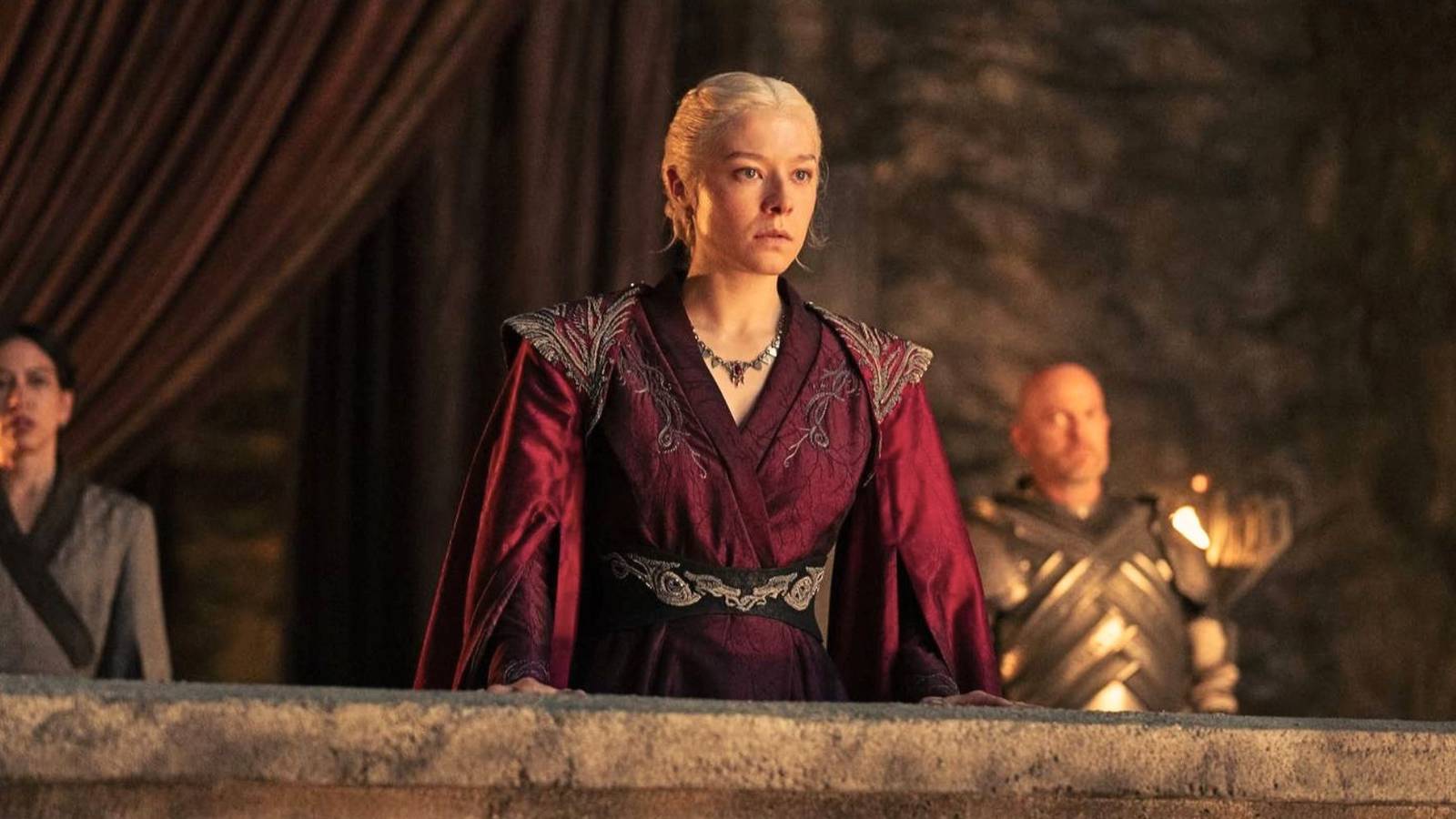
In the latest episode of House of the Dragon, Rhaenyra Targaryen (Emma D'Arcy) and Daemon (Matt Smith) have a tense conversation in the Sept—switching between the common tongue and High Valyrian to keep their plans hidden. It's a small but powerful moment that highlights something Game of Thrones never fully explored: the language isn't just a relic; it's a tool of control, identity, and rebellion.
High Valyrian has always been part of the Targaryen mystique, but House of the Dragon Season 3 uses it to deepen the family's sense of exceptionalism. For the Targaryens, speaking the ancient tongue is more than bilingual convenience—it's a declaration of superiority. They see themselves as heirs to Old Valyria's glory, and the language reinforces their belief that they are above the common folk of Westeros.

This season, the show expands on that lore in ways the original series never could. In Game of Thrones, High Valyrian was mostly limited to Daenerys's commands to her dragons—"Dracarys!" being the most famous example. But here, it's woven into everyday politics. Rhaenyra and Daemon use it to plot against enemies, while Aegon II (Tom Glynn-Carney) bitterly recalls how his brother Aemond (Ewan Mitchell) always outshone him in the language. Even Rhaenyra's children struggle with their lessons, showing that mastery of High Valyrian is a mark of true Targaryen blood.
The language also connects directly to dragon-riding. Dragonkeepers speak it to the beasts, riders issue commands in it, and even wild dragons like Sheepstealer respond to it. This makes High Valyrian not just a cultural artifact but a practical necessity for anyone who wants to wield power in the Targaryen dynasty.
What makes House of the Dragon's approach so effective is its timing. Set during the height of Targaryen power, the show can fully embrace the language as a symbol of the family's dominance. In contrast, Game of Thrones was set in a world where dragons were extinct and the Targaryens were in decline. Daenerys spoke High Valyrian, but she was an outsider fighting to reclaim a lost throne. Here, the language is a daily reality for a family that still believes they are gods among men.
Even A Knight of the Seven Kingdoms, set a century later, lacks this linguistic richness. By then, the Targaryens have lost their dragons and much of their cultural identity. High Valyrian is a dead language, studied by scholars but not spoken with the casual confidence of Rhaenyra and Daemon.
This season also fixes a major book problem. In George R.R. Martin's Fire & Blood, High Valyrian is barely mentioned during the Dance of the Dragons. The showrunners have wisely expanded its role, making it a key part of the Targaryen identity and a source of dramatic tension. For more on how the series improves on the source material, check out how Helaena's pregnancy in House of the Dragon Season 3 fixes a major book problem.
Ultimately, House of the Dragon Season 3 proves that High Valyrian is more than just a language—it's a weapon. And in the brutal game of thrones, that makes all the difference.