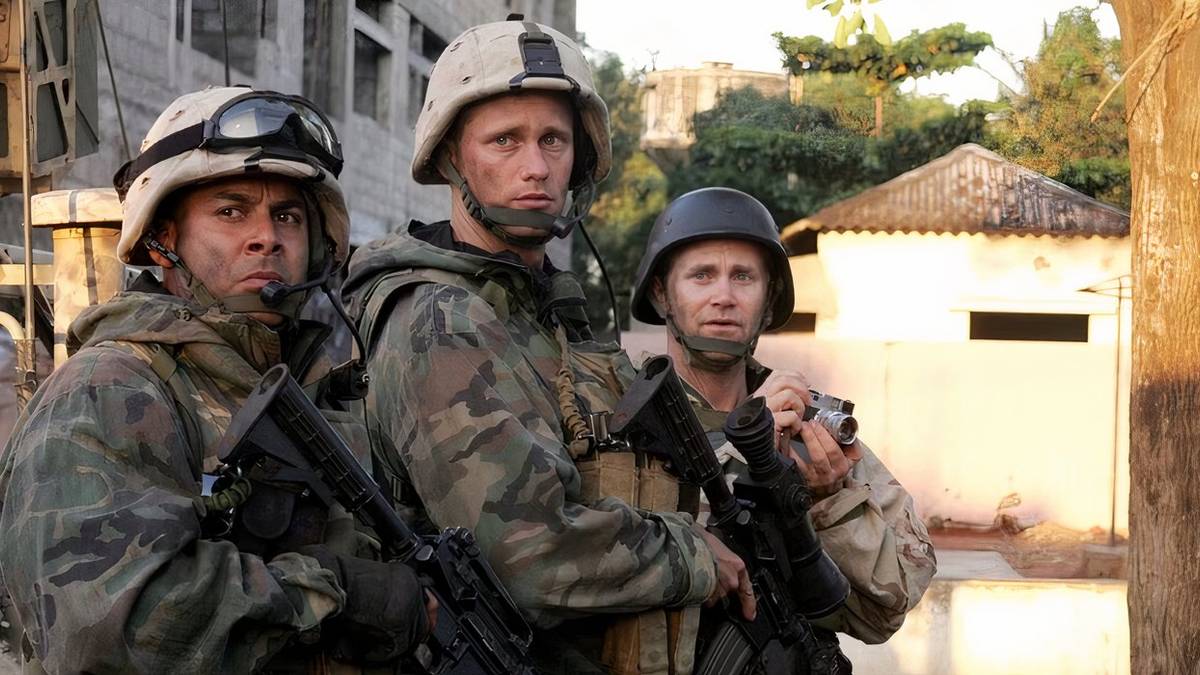
In the wake of HBO's acclaimed Band of Brothers, a new war story emerged, but this one felt startlingly different. Generation Kill trades the clear moral lines of World War II for the chaotic, ambiguous reality of the 2003 Iraq invasion. This seven-part miniseries, based on journalist Evan Wright's nonfiction book, immerses viewers in the grinding experience of the Marines' 1st Reconnaissance Battalion. While initially airing in 2008, its unflinching portrayal of a conflict marked by confusion and consequence finds a powerful second life on streaming platforms today.
A Different Kind of Brotherhood
Unlike its predecessor, Generation Kill isn't a tribute to a "Greatest Generation." It's a tense, often darkly humorous examination of modern soldiers navigating a war with shifting goals. The series meticulously follows Wright (played by Lee Tergesen) as he embeds with the battalion, getting to know men like the intense Sergeant Brad 'Iceman' Colbert (Alexander Skarsgård) and the wisecracking Corporal Josh Ray Person (James Ransone). The actors underwent rigorous boot camp, not to prepare for epic battles, but to capture the exhausting boredom, sudden terror, and complex camaraderie of soldiers waiting in the desert.
The show's brilliance lies in its refusal to paint its subjects with a broad brush. It humanizes the Marines—showing their patriotism, frustration, and dark humor—while never flinching from the tragic impact of the war on Iraqi civilians. The critique here is less about the individual soldier and more about the military-industrial complex and reactionary politics that sent them into a poorly defined mission. For viewers seeking more intense, focused storytelling, it's a prime example of a miniseries that, like the entries in our list of Flawless Binge-Watching, delivers a complete and potent narrative arc.
Relevance Found in the Chaos
What makes Generation Kill resonate so strongly now is its depiction of a war based on questionable intelligence and evolving justifications. Doubts about the mission's purpose plague the characters from the start, mirroring the public's growing skepticism. Soldiers who enlisted after 9/11 to defend their country find themselves questioning the very nature of their deployment. The series says as much through silence and isolation as it does through dialogue, highlighting the strategic disarray by focusing on one battalion's fragmented experience.
This focus on character over clear-cut action defies easy genre classification. It's a war drama, a character study, and a piece of embedded journalism all at once. While it didn't achieve the immediate mainstream acclaim of other HBO historical pieces, its raw honesty has cemented its status as a classic. It proves that powerful television can come from exploring recent, uncomfortable history. For those looking to explore other impactful limited series, the landscape in 2026's Must-Watch Miniseries offers a variety of gripping options.
A Legacy of Uncomfortable Truths
Created by David Simon and Ed Burns (The Wire), Generation Kill shares their trademark complexity and moral ambiguity. It doesn't seek to make viewers comfortable. Instead, it presents a damning snapshot of a specific moment, arguing that the confusion and tragedy depicted were not anomalies but features of the conflict. The series suggests this is just one story from a war with countless perspectives, a powerful reminder of the human cost of geopolitical decisions.
Now readily available for streaming, Generation Kill offers a binge-worthy experience that is as intellectually engaging as it is emotionally draining. Its ensemble cast delivers phenomenal performances, making the Marines feel authentically lived-in. In an era where documentary and drama increasingly blend, this series stands as a masterclass in adapting recent history with integrity, grit, and a critical eye. It remains one of HBO's most vital and underrated achievements, a war story for a generation defined by complex, unresolved conflicts.