An R rating should be a superhero movie's secret weapon—allowing for harsher, stranger, bloodier, and more psychologically intense storytelling. Just look at Deadpool, which balanced humor with carnage. But the 2000s kept showing that a rating alone means nothing. You can pile on gore, profanity, leather, guns, monsters, revenge, vampires, occult powers, and comic-book tragedy, yet still end up with a movie that has no force.
These six films fail in different ways, which makes the ranking even more frustrating. Some misunderstand characters with real fanbases. Some confuse violence with personality. And all of them make the R rating feel less like creative freedom and more like a warning label. It’s weird, but here goes.
6. 'The Punisher' (2004)
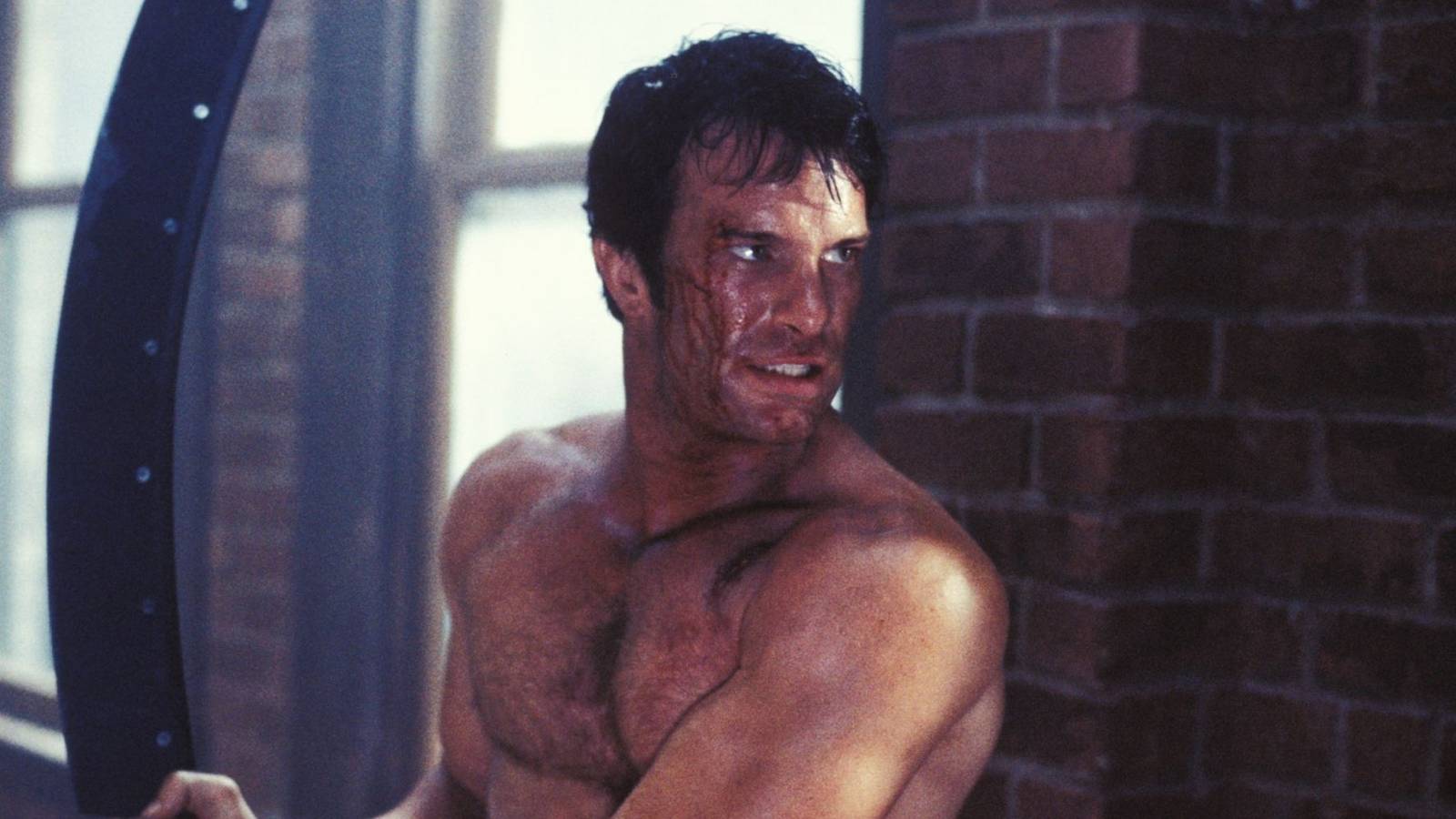
Frank Castle (Thomas Jane) wasn't a bad Frank Castle. That's what makes The Punisher more annoying than a completely hopeless adaptation. Jane has the physical sincerity for the role, and he understands that Frank should feel like a man whose old life has been destroyed beyond repair. That’s clear. But the movie around him keeps refusing to become as hard, focused, or emotionally brutal as the character needs. It wants revenge, family tragedy, crime drama, comic-book punishment, and oddball neighbor material, then never finds the right weight for any of it.
Howard Saint (John Travolta) feels too polished and theatrical for a villain who should make Frank’s world feel genuinely dangerous. The Tampa setting removes some of the grimy urban pressure usually tied to the character, and the tonal shifts are rough. One minute Frank is a silent executioner, the next the film is playing with quirky apartment-community beats. The skull shirt, the popsicle torture, and the final assault have fans for a reason, but the whole movie keeps softening a character who should feel terrifyingly direct.
5. 'Blade: Trinity' (2004)
Watching Blade: Trinity after the first two films is painful because the drop in attitude, discipline, and danger is obvious almost immediately. Blade (Wesley Snipes) still has the posture, the voice, and the physical command of Blade here, but the film keeps crowding him with jokes, franchise setup, weak team banter, and a Dracula plot that never feels worthy of him. Blade should dominate every room. Here, the movie keeps pulling attention away from the one thing it absolutely needed to protect.
Hannibal King (Ryan Reynolds) brings energy, and Abigail Whistler (Jessica Biel) looks capable, yet the Nightstalkers feel less like a necessary evolution and more like a forced spin-off plan interrupting Blade’s own film. Dracula, renamed Drake (Dominic Purcell), is shockingly bland for a villain meant to be the origin point of vampire terror. The action lacks the clean menace of Blade II, the vampire politics are thinner, and the humor keeps weakening the stakes. Even the R-rated violence feels routine. A Blade movie should never feel this casual about Blade.
4. 'Punisher: War Zone' (2008)
Punisher: War Zone at least understands that Frank Castle (Ray Stevenson) should be violent, but it mistakes excess for impact so often that the movie becomes exhausting instead of satisfying. Stevenson looks closer to the comic-book image of Frank than Thomas Jane did, and he has the right coldness. The film also gives him more graphic kills, heavier weapons, and a nastier criminal world. That sounds promising until the storytelling starts losing control.
The biggest issue is Jigsaw. Billy Russo (Dominic West) is played with so much exaggerated noise that the villain stops feeling dangerous and starts feeling cartoonish in the worst way. Loony Bin Jim (Doug Hutchison) pushes the film even further into ugly stupidity. The violence is frequent, but too much of it feels like a dare rather than a consequence. Frank’s grief, guilt, and moral damage should be the center. Instead, the movie often behaves as if splattered bodies are enough. Stevenson deserved a sharper, meaner, more disciplined Punisher film. This one has blood, but very little dramatic intelligence.
3. 'The Crow: Salvation' (2000)
The original Crow had tragedy, atmosphere, music, pain, and a lead performance that gave the material real emotional weight. The Crow: Salvation has the basic outline of a revenge story and almost none of the feeling required to justify it. Alex Corvis (Eric Mabius) is executed for the murder of his girlfriend, Lauren, then revived to punish the corrupt people responsible. The premise gives the film grief, injustice, police corruption, and supernatural revenge to work with.
The movie, however, still feels strangely empty. Alex never becomes compelling enough to carry the mythology, and the murder conspiracy plays out with little urgency. Erin (Kirsten Dunst) gives the film some human interest as Lauren’s sister, but her scenes cannot repair the flatness around her. The villains are sleazy without being memorable. The revenge kills lack the tragic charge that defines the best version of this character type. A Crow film needs grief that feels personal and style that feels tied to that grief. Salvation mostly feels like a sequel trying to use the brand name without understanding the ache behind it.
2. 'The Crow: Wicked Prayer' (2005)
If Salvation was empty, The Crow: Wicked Prayer is a full-blown disaster. This film takes the franchise’s gothic, melancholic core and replaces it with cheap thrills, laughable dialogue, and a lead performance from Edward Furlong that lacks any of the brooding intensity the role demands. The plot involves a biker gang, a satanic cult, and a resurrection that feels more like a parody than a continuation of the series. The R rating here is used for gratuitous violence that has no emotional payoff, making the whole experience feel like a cheap knockoff rather than a proper Crow entry. It’s a painful reminder that even a beloved franchise can be driven into the ground.
1. 'Ghost Rider: Spirit of Vengeance' (2011)
While technically released in 2011, this sequel to 2007’s Ghost Rider is the epitome of wasted potential. Nicolas Cage returns as Johnny Blaze, but the film’s chaotic tone, incoherent plot, and over-the-top performances turn what could have been a dark, supernatural thriller into a messy, unintentionally comedic mess. The R rating allows for more explicit violence, but it’s used so haphazardly that it loses all impact. The villain, Roarke (Ciarán Hinds), is forgettable, and the story about a boy with a demonic destiny feels recycled. This movie proves that even with a star like Cage and a cool concept, a bad script and direction can ruin everything. It’s the worst of the worst, a cautionary tale for anyone who thinks an R rating automatically makes a superhero movie better.
For more on failed R-rated films, check out our list of The Absolute Worst R-Rated Comedies of the 2010s, Ranked and The 6 Worst R-Rated 2000s Blockbusters That Wasted Big Budgets and Bigger Potential.