Fantasy fiction thrives on the promise of escape. We crack open a book hoping to leave our world behind and step into something extraordinary—a place where magic hums in the air, history runs deep, and every corner hides a new wonder. The greatest authors in the genre don't just sketch a backdrop; they construct entire realities, complete with their own physics, politics, and myths. These are the books that set the gold standard for worldbuilding, inviting readers to lose themselves in universes that feel as real as our own.
Ground-Level Grit and Grandeur
Glen Cook's The Black Company (1984) flips the fantasy script by showing war from the mud-splattered boots of mercenaries rather than kings or chosen ones. The Company, an elite unit hired by the feared Lady, marches through a land scarred by ancient conflicts. As they trudge across battlefields and ruins, we piece together a sprawling history—centuries of sorcerous tyranny, rebellion, and a sleeping evil that refuses to stay buried. It's a raw, unglamorous view of a world that feels lived-in, and it helped birth the grimdark subgenre.

Scott Lynch's The Lies of Locke Lamora (2006) takes us to Camorr, a city that glitters like a Venetian dream but hides a rotten core. Built atop the bones of a vanished civilization, its canals and palaces are dotted with mysterious Elderglass structures that no one can explain. The story follows a band of con artists who fleece the nobility, but as their schemes unravel, we're pulled into the city's layered underworld—guilds, poisons, and the sinister Bondsmagi who sell their magic to the highest bidder. It's a world that rewards curiosity at every turn.
Magic as a Living System
Patrick Rothfuss's The Name of the Wind (2007) is a masterclass in weaving magic into everyday life. The protagonist, Kvothe, recounts his journey from a trouper's child to a student at the University, where he studies sympathy—a magic based on thermodynamics and careful energy transfer. But the world extends far beyond academia: royal courts simmer with intrigue, the fae realm of Felurian offers both beauty and danger, and the Chandrian, seven immortal beings, haunt the edges of every tale. Even children's songs carry the weight of forgotten history, making the world feel ancient and alive.
Ursula K. Le Guin's A Wizard of Earthsea (1968) proves that less can be more. In Earthsea, magic is rooted in language itself—true names hold power over the things they describe. This elegant system shapes everything from education to governance, and the archipelago's scattered islands each harbor distinct cultures and traditions. The story of Ged, a young wizard who must confront the shadow he unleashed, becomes a meditation on balance and responsibility, all set against a world that feels both vast and intimate.
Satire and the Surreal
Terry Pratchett's The Colour of Magic (1983) launched the Discworld series, a flat planet balanced on four elephants atop a giant turtle. It's a premise that could only come from a mind that delights in absurdity, yet Pratchett's world is anything but shallow. Through the hapless wizard Rincewind and the tourist Twoflower, we encounter dragons fueled by belief, a sentient luggage, and a pantheon of gods who meddle in mortal affairs. The humor is sharp, but the worldbuilding is surprisingly rigorous—a place where folklore, philosophy, and jokes coexist in perfect harmony.
Gene Wolfe's The Shadow of the Torturer (1980) opens with a line that hints at the layers to come: "We believe that we invent symbols. The truth is that..." The novel follows Severian, a disgraced torturer, through a far-future Earth where technology and magic are indistinguishable. The world is a palimpsest of forgotten ages, and every chapter reveals another cryptic relic or ritual. It's a dense, rewarding read that demands patience but offers immense depth.
Classics That Endure
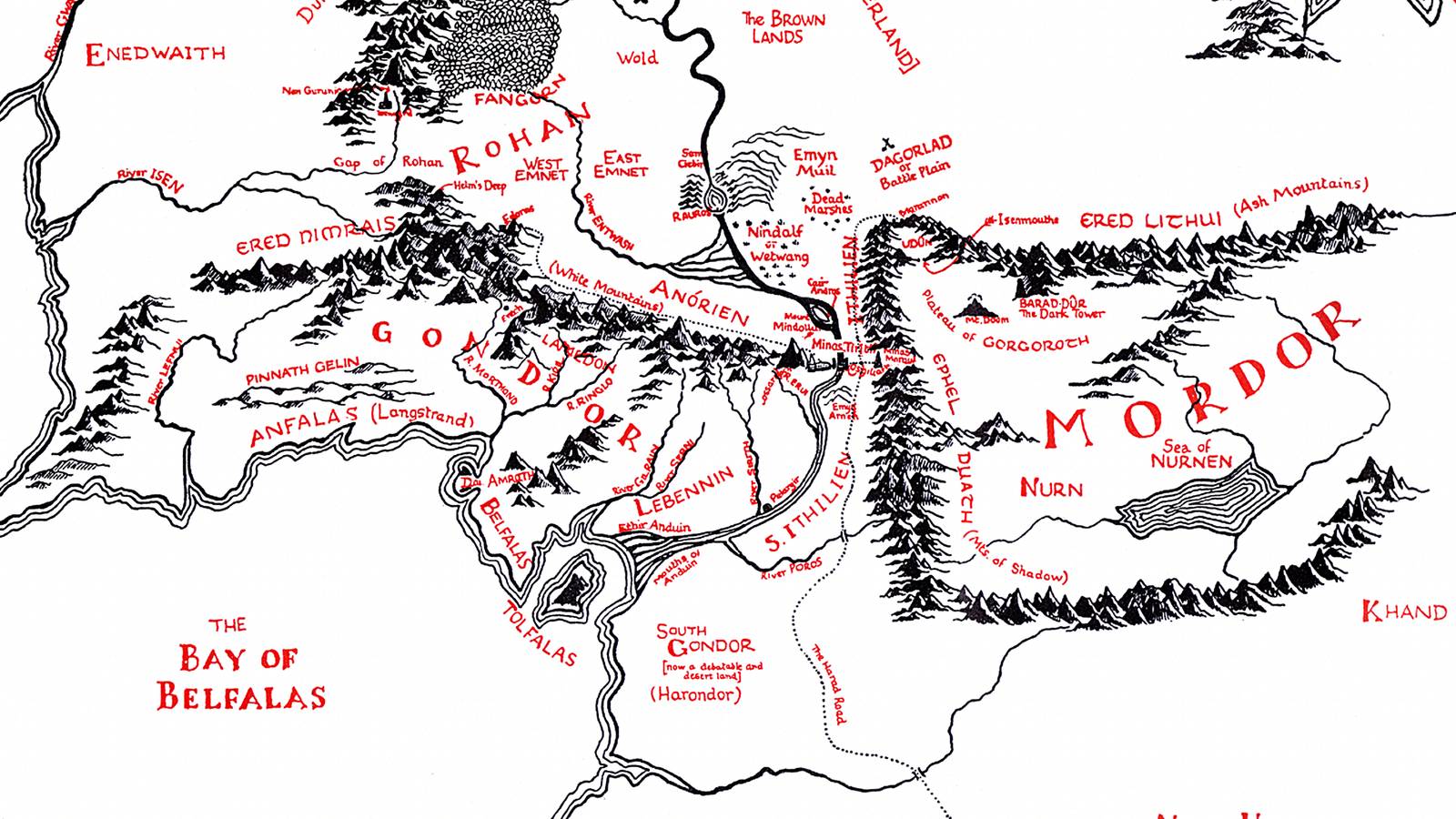
J.R.R. Tolkien's The Lord of the Rings (1954) remains the benchmark for epic worldbuilding. Middle-earth is a tapestry of languages, histories, and peoples, from the Shire's pastoral calm to the shadowed peaks of Mordor. Tolkien's philological background gave his world a linguistic authenticity that few can match, and his appendices read like a real chronicle. It's a world that has inspired countless imitators but never been surpassed.
Philip Pullman's The Golden Compass (1995) introduces a parallel universe where human souls manifest as animal companions called dæmons. This single conceit reshapes society—from the scholarly halls of Oxford to the frozen North, where armored bears and witch clans hold sway. Pullman's world is rich with theological and philosophical undertones, making it a favorite for readers who crave depth.
Other notable mentions include Frank Herbert's Dune (1965), which blends ecology, politics, and religion into a desert epic, and Robin Hobb's Assassin's Apprentice (1995), which builds a kingdom through the eyes of a bastard prince. Each of these books demonstrates that worldbuilding isn't just about maps and magic systems—it's about creating a place that feels like it exists beyond the page.
For more on how classic stories continue to shape our cultural landscape, check out our take on classic adventure novels and why they often outshine their film versions. And if you're in the mood for a different kind of escape, our list of genre-defining sci-fi might be your next stop.