Science fiction has always had a special relationship with science itself. While some stories zip through galaxies with little regard for physics, hard sci-fi takes a different path—it builds its worlds on the bedrock of real scientific principles, or at least plausible extensions of them. These are the books that make you feel smarter just by reading them, even when they stretch your brain to its limits.
Whether it's surviving on Mars with nothing but botany and chemistry, or grappling with the nature of consciousness itself, these novels offer a unique blend of intellectual challenge and emotional payoff. If you're a fan of stories that respect the laws of nature while still daring to ask "what if?", here are the hard sci-fi books that deserve a spot on your reading bucket list.

Blindsight by Peter Watts (2006)
Peter Watts' Blindsight is a mind-bending exploration of consciousness and intelligence. Set in 2082, humanity detects alien objects entering Earth's atmosphere, and a crew of five transhuman specialists aboard the spaceship Theseus is dispatched to investigate a mysterious signal at the edge of the solar system. What they find are the Scramblers—creatures that process information without any self-awareness.
The novel dives deep into the question of whether consciousness is truly necessary for intelligence. It challenges the reader to consider that emotions, which we often see as our greatest strength, might actually be a liability when facing threats that demand pure logic. It's a dense, philosophical read that will leave you questioning the very nature of your own mind.
The Martian by Andy Weir (2011)
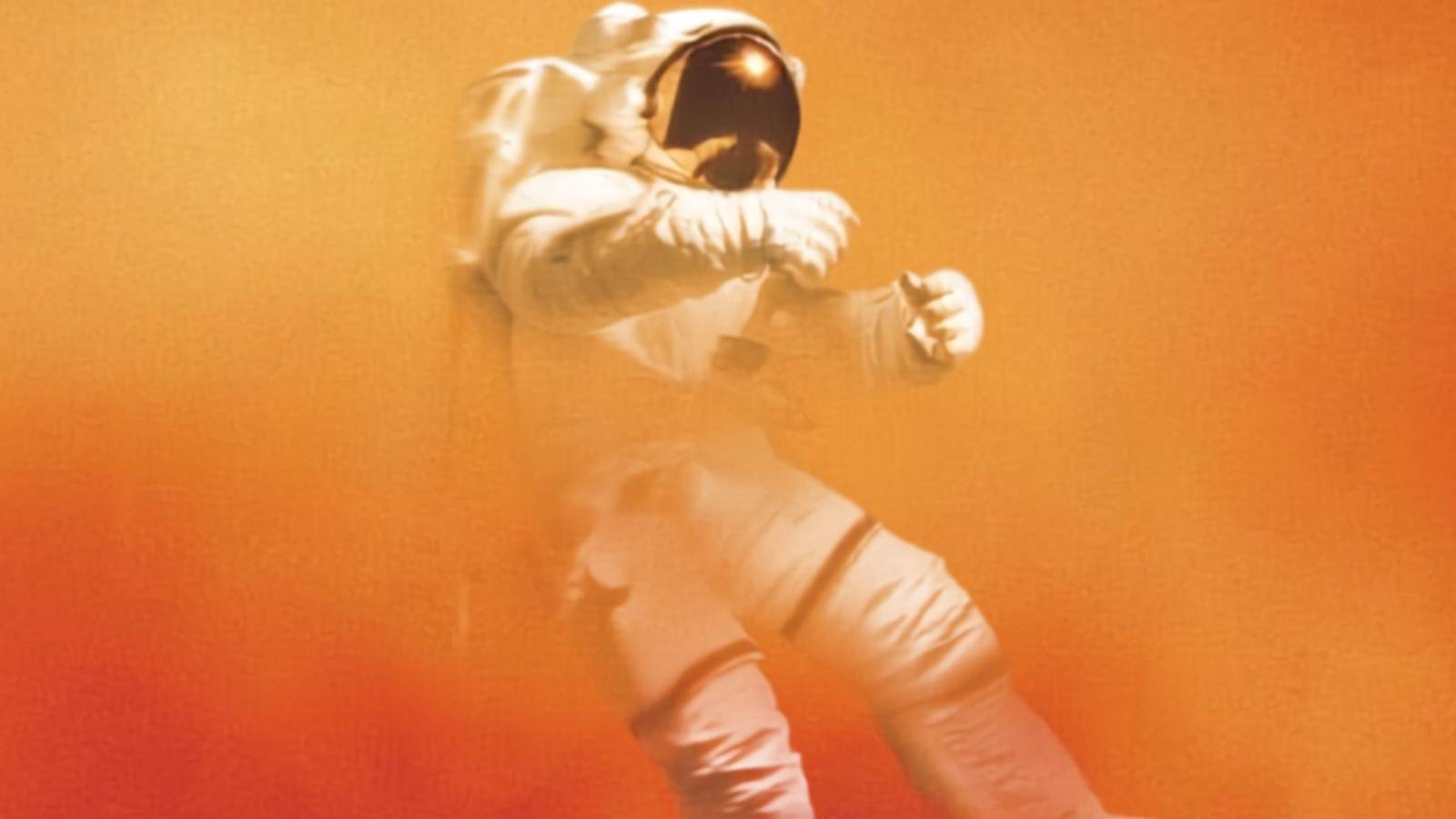
Andy Weir's The Martian is the perfect entry point for those new to hard sci-fi. When a dust storm forces NASA's Ares 3 crew to abandon Mars, astronaut Mark Watney is left behind, presumed dead. Armed with his wits and a background in botany, he must figure out how to survive on a planet where nothing can kill you faster than a simple mistake.
Weir's novel is a masterclass in problem-solving, as Watney uses closed-ecosystem farming, chemistry, and even ion propulsion to stay alive. The science is accurate and detailed, but it's presented in a way that's accessible and even humorous, thanks to Watney's irreverent voice. It's a thrilling survival story that proves science can be just as exciting as any space battle.
Diaspora by Greg Egan (1997)
Greg Egan's Diaspora takes hard sci-fi to its extreme. In the 30th century, humanity exists in multiple forms: biological, digital, and artificial. When a cosmic event threatens Earth, a team led by Yatima, a mathematically gifted digital intelligence, sets out to investigate, uncovering realities that defy our understanding of space and time.
This is not a light read. Egan's novel is packed with advanced physics, including his own Kozuch Theory, and it demands careful attention. But for those willing to put in the effort, Diaspora is a rewarding journey into the far future of intelligence and existence. It's a book that will make you feel like you've earned a degree in theoretical physics by the time you finish.
Children of Time by Adrian Tchaikovsky (2015)
Adrian Tchaikovsky's Children of Time offers a unique twist on the evolution of intelligence. After Earth becomes uninhabitable, humanity's last survivors search for a new home. Meanwhile, a failed terraforming experiment on a distant planet gives rise to a new dominant species: spiders. As these arachnids evolve, they develop their own society, culture, and technology.
Tchaikovsky, who has a background in zoology, brings a fascinating perspective to the genre. The novel explores animal cognition and evolutionary biology in a way that's both scientifically grounded and deeply imaginative. It's a thought-provoking look at what intelligence really means, and whether humanity's way is the only way.
Leviathan Wakes by James S.A. Corey (2011)
The first book in The Expanse series, Leviathan Wakes, is a space opera that doesn't forget its scientific roots. Set in 2350, humanity has colonized the Solar System, but life is far from peaceful. Earth and Mars are locked in a cold war, while the Belters—the people who mine the asteroid belt—struggle for survival and recognition.
Corey's world-building is grounded in real physics: the effects of low gravity on the human body, the limitations of spacecraft, and the gritty reality of space combat. Instead of flashy laser battles, ships rely on railguns and point-defense systems. It's a gripping story of mystery and conspiracy, but it's also a love letter to the science of space travel.
The Gods Themselves by Isaac Asimov (1972)
Isaac Asimov's The Gods Themselves is a classic that tackles the concept of parallel universes. Scientists develop the Electron Pump, a device that transfers matter between universes to generate limitless energy. But this breakthrough comes with a catastrophic side effect that threatens the very fabric of reality.
Asimov's novel is divided into three parts, each exploring a different perspective, including the aliens from the parallel universe. It's a brilliant exploration of scientific ethics and the unintended consequences of discovery. The book won the Hugo and Nebula awards, and it remains a cornerstone of hard sci-fi literature.
These novels represent the best of hard sci-fi, offering stories that are as intellectually stimulating as they are entertaining. Whether you're a seasoned fan or just dipping your toes into the subgenre, these books are essential reading. And if you're looking for more fantastic reads, check out our list of dragon fantasy books or top-rated books of the decade for more inspiration.