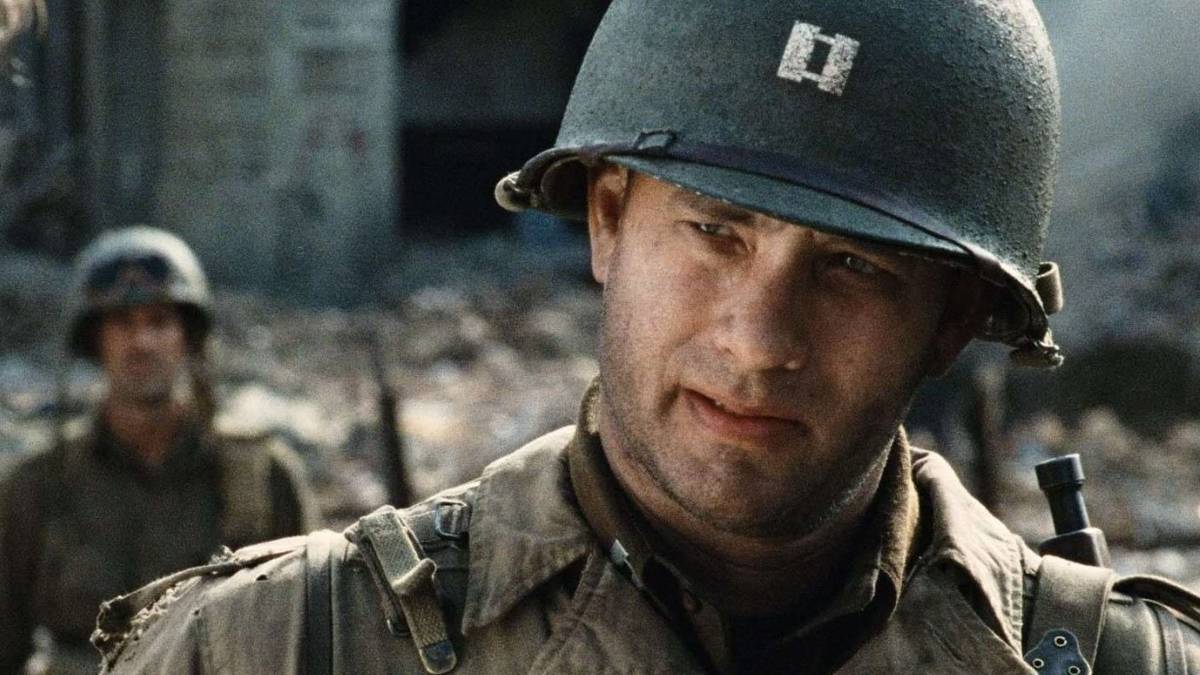
Steven Spielberg's Saving Private Ryan is a titan of cinema. Its D-Day sequence is a masterclass in visceral filmmaking, its technical craft is beyond reproach, and its influence echoes through every war movie that followed. But being the most famous doesn't make it the best. In fact, its very dominance can overshadow films that ask harder questions, embrace ambiguity, and refuse to offer the comfort of clear-cut heroism.
This list celebrates those films—works that dig into the psychological, moral, and systemic wreckage of war without tidy resolutions. They don't just show combat; they dissect the ideologies, fears, and institutional failures that fuel it. Some strip away glory entirely, leaving only raw, uncomfortable truths. These are the movies that, in their own ways, surpass Spielberg's masterpiece.

The Psychological Toll
The Hurt Locker (2008) – Kathryn Bigelow's Iraq War drama remains the definitive look at combat as addiction. Jeremy Renner's Sergeant William James is a bomb disposal expert who thrives on danger, finding more meaning in defusing IEDs than in any peacetime routine. The film's power lies in its refusal to moralize; instead, it shows how war rewires the brain, making ordinary life feel hollow. It's a portrait of a man who doesn't want to escape the war—he wants to stay in it.
Full Metal Jacket (1987) – Stanley Kubrick's two-part masterpiece argues that the military doesn't just send soldiers to war; it creates them. The first half, set in boot camp, shows the systematic stripping of individuality, turning recruits into instruments of violence. The second half drops these hollowed-out men into Vietnam, where their dehumanization reaches its logical conclusion. Unlike Saving Private Ryan, which assumes soldiers are fundamentally intact, Kubrick shows that war requires breaking people first.
The System's Cruelty
Paths of Glory (1957) – Kubrick again, this time in World War I, delivers a scathing indictment of military hierarchy. When a French assault fails, three soldiers are scapegoated and court-martialed for cowardice. Kirk Douglas's Colonel Dax defends them, but the real battle is against a system that values its own reputation over human life. The film's most damning scenes aren't in the trenches but in the courtroom, where language is twisted to justify injustice. It's a political knife-edge that cuts deeper than any battlefield spectacle.
Platoon (1986) – Oliver Stone's Vietnam epic, drawn from his own service, shows that the enemy isn't just the unseen foe—it's the corruption within. Charlie Sheen's Chris Taylor is caught between two sergeants: one who clings to morality, another who embraces savagery. The film's chaos and moral ambiguity make it a raw, angry testament to a war that devoured its own. It doesn't ask us to admire bravery; it forces us to witness the erosion of conscience.
Chaos and Indifference
Black Hawk Down (2001) – Ridley Scott's account of the 1993 Battle of Mogadishu is often dismissed as pure spectacle, but that undersells its grim precision. The film unfolds in near real-time as a mission collapses, leaving soldiers trapped in a hostile city. There's no sentimental motivation here—just chaos, fear, and the brutal indifference of war. It's a stark counterpoint to Saving Private Ryan's emotional anchors, showing that sometimes war has no meaning at all.
The Thin Red Line (1998) – Terrence Malick's poetic meditation on Guadalcanal is less about battles than about the souls caught in them. The film juxtaposes the beauty of nature with the ugliness of human conflict, asking profound questions about existence and violence. Its fragmented narrative and philosophical voiceovers challenge viewers to see war not as a series of events, but as a spiritual crisis. It's a war film that feels more like a prayer than a story.
Beyond the Battlefield
Come and See (1985) – Elem Klimov's Soviet masterpiece is arguably the most harrowing war film ever made. It follows a young boy who joins the resistance in Belarus, only to witness unspeakable atrocities. The film's surreal, nightmarish quality makes it less a historical drama than a descent into hell. It doesn't just show war's costs; it makes you feel them in your bones. This is the anti-Saving Private Ryan—no heroics, no redemption, only the obliteration of innocence.
Apocalypse Now (1979) – Francis Ford Coppola's Vietnam epic is a journey into the heart of darkness, both literal and metaphorical. Captain Willard's mission to assassinate Colonel Kurtz becomes a surreal exploration of madness and the collapse of morality. The film's hallucinatory style and iconic performances (Martin Sheen, Marlon Brando) make it a touchstone for how war can unhinge the mind. It's less about combat than about the psychological abyss that war opens up.
Dunkirk (2017) – Christopher Nolan's immersive retelling of the evacuation of Dunkirk is a masterclass in tension. With minimal dialogue and a relentless score, the film drops you into the chaos of survival. It's not about heroism but about the primal instinct to escape. Nolan's nonlinear structure and practical effects create a sensory experience that rivals—and some argue surpasses—Saving Private Ryan's opening sequence.
1917 (2019) – Sam Mendes's one-shot wonder follows two British soldiers on a desperate mission across No Man's Land. The real-time, continuous shot technique creates an immediacy that's both breathtaking and exhausting. It's a film about the futility of war and the sheer endurance required to survive it. While it may lack the thematic depth of others on this list, its technical brilliance and emotional weight make it a worthy contender.
These films don't just depict war—they interrogate it. They refuse to let audiences walk away feeling uplifted or reassured. Instead, they leave us with questions about humanity, power, and the systems that send people to die. That's what makes them not just great war movies, but essential cinema. For more cinematic deep dives, check out our list of sci-fi masterpieces or explore the best adventure movies of 2026.