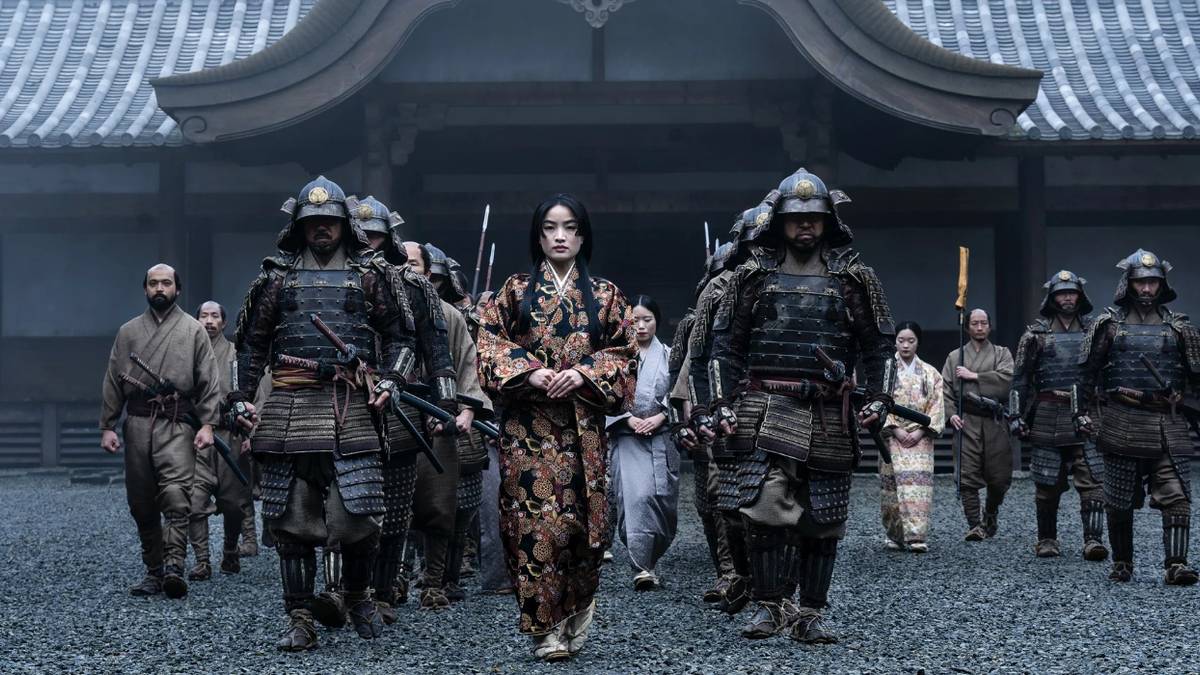
FX's Shōgun proved that historical drama can be both deeply personal and grandly political. Set in 1600 Japan, the series follows English pilot John Blackthorne as he's caught between Lord Yoshii Toranaga and his rivals. The show's intricate power plays, brutal battles, and cultural collisions made it a modern TV phenomenon.
But once you've finished the series, where do you turn for that same fix of political maneuvering and historical immersion? Fortunately, the world of historical fiction is rich with stories that echo Shōgun's themes—from samurai epics to courtly intrigue—no matter the era or location. Here are five novels that will satisfy your craving for sweeping, character-driven history.

Pachinko by Min Jin Lee
Min Jin Lee's Pachinko takes a broad historical lens, spanning nearly eight decades. It begins in Korea in 1910, just after Japan's annexation, and follows Sunja, a woman whose life choices ripple through generations. Her family's journey to Japan is marked by war, poverty, discrimination, and the constant struggle to define identity in a hostile world.
Like Shōgun, Pachinko explores how individuals navigate systems of power and cultural displacement. While it lacks the samurai battles, it offers a deeply human look at resilience and the cost of survival—perfect for fans of Shōgun's cultural clashes.
Musashi by Eiji Yoshikawa
If the samurai code was your favorite part of Shōgun, Eiji Yoshikawa's Musashi is a must-read. Set immediately after the Battle of Sekigahara in 1600, it follows Shinmen Takezō, a young man forced by a monk to confront his past and forge a new path. He becomes the legendary swordsman Miyamoto Musashi, wandering Japan to perfect his craft and philosophy.
This novel is a direct spiritual successor to Shōgun's world, offering an intimate look at warrior culture in the same era. It's a deep dive into the mindset of a samurai, making it an ideal companion for those who loved the martial and philosophical elements of the show.
The Thousand Autumns of Jacob de Zoet by David Mitchell
David Mitchell's The Thousand Autumns of Jacob de Zoet transports readers to 1799 Nagasaki, where Dutch clerk Jacob de Zoet arrives at the Dejima trading post. He expects to earn a fortune, but instead finds himself entangled in corruption, spiritual mysteries, and a forbidden love for a Japanese midwife named Orito. When Orito is taken to a mountain temple, Jacob must navigate a web of secrets and captivity.
Mitchell excels at making history feel alive, much like Shōgun. Jacob is another European outsider trying to understand Japan, but Mitchell gives Japanese characters their own agency and depth. The novel's exploration of trade, religion, and foreign relations mirrors Shōgun's interest in cultural exchange and conflict.
She Who Became the Sun by Shelley Parker-Chan
Shelley Parker-Chan's She Who Became the Sun shifts to 14th-century China, where the Mongol Yuan Dynasty is crumbling. A peasant girl, told she has no future, assumes her dead brother's identity to survive. As Zhu Chongba, she rises through the ranks of the Red Turban Rebellion, but her new power comes with the constant threat of exposure.
This novel is a masterclass in political maneuvering, reminiscent of Toranaga's calculated moves in Shōgun. Parker-Chan adds layers of gender and queer identity, making it a fresh take on the epic. It's a gripping read for anyone who loves ruthless ambition and complex power dynamics.
Wolf Hall by Hilary Mantel
Hilary Mantel's Wolf Hall leaves Asia for the treacherous court of Henry VIII. It follows Thomas Cromwell, a blacksmith's son who rises to become one of England's most powerful men. Through his eyes, we witness the fall of Cardinal Wolsey, Henry's pursuit of Anne Boleyn, and the religious upheaval of the Reformation.
Mantel's genius lies in making political intrigue feel personal. Every character has hidden motives, alliances shift in an instant, and one misstep can be fatal—just like in Shōgun. For those who loved the scheming and backstabbing of the series, Wolf Hall is an essential read.
These five novels prove that historical fiction can be as thrilling and thought-provoking as any modern drama. Whether you're drawn to samurai, courtiers, or rebels, each book offers a window into a world where power is a game and survival is the prize. For more recommendations, check out our list of the best historical adventure novels or dive into the phenomenon of The Calamity Club.