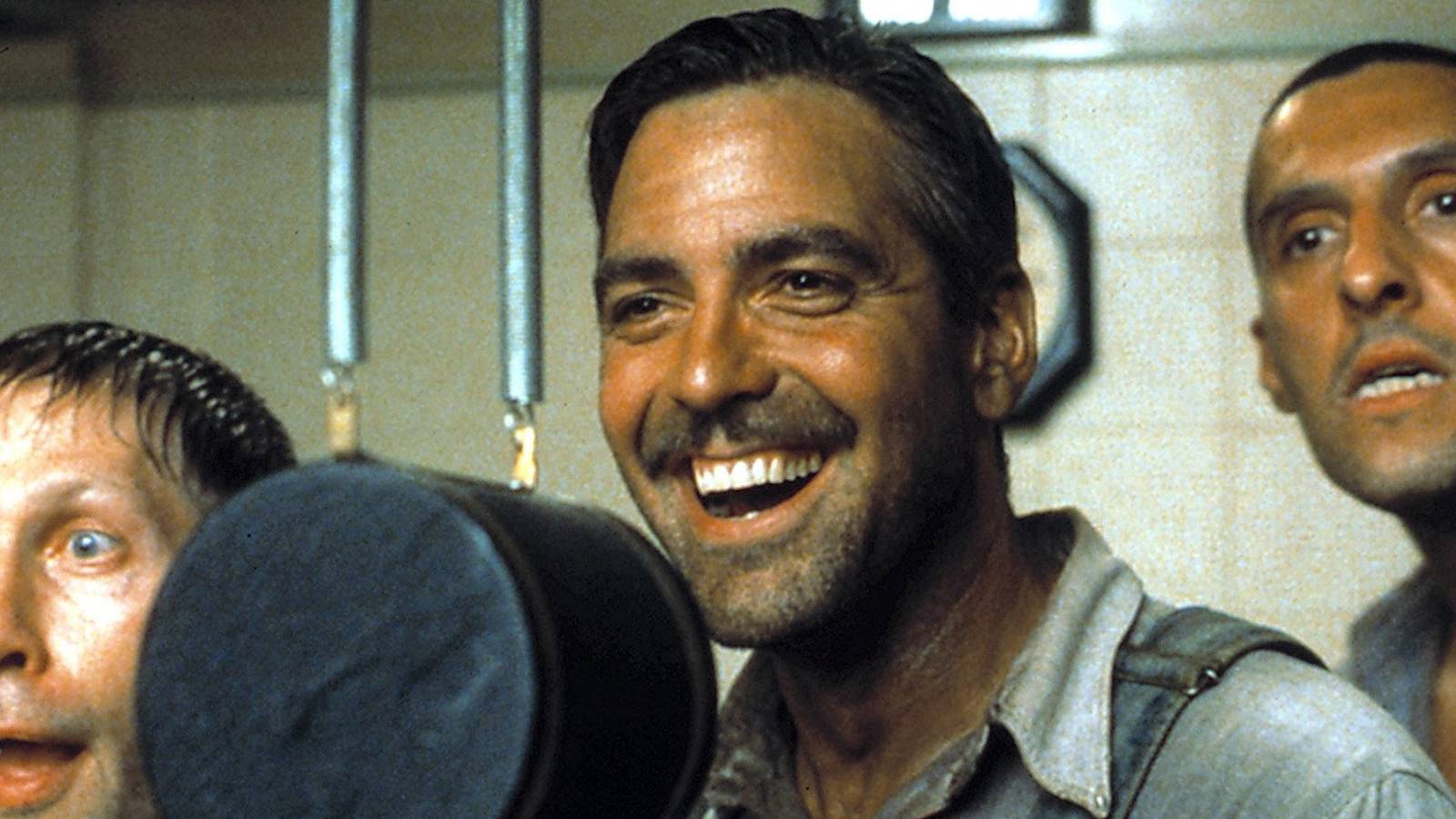
Christopher Nolan's The Odyssey has stormed theaters, already crossing the billion-dollar mark and earning praise for its faithful yet cinematic retelling of Homer's ancient poem. But for those craving more of Odysseus's journey—with a twist—the Coen Brothers' 2000 gem O Brother, Where Art Thou? offers a radically different, yet equally brilliant, take. Set in 1930s Mississippi and scored with bluegrass and folk tunes, it swaps Greek gods for chain gangs and turns a king's homecoming into a ramshackle escape by three convicts.
George Clooney stars as Ulysses Everett McGill, a fast-talking con man who, along with his fellow escapees Pete (John Turturro) and Delmar (Tim Blake Nelson), sets off to find buried treasure. While Everett lacks Odysseus's heroic stature, he shares the same driving obsession: getting home to his wife Penny (Holly Hunter) before she remarries. The Coens weave Homer's story into the American South with remarkable ease, turning the epic's iconic encounters into something both fresh and familiar.

From Sirens to Cyclops: Myth Meets the Delta
Where O Brother, Where Art Thou? truly shines is in its clever translation of Homer's monsters and temptations. The Sirens become three women bathing in a river, whose haunting harmonies lure the trio off course. The Cyclops is transformed into Dan Teague (John Goodman), a one-eyed Bible salesman who threatens to rob—and possibly kill—the heroes. These adaptations never feel like forced Easter eggs; instead, they serve the story organically, grounding myth in a dusty, Depression-era reality.
The film also mirrors the epic's final act: Everett must prove himself worthy of Penny, who is courted by a suitor. The Coens preserve the emotional stakes of Homer's tale—perseverance, loyalty, and the fight for family—while infusing it with their trademark wit. The result is a story that feels both timeless and distinctly American, a reminder that great narratives can be reinvented without losing their soul.
A Timeless Tale, Reinvented for New Audiences
Nolan's The Odyssey has already sparked renewed interest in Homer's epic, but O Brother, Where Art Thou? proves that the best adaptations don't just repeat the original—they find new ways to make it resonate. The Coens' film joins a lineage of works that show how beloved stories can be reimagined across genres and eras. Its themes of courage, found family, and redemption are as relevant today as they were in ancient Greece or the Great Depression.
For anyone who has marveled at Nolan's sweeping vision, O Brother, Where Art Thou? offers a perfect counterpoint: a lighter, more irreverent journey that still honors the epic's heart. It's a testament to the power of storytelling—and proof that sometimes the best way to keep a classic alive is to give it a banjo and a Southern drawl.