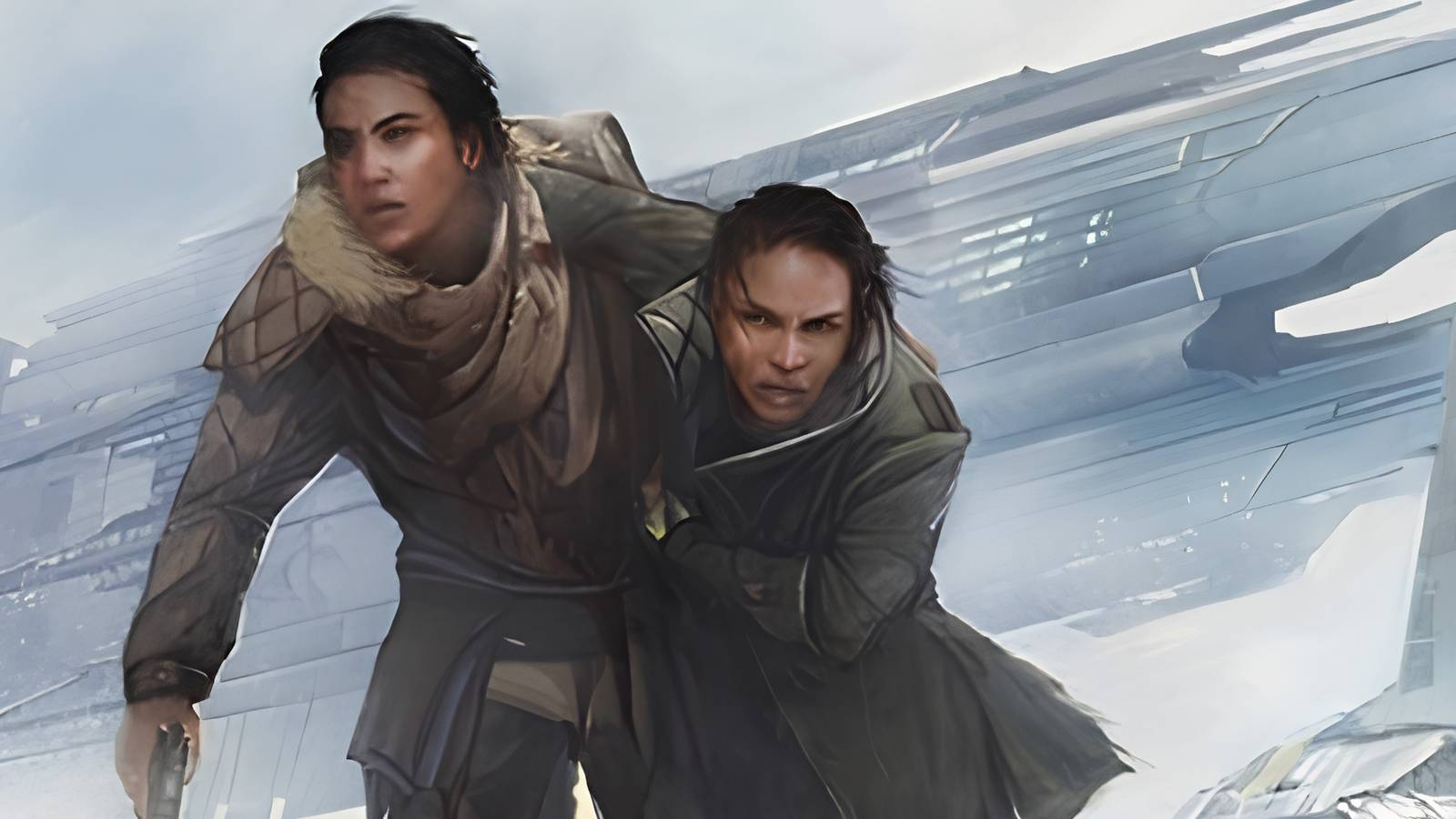
Streaming platforms are constantly hunting for the next breakout hit, and they often look to unexpected sources. HBO turned a video game into a phenomenon with The Last of Us, Apple TV+ expanded a movie monster universe, and Prime Video went back to Middle-earth. But for those craving a truly original space opera, there's a 13-year-old novel that might just outshine them all: Ann Leckie's Ancillary Justice.
This Hugo, Nebula, and Arthur C. Clarke Award-winning book has been quietly waiting for its moment. With Dune: Prophecy on the horizon and Foundation still in limbo, the genre is ripe for a fresh voice. Ancillary Justice isn't just another epic—it's a smart, introspective, and wildly inventive story that could be the next great streaming series.

A Tale of Two Timelines
The novel opens on a frozen planet called Nilt, where Breq—our protagonist—rescues a drugged and beaten officer named Seivarden Vendaai. But Breq is no ordinary person. She was once the starship Justice of Toren, an AI that controlled thousands of human bodies called ancillaries. For 3,000 years, she was a ship and an army. Now, after her ship was destroyed, she's reduced to a single body, on a quest for revenge.
The story unfolds across two timelines. In the present, Breq hunts for a weapon to assassinate Anaander Mianaai, the ruler of the Radch empire—an AI herself who occupies thousands of bodies. In the past, we see the events leading to the ship's destruction, set against the backdrop of an expansionist empire that conquers planets and turns survivors into disposable soldiers.
Why This Book Is Perfect for TV
Dual timelines have proven successful in shows like Monarch: Legacy of Monsters, and the empire-building echoes the Borg from Star Trek. But what truly sets Ancillary Justice apart are two bold ideas. First, it makes an AI the hero—not the villain. Breq's journey from a collective consciousness to an individual is a fascinating exploration of identity and free will. Second, the Radchaai culture doesn't use gender as a distinguishing trait, so all characters are referred to with she/her pronouns. It's a subtle but powerful choice that challenges viewers' assumptions and adds depth to the world.
This isn't just a spectacle-driven space opera. It's a character-driven story about class, revenge, and what it means to be human—or not. Yet there's plenty of room for grand, effects-heavy moments, from space battles to planetary conquests. The trilogy, known as the Imperial Radch, offers a rich universe that could sustain multiple seasons.
Despite being optioned before, Ancillary Justice has never made it to the screen. That's a missed opportunity, because this is exactly the kind of smart, original sci-fi that streaming audiences are craving. If you're looking for a book that could be the next gritty sci-fi replacement, this is it.
For fans of classic space opera, Ancillary Justice is a must-read. And for streamers, it's a golden opportunity to bring something truly unique to the small screen.