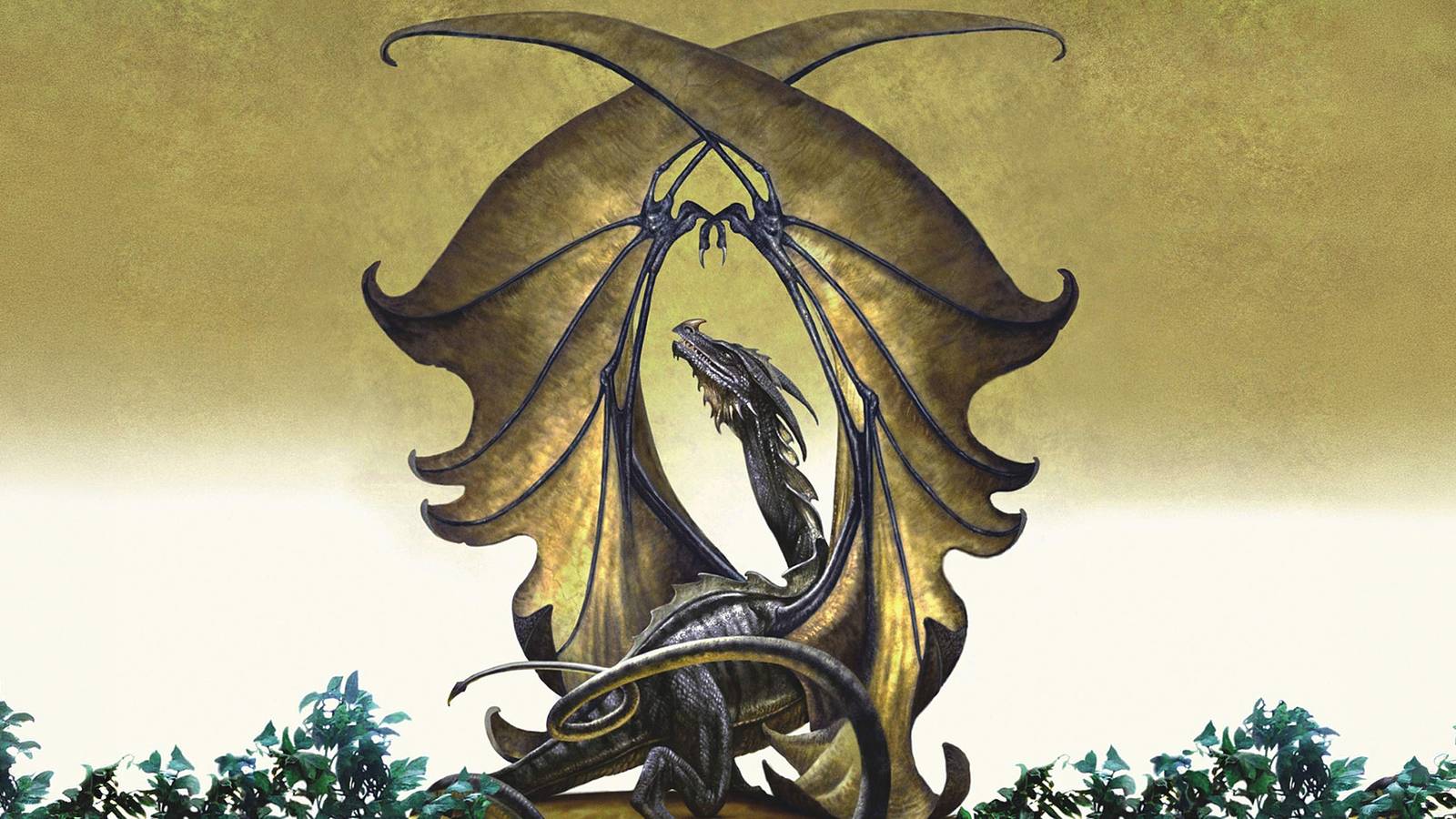
Dragons have long been a staple of fantasy, from the wise and terrifying Smaug to the political weapons of Game of Thrones. But what if the story was told from the dragon's perspective? That's the bold premise of E.E. Knight's Age of Fire series, a six-book saga that ran from 2005 to 2011 and remains one of the most unique entries in the genre.
While George R.R. Martin's dragons are impressive in their own right, they often feel more like forces of nature than characters. Knight takes the opposite approach, diving deep into the minds of his dragon protagonists, exploring their biology, society, and worldview in a way that few other authors have attempted.

A Story Told in Scales and Fire
The series kicks off with Dragon Champion, which introduces us to a clutch of five hatchlings: a red male, a copper male, a gray male named AuRon, and two green females, Wistala and Jizara. From the start, we're thrown into the alien nature of dragonkind—the males are compelled to fight to the death until only one remains. AuRon and the copper team up to slay the red, but the copper falls from the nest and becomes an outcast, while AuRon and his sisters are raised by their parents.
Their peaceful existence is shattered when a group of dwarves, aided by a human dragon hunter known as the Dragonblade, attacks the nest. The parents and Jizara are killed, and the three surviving siblings are scattered across the world. Each of the first three books follows one sibling's journey: AuRon wanders as a wild dragon, learning the secrets of his kind; Wistala is adopted by an elf and becomes embroiled in human and dwarf conspiracies; and the Copper, now named RuGaard, finds his way to the Lavadome, an underground dragon society rife with political intrigue.
This structure allows Knight to explore the world from multiple angles, each book offering a different flavor of dragon life. AuRon's story is a solitary survival tale, Wistala's is a political thriller, and RuGaard's is a courtly drama among dragons. It's a clever way to keep the series fresh while building a rich, interconnected narrative.
Biology and World-Building Like No Other
Knight's dragons are rooted in classic European mythology—six-limbed, fire-breathing, treasure-hoarding—but he adds a layer of biological realism that makes them feel truly alien. For instance, dragons must consume metal to keep their scales healthy; without it, their armor becomes brittle and falls off. Gray dragons like AuRon have chameleon-like skin to compensate for their lack of scales. There's also a striking sexual dimorphism: males come in a rainbow of colors, while females are always green.
Even the fire-breathing gets a scientific twist. Dragons produce a fatty substance called foua, which they spit and ignite into a napalm-like flame. And in a nod to the 2002 film Reign of Fire, their fire comes from vents in their mouths. Perhaps most intriguingly, dragon wings are tucked beneath their skin at birth and only burst through when they reach about fifteen years old—a detail that adds a layer of vulnerability and growth to their early lives.
But it's not just the physical traits that make these dragons stand out. Knight masterfully gets inside their heads. They're sentient, with distinct personalities, but they share a deep-seated belief in their own superiority. Their long lifespans mean they watch human companions age and die in what feels like the blink of an eye, reinforcing their alien perspective. It's a powerful tool that makes the reader feel the weight of dragon existence.
For fans of epic fantasy with dragons, or those who appreciate incredible world-building, the Age of Fire series is a hidden gem. It's a bold, immersive take on the genre that deserves a spot on any fantasy reader's shelf.