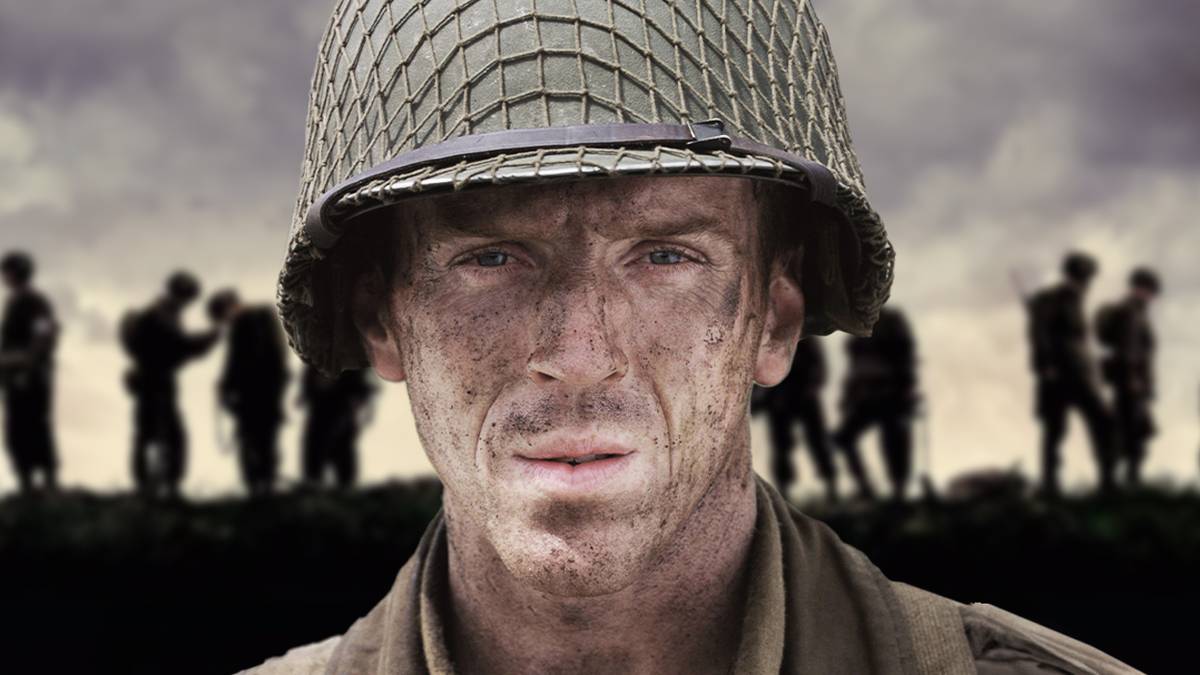
Twenty-five years after its debut on HBO, Band of Brothers remains a towering achievement in television. The limited series, which chronicles the experiences of Easy Company during World War II, is being celebrated with a new documentary, Band of Brothers: Legacy, arriving on HBO Max on September 9. The documentary features fresh interviews with cast members like Damian Lewis, Ron Livingston, Michael Cudlitz, and David Schwimmer, along with never-before-seen archival footage and photos, offering a deep dive into the making of the series and its lasting impact.
While the series was lauded for its visceral battle sequences and gritty realism, what truly sets it apart—and what feels remarkably contemporary—is its nuanced portrayal of the psychological toll of war. Long before mental health became a mainstream conversation, Band of Brothers treated the emotional struggles of soldiers as an integral part of the narrative, not an afterthought. It didn't confine these issues to a single episode; instead, it wove them throughout the entire series, showing how trauma and resilience coexist in the lives of those who fight.
This approach was groundbreaking. Many war dramas either ignore mental health or address it in a heavy-handed, one-off manner. Band of Brothers did the opposite. It showed mental health as a constant, evolving presence—sometimes overt, sometimes subtle, but always there. A lingering glance, a moment of hesitation, a quiet conversation—these small details accumulated to create a powerful, realistic portrait of soldiers grappling with invisible wounds.
The series also avoided stigmatizing mental health struggles. Instead, it presented them as a natural, albeit painful, part of the soldier's experience. This acceptance is perhaps best exemplified in the episode "Bastogne," when Lieutenant Winters notices that medic Eugene "Doc" Roe is visibly distressed. Rather than offering a grand speech, Winters simply tells him to get a hot meal in town. It's a small gesture, but it speaks volumes about the importance of looking out for one another—a theme that resonates just as strongly today.
One of the most powerful explorations of mental health comes in the third episode, "Carentan," which focuses on Private Albert Blithe. After being separated from his unit on D-Day, Blithe struggles to rejoin the fight, admitting he "just kinda stayed put" instead of seeking out his comrades. Later, he experiences "hysterical blindness," a physical manifestation of his psychological distress. When Winters tells him he can return to England, Blithe is moved to tears—a rare moment of vulnerability that underscores the weight he carries.
Blithe's journey is a masterclass in depicting PTSD. His body and mind seem to betray him at crucial moments, yet he pushes through, eventually killing an enemy soldier and then seeking out the body—a haunting reminder of the moral complexities of war. Through Blithe, the series shows how mental health can fluctuate, how soldiers can be paralyzed one moment and functional the next, and how the scars of battle are not always visible.
As we celebrate the 25th anniversary of Band of Brothers, it's clear that its legacy extends far beyond its technical brilliance. The series set a precedent for how television can handle mental health with honesty and empathy. It reminds us that the greatest battles are often fought within, and that acknowledging this is not a sign of weakness but of strength. In an era where mental health awareness is finally gaining the attention it deserves, Band of Brothers stands as a timeless testament to the human spirit's capacity to endure—and to the power of storytelling to illuminate the darkest corners of our experience.