The penultimate episode of X-Men '97 Season 2, "The Dead Man's Hand," finally brings Gambit (AJ LoCascio) back into the X-Men's orbit. But the Ragin' Cajun isn't himself after being resurrected by Apocalypse (Ross Marquand). As the new Horseman of Death, he can "corrupt" others with his signature playing cards. Gambit's return is teased in the episode's opening flashback to the night he died, where he and Rogue (Lenore Zann) share a dance and a kiss—before she sees his new form and wakes up screaming.
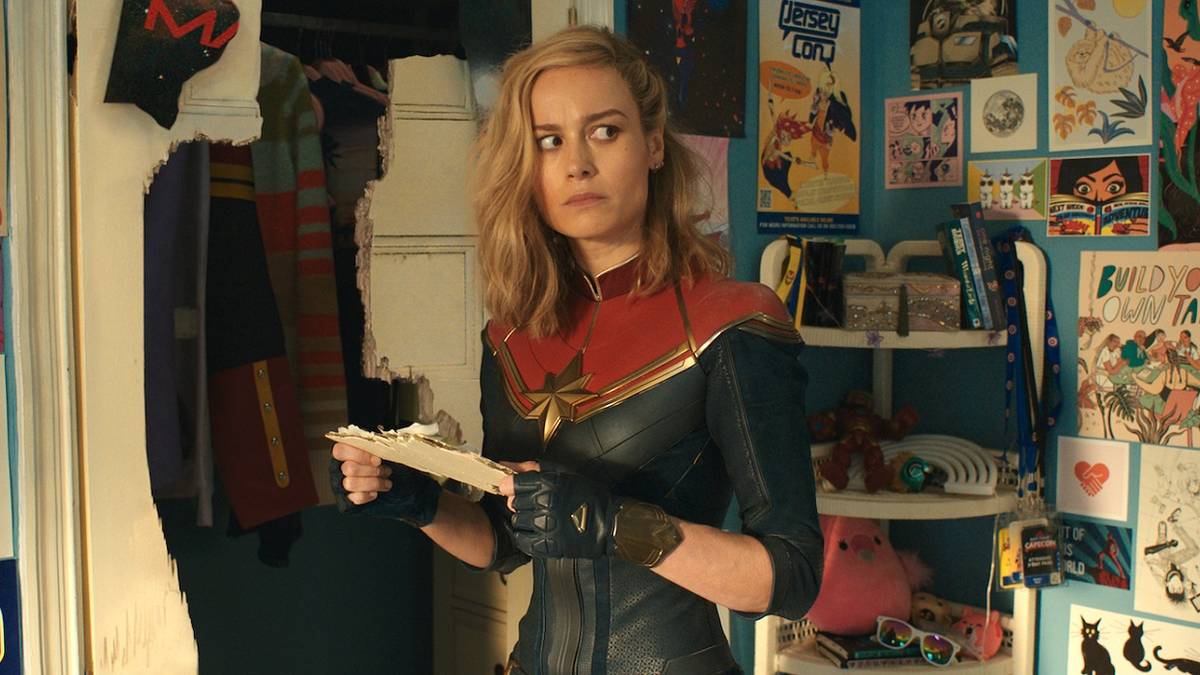
What follows is even more surprising. Cable (Chris Potter) and X-Force arrive with news that Gambit has killed Apocalypse and is on the loose. Rogue's nightmare wasn't just a dream—it was a vision of things to come. That might puzzle some viewers, since her mutant ability lets her absorb skills and powers from others, but she's never encountered a precognitive mutant. Yet there's a character whose future-seeing abilities are permanently fused into Rogue: Carol Danvers, aka Ms. Marvel, now known as Captain Marvel.

Rogue's Seventh Sense Comes From Carol Danvers
Most fans know Captain Marvel can absorb and redirect energy, fly, and punch through walls. But she also has a "seventh sense" that grants her premonitions, often through dreams. Rogue first absorbed this power in Avengers Annual #10, when she battled Carol and permanently took her abilities, leaving Carol in a coma. Rogue soon discovered she had Carol's strength and speed, but she also inherited the seventh sense—a power she eventually learned to control and use to help the X-Men.
This isn't the first time Rogue has tapped into that ability on screen. In the X-Men: The Animated Series episode "A Rogue's Tale," Ms. Marvel's psyche surfaces and causes Rogue's seventh sense to spiral, showing her visions of her life. Rogue ultimately regains control, but the guilt of what she did to Carol lingers. The episode ends on a hopeful note, with signs that Carol might wake from her coma.
The comics, however, have largely dropped this power. Rogue's precognitive abilities were a staple of her character in the 1980s and '90s, but as Marvel shifted focus, the seventh sense faded into obscurity. X-Men '97 bringing it back is a deep-cut nod to longtime fans and a reminder of how rich the X-Men lore really is.
Chris Claremont's Legacy Lives On
Both X-Men: The Animated Series and X-Men '97 have drawn heavily from iconic comic storylines, but "The Dead Man's Hand" cements Chris Claremont as the most influential creator on the franchise. Claremont's run turned the X-Men into Marvel's biggest property, using mutants as a metaphor for marginalized groups and co-creating fan favorites like Rogue, Gambit, and Kitty Pryde. He also wrote two of the most famous arcs: "The Dark Phoenix Saga" and "Days of Future Past."
Supervising Director Jake Castorena has said Claremont's work was a key inspiration for the series. "Obviously, the OG show was going to be our north star, and in order to do that justice, you have to look at: What was the OG show's north star? They didn't have a show, so they went to the comics. They pulled a lot from the books, so for us to be a spiritual successor, we needed to be also doing the same."
Claremont also developed Carol Danvers, having her recover from her coma and join the X-Men in space, where they battled the Brood. It's fitting that X-Men '97 continues to mine his work for inspiration, even as it adapts modern stories. Perhaps a future season will finally see Carol fully wake up and reconcile with Rogue—or even take on her cosmic Binary form. Until then, Rogue's seventh sense is a welcome blast from the past that reminds us why Claremont's X-Men remain timeless.
For more on Marvel's animated universe, check out our look at the Runaways' return and hidden Easter eggs in Spider-Man: Brand New Day.