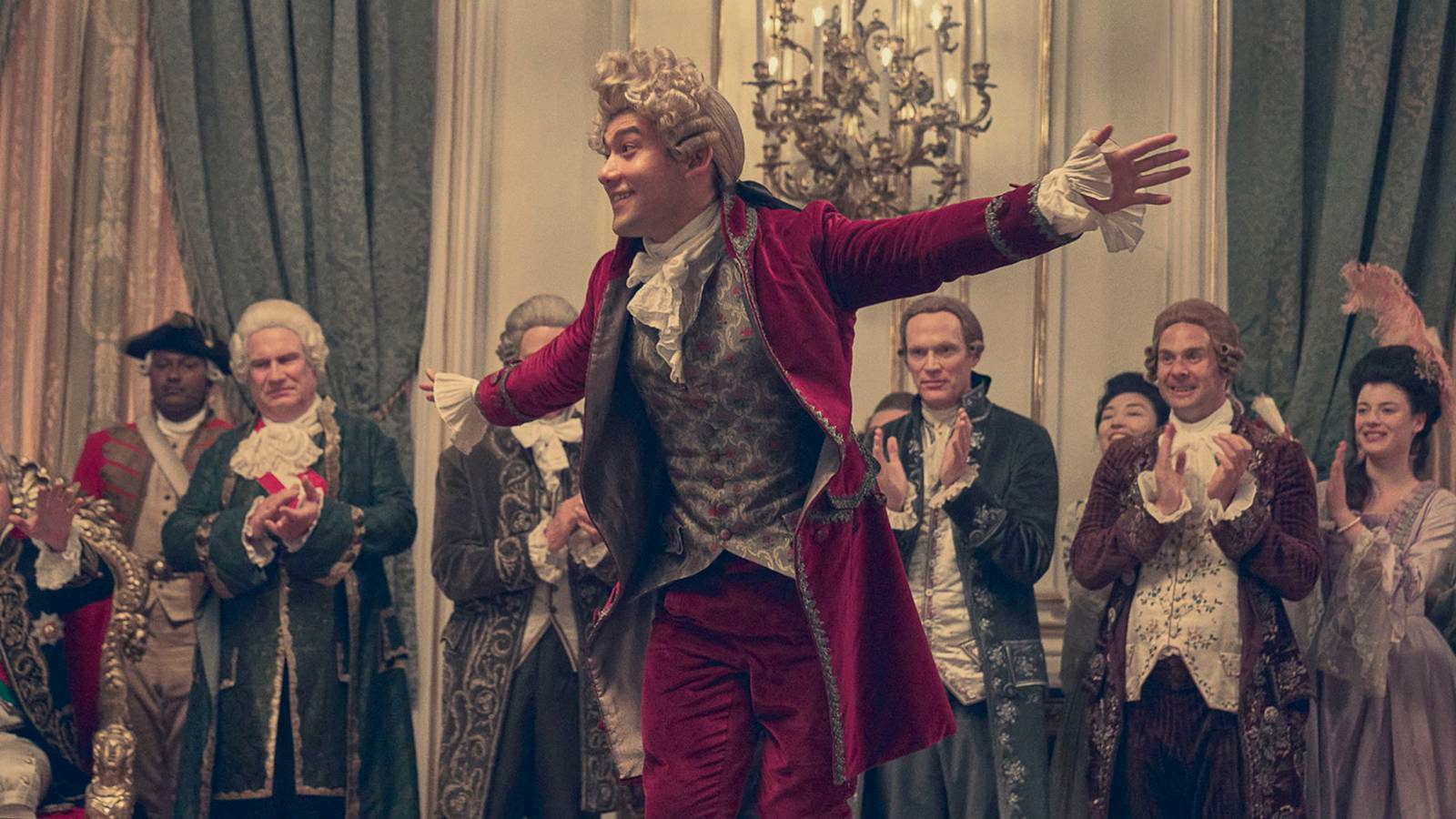
Nearly half a century after Miloš Forman's Oscar-winning film, a new Amadeus arrives on Starz, and it's determined to be anything but reverent. This five-episode limited series, starring Will Sharpe (The White Lotus) as Wolfgang Amadeus Mozart and Paul Bettany as his rival Antonio Salieri, takes Peter Shaffer's stage play and injects it with a modern, anarchic energy. Think The Great meets Harlots—bawdy, chaotic, and unapologetically absurd.
The series wastes no time announcing its intentions. Mozart's genius is central, but it's wrapped in debauchery, ego, and an anachronistic swagger that makes his unraveling both riotous and unsettling. The storytelling mirrors this volatility, swinging between sharp character insights and sequences designed purely to provoke. This push-and-pull—between Mozart and Salieri, and between the audience and the show itself—defines the entire experience.
Performances That Command the Stage
If Amadeus works as well as it does, it's largely because of its leads. Sharpe's Mozart is not the tortured genius of tradition; he's impulsive, naughty, and magnetic—a man who seems incapable of existing within the rigid structures of his time. His scenes with Constanze (Gabrielle Creevy) reveal surprising maturity and vulnerability, grounding the chaos in real emotion.
Opposite him, Bettany's Salieri is a masterclass in controlled fury. Where Sharpe is all fire, Bettany is stillness—a courtier who has spent years mastering restraint, only to find himself unraveling in the presence of Mozart's unmatchable talent. Every small reaction feels loaded, making their rivalry crackle with tension.
Visual Splendor, Emotional Shallowness
Written by Joe Barton (Black Doves) and directed by Julian Farino and Alice Seabright, Amadeus is visually sumptuous. The costumes are extravagant, the locations richly detailed, and the overall aesthetic deliberately heightened and surreal. The production design demands attention, reinforcing that this is a story about spectacle as much as music and murder.
Yet beneath the ornate visuals, the story often feels thin. Emotional arcs—especially for supporting characters—lack depth, leaving certain moments less impactful than they should be. The series is so enamored with its own excess that it loses sight of the quieter, introspective elements that made the original story compelling. Mozart's genius takes a backseat to the chaos, and the rivalry doesn't always carry the same emotional weight as its predecessor.
This version of Amadeus is a spectacle first and a character study second. It's big, bold, and undeniably fun, even when it falters in depth. Shaffer's original story was already criticized for its coarse approach to Mozart, but this adaptation pushes past mild discomfort into truly jaw-dropping lewdness. For viewers willing to embrace its theatricality and historical aversion, there's plenty to enjoy. But those expecting a nuanced or historically grounded exploration will be left wanting more.
For fans of bold adaptations, this Amadeus is a wild ride—just don't go in expecting a definitive portrait. If you're curious about how other adaptations have fared, check out our list of the worst book-to-movie adaptations ever or read about why Netflix's Alias Grace remains a must-watch crime thriller adaptation.