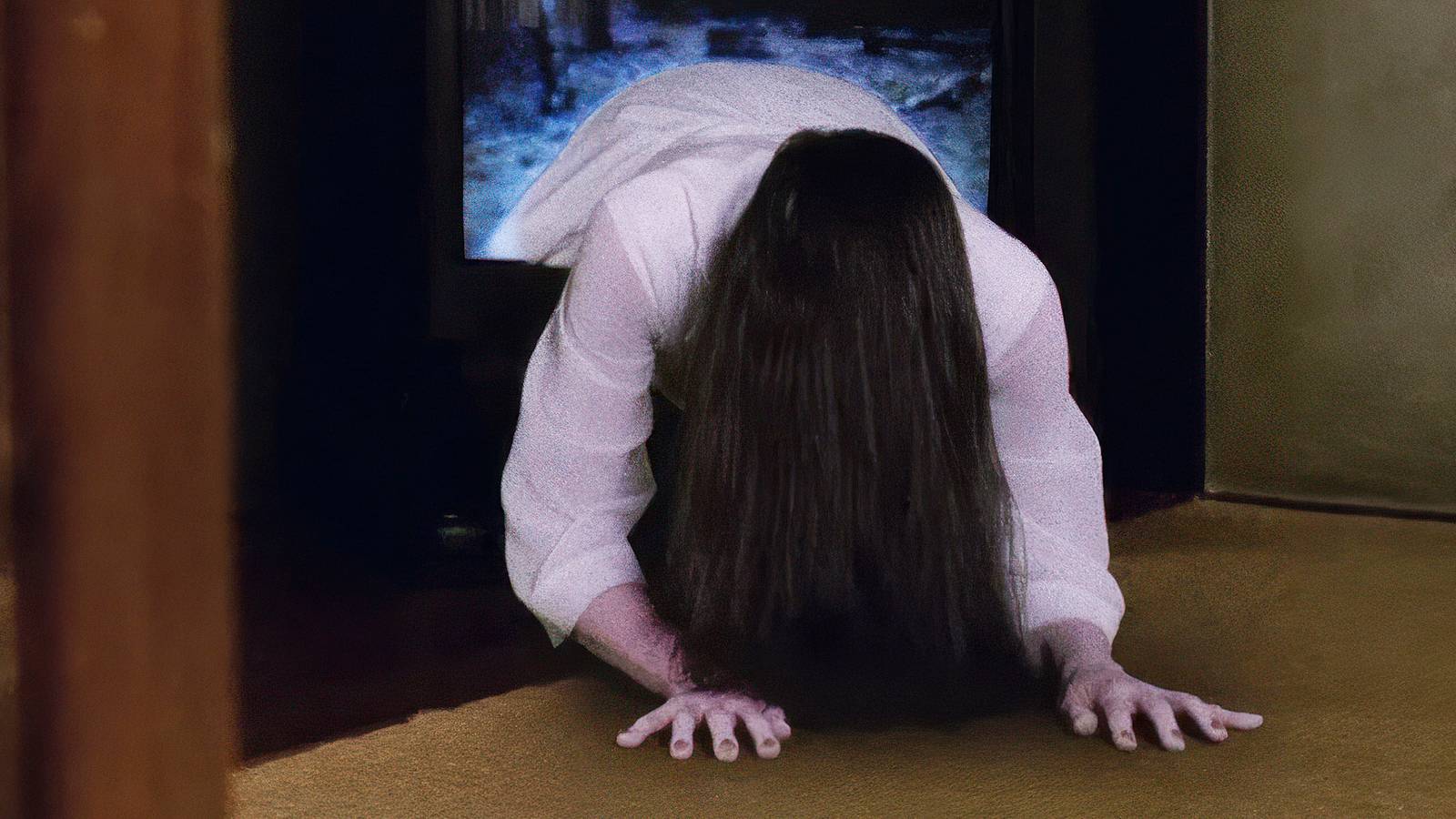
If you only know the story of a cursed videotape that kills you seven days after watching it, you probably picture Samara crawling out of a television in a rain-soaked Pacific Northwest. Gore Verbinski's 2002 remake The Ring became a cultural juggernaut, searing that image into early-2000s pop culture. But for all its slick, blue-tinted terror, it's the 1998 Japanese original—Hideo Nakata's Ringu—that remains the true masterpiece. And surprisingly, many horror fans still haven't seen it.
Verbinski's version is a polished studio nightmare, drenched in icy blues and rain-soaked dread. It's a fantastic horror film, but it plays by Hollywood rules: big scares, dramatic reveals, and a sense of urgency. Ringu operates differently. Its horror is slower, more invasive, almost sickly. Watching it feels less like a carnival ride and more like realizing you've brought something contaminated into your home. The film never chases you; it just keeps moving closer while pretending not to.
What Is 'Ringu' About?
Directed by Hideo Nakata, Ringu follows journalist Reiko Asakawa (Nanako Matsushima) as she investigates a cursed videotape linked to a series of mysterious deaths. Anyone who watches it dies exactly seven days later. This setup has been strip-mined by horror for the last 25 years, but Ringu arrived before the formula became assembly-line material. The film treats the supernatural less like flashy spectacle and more like a disease spreading through ordinary life.
Reiko feels like a real, exhausted adult trying to function under impossible stress. She's not a franchise-ready heroine spouting witty one-liners; she's someone whose nervous system is quietly disintegrating beneath business-casual clothing. This groundedness keeps the horror intimate. Nakata turns familiar spaces—apartments, offices, phone calls—hostile without needing giant effects sequences. The dread accumulates gradually, until the whole movie feels contaminated. A ringing telephone becomes threatening. A long stare becomes unbearable. The silence is deafening.
By the time Sadako Yamamura (Rie Ino'o)—the prototype for Hollywood's Samara—appears, the film has already poisoned the emotional environment. Nakata understands that fear becomes stronger when the audience participates in it. He dares you to imagine something just outside the frame, rather than shoving monsters in your face with orchestral shrieks. This restraint is what makes Ringu so enduringly unsettling.
Sadako: More a Bad Memory Than a Monster
Modern horror often stuffs terrifying concepts into giant mythology ecosystems, where every ghost needs a backstory and a cinematic universe. Nakata knows that the less you understand the curse, the worse it feels. Ringu leaves gaps everywhere. The curse feels ancient, irrational, and partially unknowable—far more frightening than a giant exposition dump about ghost physics. Sadako herself barely behaves like a traditional villain. She's more like a lingering wound that refuses to heal. The film never overuses her, holding her just outside full visibility long enough for your imagination to make terrible decisions on its own.
The influence of Ringu on modern horror is immeasurable. If it never crossed over internationally, the entire 2000s wave of supernatural films—from The Grudge to Pulse to Dark Water—would look very different. You can draw a direct line from Sadako emerging from that television to half the ghost stories that followed, suddenly terrified of their own furniture. For a deeper dive into how horror TV has evolved, check out how Mike Flanagan's Haunting of Hill House car jump scare redefined horror TV.
Honestly, what lingers after Ringu isn't the famous television scene. It's the sensation the movie leaves behind—an oppressive feeling that the curse never stopped moving. It just slipped into another room while everyone else tried to continue living normally around it. That's the mark of a true masterpiece. If you're new to horror and want to explore more classics, check out our guide to 10 perfect horror movies for beginners.