In an era of endless streaming seasons and sprawling franchises, there's a special power in a story that knows exactly when to end. Sci-fi miniseries offer a unique proposition: a single, potent idea explored with laser focus, delivering a complete narrative arc without the bloat. They trap you in a world, test its characters under immense pressure, and leave you with a conclusion that resonates, not a promise for next year.
These limited-run stories often surpass their longer counterparts by embracing discipline. There's no room for tangential subplots or episodes that merely mark time. Every scene builds toward a cohesive whole, using the genre's speculative frameworks not just for spectacle, but as a crucible for human emotion and philosophical inquiry. From bleak dystopias to warm post-apocalyptic tales, the best miniseries feel definitive.

1. 'Watchmen' (2019)
Damon Lindelof's Watchmen is a masterclass in dense, ambitious storytelling. This HBO series, a sequel to the iconic graphic novel, is a politically charged, emotionally raw, and structurally inventive feat. Its genius lies in its economy; despite tackling weighty themes of legacy, trauma, and systemic racism, it never feels sprawling. Regina King's performance as Angela Abar provides an unwavering moral and emotional center, grounding the show's wilder conceits in palpable humanity. The series trusts its audience completely, weaving history, mystery, and superhero lore into a package that feels richer and more complete than many shows with triple its runtime.
2. 'Station Eleven' (2021–2022)
Based on Emily St. John Mandel's novel, Station Eleven transcends its pandemic premise to become a profound meditation on art, memory, and connection. The series elegantly intertwines two timelines: the collapse of civilization and the fragile society that emerges decades later. Mackenzie Davis's Kirsten and Himesh Patel's Jeevan anchor the story with a relationship built on desperate, makeshift care. The finale avoids easy sentimentality, instead offering a messy, partial, and deeply moving vision of healing. It understands that people carry damage forward, yet still find ways to create meaning together, making it an emotional powerhouse. For more stories that reveal new layers upon revisiting, explore The Rewatch Revolution.
3. 'Devs' (2020)
Alex Garland's cerebral FX miniseries Devs is a chilling exploration of determinism and free will. When software engineer Lily Chan (Sonoya Mizuno) investigates the mysterious death of her boyfriend at a secretive quantum computing division, she uncovers a truth that challenges the very nature of reality. Nick Offerman is mesmerizing as Forest, the cult-like leader of the project, who believes his machine can see an unchangeable future. The show creates an atmosphere of eerie, philosophical dread, tightening its grip with each episode as Lily's grief transforms into relentless momentum. It's a heady, visually stunning puzzle that leaves a lasting impression.
4. 'Maniac' (2018)
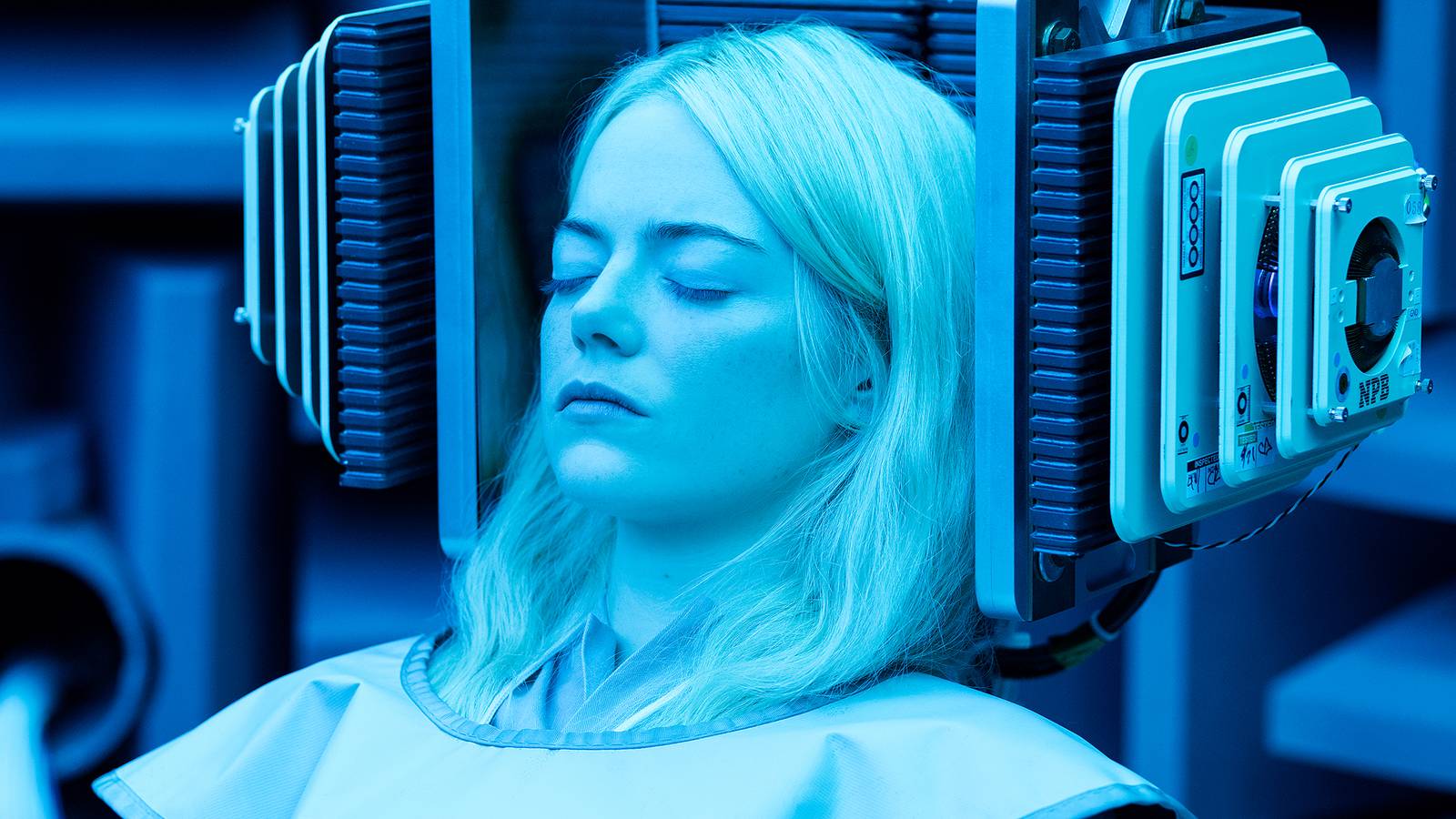
This Netflix gem, starring Emma Stone and Jonah Hill, is a genre-bending odyssey into the human psyche. Two strangers, Annie and Owen, enter a controversial pharmaceutical trial that sends them into a series of vivid, hallucinatory simulations. While these sequences are wildly inventive—spanning fantasy epics, 1940s noir, and more—they consistently serve the core emotional story. Each bizarre scenario strips away another layer of its protagonists' defenses, revealing their shared loneliness and desperate need for authentic connection. The payoff is profoundly earned, offering a catharsis that feels genuine because the series never loses sight of its characters' inner wounds.
5. 'The Expanse' (2015–2022)
While technically a multi-season series, The Expanse earns its place here by embodying the precision and consequence-driven storytelling that defines the best miniseries. Beginning as a noir-tinged mystery in a fully realized solar system, it evolves into a grand political saga without ever wasting a moment. The science feels tangible, making space a genuinely hostile environment. Characters like James Holden (Steven Strait), Naomi Nagata (Dominique Tipper), and the formidable Chrisjen Avasarala (Shohreh Aghdashloo) grow and change across seasons where every action has a reaction. Its narrative discipline makes it binge-worthy and deeply satisfying. Fans of smart, contained sci-fi should also check out Prime Video's 'Night Sky' for another clever twist on the genre.
6. 'Years and Years' (2019)
This BBC and HBO collaboration is a terrifyingly plausible family saga shot through with near-future sci-fi. Tracking the Manchester-based Lyons family over 15 years of political, technological, and social upheaval, the show feels less like prediction and more like acceleration. Emma Thompson is brilliantly unsettling as the populist politician Vivienne Rook. The series uses its limited run to devastating effect, compressing the anxieties of our time into a relentless emotional journey that asks what remains of our humanity when the world changes faster than we can adapt.
7. 'Chernobyl' (2019)
Though historical, Craig Mazin's Chernobyl operates with the terrifying logic of the finest sci-fi horror. It meticulously documents the 1986 nuclear disaster and the devastating cover-up that followed, creating almost unbearable suspense from known facts. The series is a stark examination of institutional failure, the cost of lies, and the quiet heroism of those who spoke truth. Its five episodes form a perfect, harrowing arc, leaving viewers with a profound sense of dread and awe. Its impact is a testament to the power of a tightly wound, singular narrative vision.
8. 'The Queen's Gambit' (2020)
While not traditional sci-fi, this Netflix phenomenon uses the same focused miniseries format to create a mesmerizing, internal universe. Following chess prodigy Beth Harmon (Anya Taylor-Joy) through her rise in the 1960s chess world, the show visualizes strategy and genius with the intensity of a psychological thriller. Its contained seven-episode structure allows for a deep, satisfying character study, tracing Beth's triumphs and struggles with addiction to a definitive and emotionally resonant conclusion. It proves that the "limited series" model can perfect any genre.
9. 'The Outsider' (2020)
Beginning as a gritty crime procedural and slowly unraveling into supernatural horror, HBO's The Outsider, based on Stephen King's novel, masterfully maintains its eerie tension across ten episodes. The investigation into the gruesome murder of a young boy leads detective Ralph Anderson (Ben Mendelsohn) and unorthodox investigator Holly Gibney (Cynthia Erivo) to confront an entity that defies rational explanation. The show benefits from its predetermined length, allowing the mystery to deepen and the horror to escalate without losing its grim, atmospheric grip or resorting to filler. For another dose of tense, must-watch television, dive into DTF St. Louis.
These nine series demonstrate that in science fiction and beyond, sometimes less truly is more. By committing to a concise vision, they achieve a narrative purity and emotional impact that longer formats often struggle to sustain. They offer complete worlds, full journeys, and the rare satisfaction of a story that knows exactly what it wants to say—and says it perfectly.