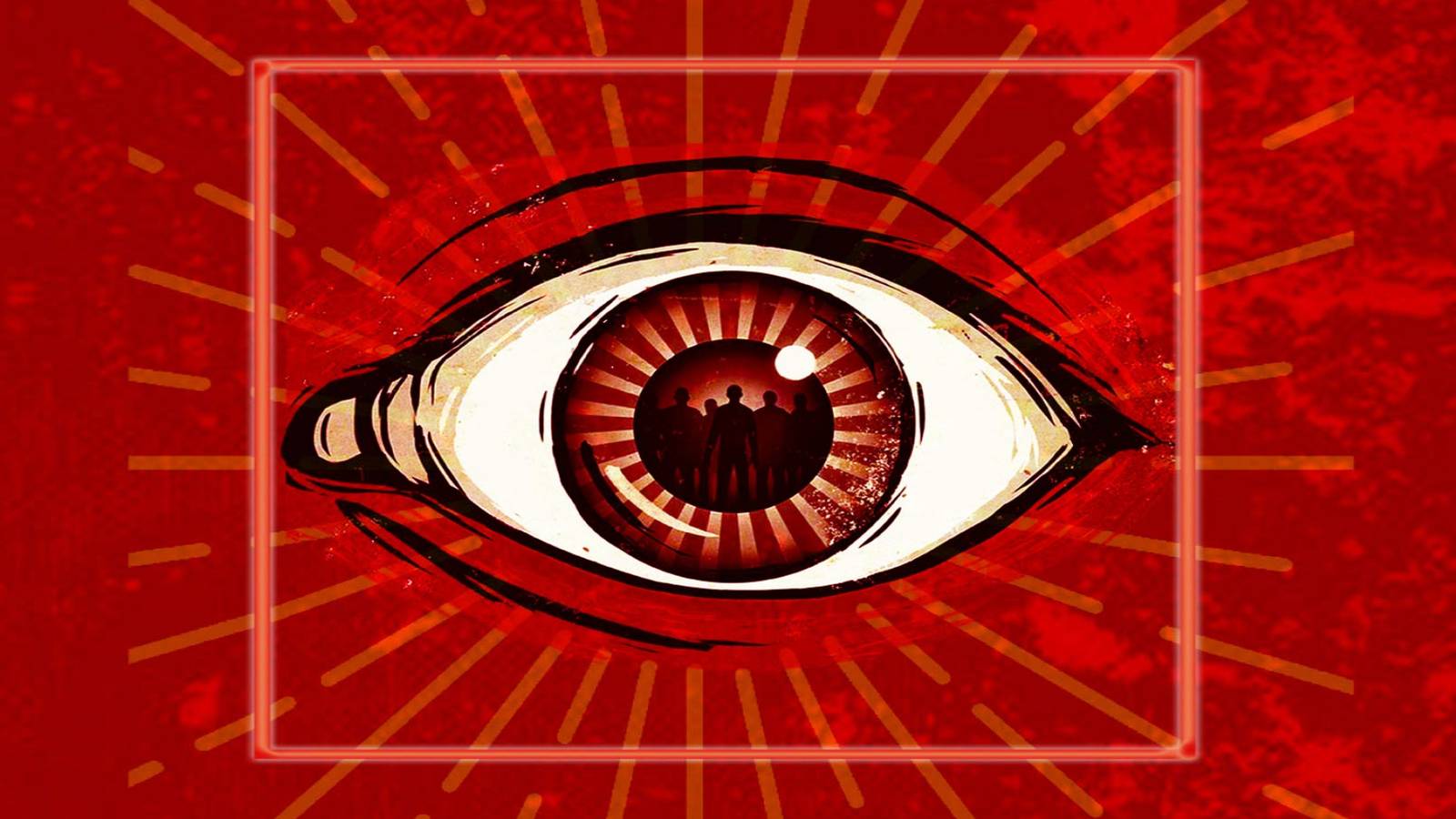
Science fiction has long been a mirror to our own world, reflecting our fears, hopes, and anxieties through the lens of the fantastical. While the genre thrives across film, television, and streaming, it's in literature that sci-fi truly stretches its legs, exploring ideas with a depth that other media often can't match. Among the genre's towering achievements, George Orwell's Nineteen Eighty-Four stands as a chilling prophecy, its influence undiminished since its publication in 1949.
Orwell's dystopian masterpiece has become a cultural cornerstone, shaping countless stories and even our everyday vocabulary with terms like "thoughtcrime" and "doublethink." Its vision of a totalitarian future, ruled by the omnipresent Big Brother, feels eerily prescient in an age of surveillance and misinformation. But it's the novel's final line—a stark, four-word declaration—that delivers the most devastating blow, a conclusion that has lost none of its power over the decades.
The World of 1984
Set in a future dominated by the superstate Oceania, 1984 follows Winston Smith, a low-ranking member of the Ministry of Truth. His job is to rewrite historical records to align with the Party's ever-shifting narrative, a task that slowly erodes his loyalty. In secret, Winston begins a forbidden affair with Julia, a fellow worker, and together they dare to dream of rebellion. But their defiance is short-lived, as they are betrayed and captured by the Thought Police, the very embodiment of the state's control.
The novel's third act is a harrowing descent into psychological torment. Winston is subjected to brutal torture and reconditioning, culminating in a confrontation with his deepest fear in Room 101. By the end, he is a broken man, his spirit crushed, and his love for Julia replaced by a hollow acceptance of the Party's doctrine.
The Final Line's Devastating Impact
The book concludes with Winston, now a shell of his former self, watching a news report of yet another victory for Oceania. In that moment, he feels a genuine, unforced love for the regime that has destroyed him. The final words—"He loved Big Brother"—are a gut punch, a testament to the complete annihilation of individuality and the triumph of totalitarianism.
What makes this line so powerful is its simplicity. It's not a dramatic declaration or a poetic flourish; it's a quiet, matter-of-fact statement that underscores the horror of Winston's transformation. The reader is left to sit with the weight of that sentence, to process the full extent of the Party's victory. It's a rare ending that offers no hope, no redemption, only the chilling certainty that the system has won.
In the years since its release, 1984 has been adapted, referenced, and analyzed countless times, but its final line remains a benchmark for dystopian fiction. It's a reminder that the most terrifying futures are not those filled with monsters or aliens, but those where the human spirit is systematically crushed. As we continue to grapple with issues of privacy, truth, and power, Orwell's words resonate more than ever, a stark warning that we must never take our freedoms for granted.
For fans of dystopian storytelling, the impact of 1984 is undeniable. Its influence can be seen in everything from polarizing finales to the best fantasy films that explore similar themes of resistance and control. And while the novel's ending is bleak, it's precisely that bleakness that makes it so unforgettable, a literary achievement that continues to challenge and disturb readers nearly eight decades later.