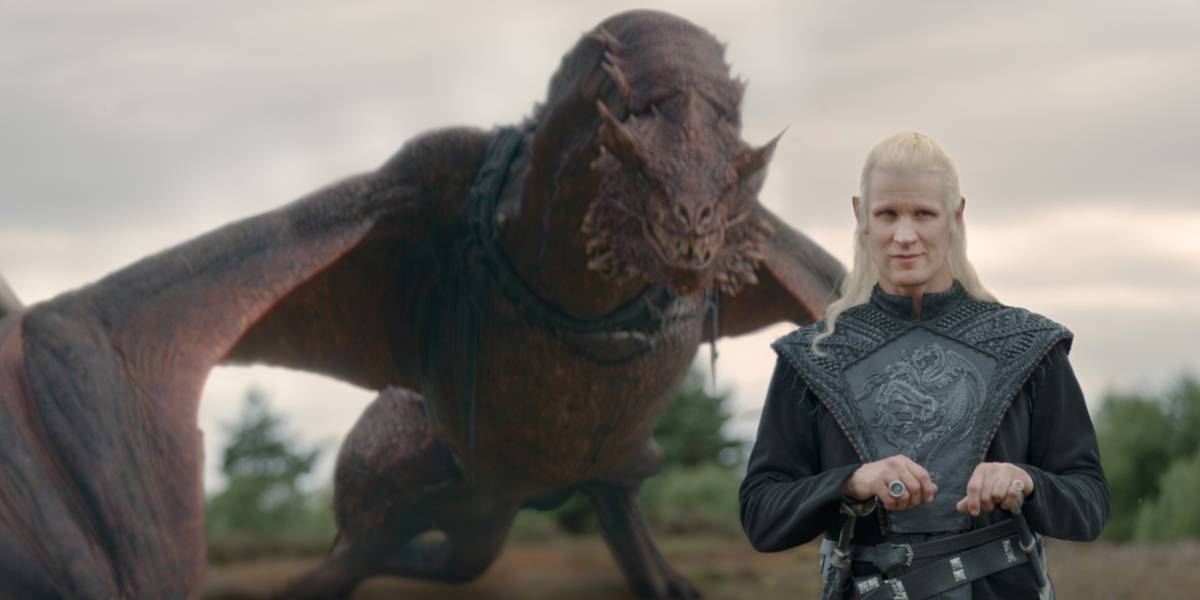
When House of the Dragon first took flight, fans were thrilled to see the Targaryen dynasty at the height of its power, with dragons soaring over King's Landing and beyond. But as the series has progressed, a nagging issue has emerged: the sizes of these magnificent beasts just don't add up. While Vhagar, the oldest and largest of the Targaryen mounts, gets the awe-inspiring scale she deserves, the rest of the dragons seem to have been scaled down to fit the screen, creating a jarring inconsistency that Game of Thrones never had to grapple with.
In Game of Thrones, Daenerys's three dragons—Drogon, Rhaegal, and Viserion—grew at a believable pace, starting as hatchlings and gradually becoming the fearsome weapons that would conquer cities. Their growth was a central part of the story, and the showrunners made sure their sizes were consistent with the timeline. By the final season, Drogon was a true monster, capable of leveling the Red Keep. That sense of scale made the dragons feel real and terrifying.
House of the Dragon, set nearly 200 years earlier, should feature dragons that are even larger and more numerous. Yet, aside from Vhagar, most of the dragons—like Syrax, Caraxes, and Meleys—appear to be roughly the same size, often looking smaller than they should be given their age and the lore. In the books, Caraxes is described as a massive, fearsome beast, but on screen, he often seems barely larger than Daenerys's dragons in their prime. This discrepancy is particularly noticeable in scenes where multiple dragons appear together, as their relative sizes are all over the place.
The issue isn't just about fan nitpicking; it affects the story's credibility. When we see Rhaenyra and Daemon riding their dragons into battle, we should feel the weight of these ancient creatures. Instead, we're left scratching our heads, wondering why Syrax, who is supposed to be a formidable dragon, looks like she could be outmuscled by a young Drogon. This inconsistency undermines the show's otherwise stellar production design and visual effects.
One possible explanation is that the showrunners are prioritizing visual clarity over strict adherence to lore. Having a dozen dragons of wildly different sizes might be visually confusing, especially in crowded battle scenes. But Game of Thrones proved that you can have dragons of varying sizes and still make it work—just look at the difference between Drogon and his brothers in the later seasons. The key is to establish a clear scale and stick to it.
Another factor could be the practicalities of filming. Building and animating a giant dragon is expensive, and the show might be cutting corners by reusing models or scaling them down to fit the budget. However, House of the Dragon is one of HBO's biggest hits, and it's disappointing to see such a glaring flaw in a show that otherwise prides itself on quality. As Game of Thrones continues to dominate streaming, the prequel has big shoes to fill, and these size issues are a misstep.
Fans have also pointed out that the dragons' growth rates don't match the show's timeline. The series jumps forward in time, and while the human characters age, the dragons seem to stay the same size. This is especially noticeable with Syrax, Rhaenyra's dragon, who is present from the start and should be significantly larger by the time the Dance of the Dragons begins. Instead, she looks the same in every episode, making the passage of time feel less real.
Despite these criticisms, House of the Dragon remains a must-watch for fantasy fans. The political intrigue, character drama, and epic battles are all top-notch, and the dragons, even if their sizes are off, are still a spectacle to behold. But as the series continues, we hope the showrunners will take note of these inconsistencies and give us dragons that truly feel like the legendary beasts of Westeros. After all, if the dragons don't feel real, the stakes of the Dance of the Dragons lose their impact.
In the meantime, fans can debate the sizes of these fictional creatures to their hearts' content. It's a testament to the show's immersive world that we care so much about the details. And who knows? Maybe future episodes will address these scaling issues and give us the giant, awe-inspiring dragons we've been waiting for. Until then, we'll keep our eyes on the skies and hope for a little more consistency in the dragon department.