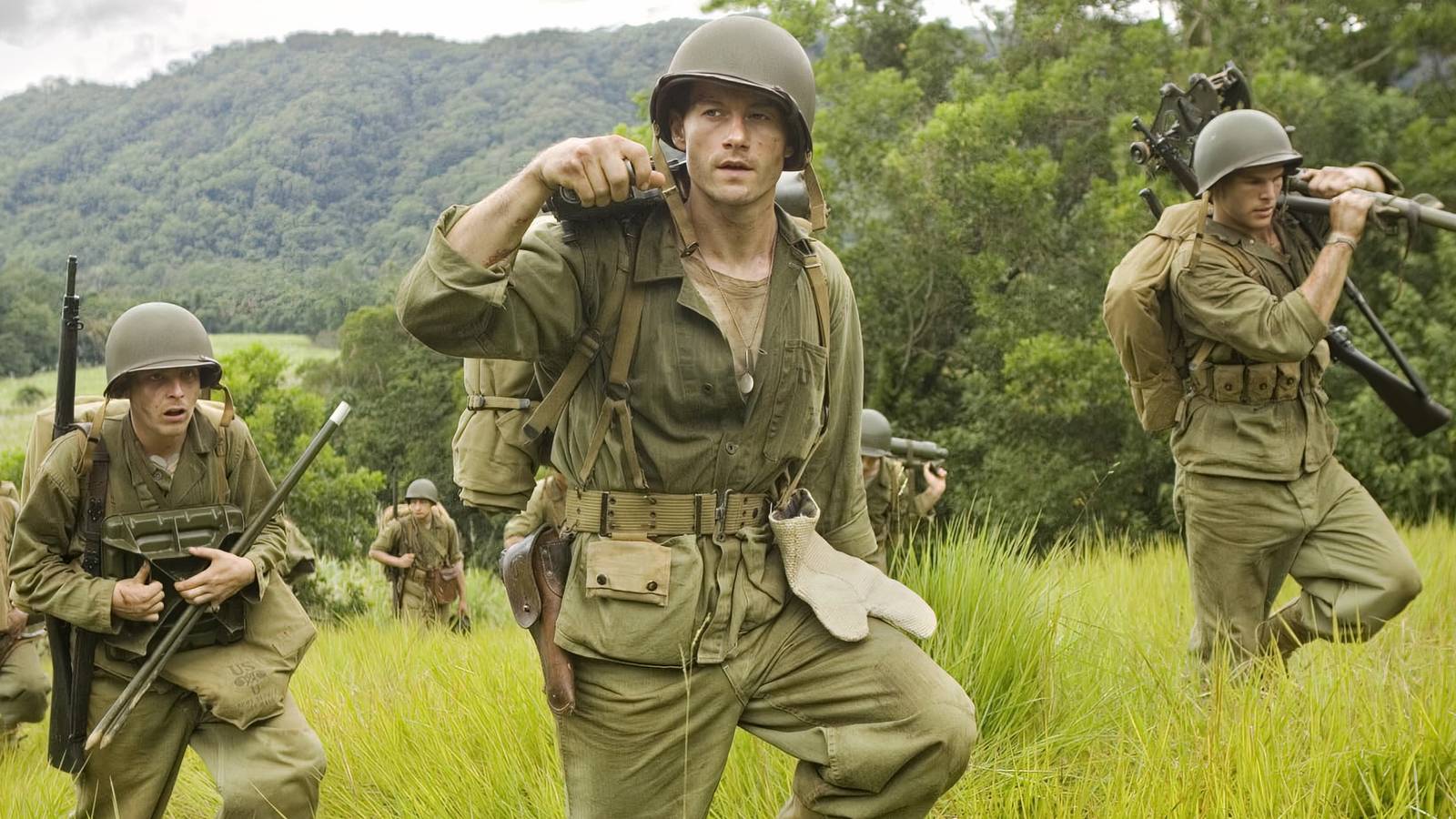
World War II remains the most devastating conflict in human history, and its stories have fueled countless films and TV shows. Among them, HBO's The Pacific stands apart as one of the most powerful and unflinching portrayals ever created. Premiering in 2010, this 10-episode miniseries is a spiritual successor to Band of Brothers, but it carves its own brutal identity by focusing on the Pacific Theater and the Marines who fought there.
Unlike the more poetic Band of Brothers, The Pacific feels like a nightmare. It doesn't shy away from the horror, exhaustion, and moral complexity of war. The series follows three real-life Marines: Robert Leckie (James Badge Dale), Eugene Sledge (Joseph Mazzello), and John Basilone (Jon Seda). Their stories unfold across key campaigns like Guadalcanal, Peleliu, Iwo Jima, and Okinawa, offering a ground-level view of some of the war's toughest battles.
What makes The Pacific so compelling is its intimate focus. Before the chaos of combat, we see quiet moments—family dinners, letters home, the weight of enlistment. These scenes make the violence that follows even more devastating. The series doesn't glorify war; it shows why young men signed up and what it cost them.
The miniseries is rooted in firsthand accounts, primarily Eugene Sledge's memoir With the Old Breed and Robert Leckie's Helmet for My Pillow. Additional material comes from Chuck Tatum's Red Blood, Black Sand. This dedication to authenticity gives the show a raw, documentary-like feel. Executive producers Steven Spielberg, Tom Hanks, and Gary Goetzman, along with writer Bruce McKenna (who also worked on Band of Brothers), ensured every detail rang true.
Upon release, The Pacific earned widespread acclaim and 24 Emmy nominations, winning eight including Outstanding Miniseries. It was HBO's most expensive production at the time, and the investment shows in its stunning visuals and visceral battle sequences. While some critics noted its narrative is more fragmented than Band of Brothers, that structure mirrors the chaotic, sprawling nature of the Pacific campaign itself.
For fans of the best miniseries of the last decade, The Pacific is essential viewing. It also paved the way for later war dramas like Apple TV+'s Masters of the Air, which adopted a similar approach of blending large-scale battles with personal stories. But The Pacific remains unmatched in its emotional intensity and historical rigor.
Nearly 15 years later, The Pacific still delivers a gut-punch. It's not just a war series—it's a haunting meditation on sacrifice, survival, and the human cost of conflict. If you haven't watched it, now is the time. And if you have, it's worth revisiting to appreciate its craft and courage.