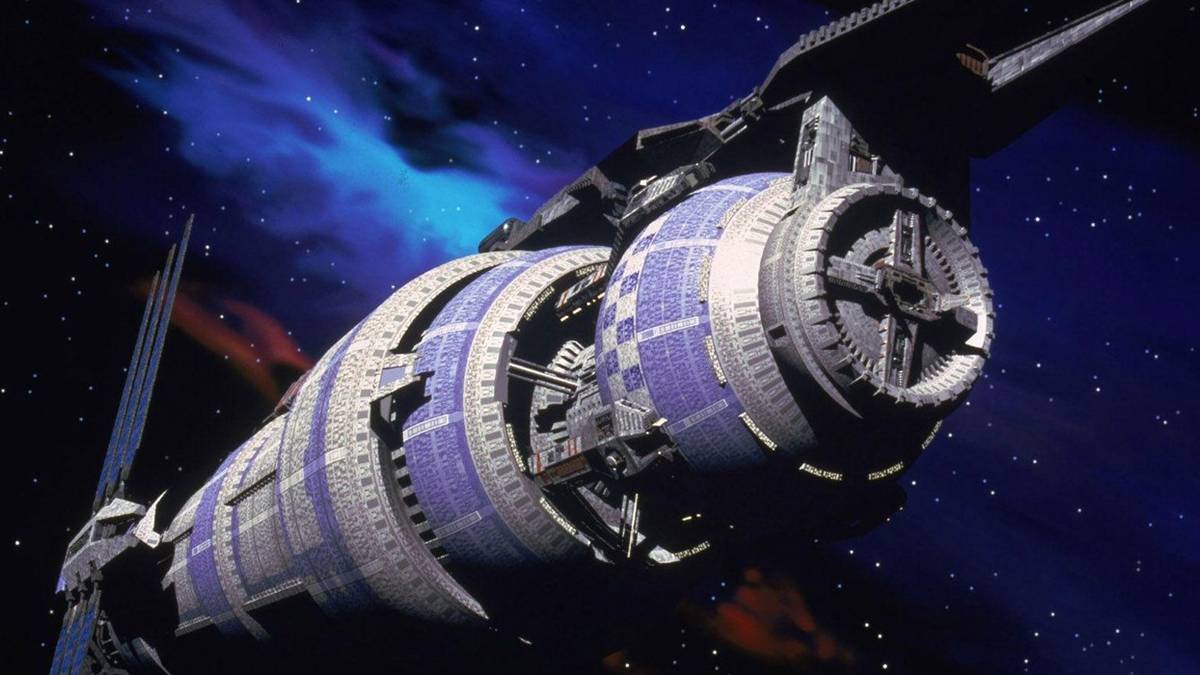
When it comes to sci-fi reboots that outshine their predecessors, Battlestar Galactica often tops the list. Ronald D. Moore's gritty reimagining proved that television could handle a space opera with real-world gravitas, steering clear of the Star Wars and Star Trek formulas. But for all its brilliance, the series finale, "Daybreak," left a sour taste for many viewers. The revelation that humanity descends from Cylons—killer robots, no less—felt like a narrative stretch too far. Even Moore himself has admitted second thoughts, telling San Diego Comic-Con last year, "A part of me wishes I hadn't done that."
If you're among those who found that ending unsatisfying, there's a hidden gem that delivers everything Battlestar Galactica promised but with a conclusion that actually lands: Babylon 5. Created by J. Michael Straczynski, this five-season epic was meticulously planned from the start, with a definitive arc that builds to a deeply resonant finale. It's a masterclass in long-form storytelling, and it might just be the sci-fi series that perfected what Battlestar started.

A Slow Burn That Pays Off
At first glance, Babylon 5 seems like a simple diplomatic hub—a neutral space station where alien races hash out their differences. But Straczynski had a grander vision. The show slowly unravels a massive intergalactic conflict, beginning with Commander Jeffrey Sinclair (Michael O'Hare) struggling with gaps in his memory from a war against the Minbari. As the mystery deepens, we learn that Sinclair may carry the soul of Valen, a legendary Minbari prophet, setting the stage for an epic confrontation with the Shadows, an ancient and malevolent alien race.
When John Sheridan (Bruce Boxleitner) takes over as commander, the series shifts into high gear. Sheridan leads an alliance against the Shadows, while also dealing with Earth's descent into fascism—a storyline that culminates in Babylon 5 seceding from the Earth Alliance. These interwoven plots, from telepath conflicts to political intrigue, all feed into a cohesive narrative that feels earned and inevitable.
Characters Who Evolve
What truly sets Babylon 5 apart is its character development. Sinclair transforms from a haunted soldier into a mythic figure, eventually becoming Valen himself. G'Kar (Andreas Katsulas) and Londo (Peter Jurasik) start as bitter rivals representing warring races, but their arcs take them to unexpected places—G'Kar becomes a spiritual leader, while Londo rises to power as Centauri emperor, only to be manipulated by the Shadows. These transformations aren't just for shock value; they're the natural result of the show's carefully constructed plot.
This depth of character is something Battlestar Galactica also excelled at, but Babylon 5 had the advantage of a pre-planned ending. The series finale, "Sleeping in Light," brings everything full circle: Babylon 5 is decommissioned, and Sheridan gathers his friends for one last farewell before passing on. It's a poignant, emotionally satisfying conclusion that respects the journey.
Overcoming the Odds
Getting Babylon 5 to the screen was a battle in itself. Straczynski spent five years pitching the show, facing setbacks like a cracked tooth that left him unable to speak clearly during a crucial meeting. He also had to contend with Star Trek: Deep Space Nine, which debuted a year earlier with a similar premise—a space station commander caught in an intergalactic war. The shadow of that franchise loomed large, but Babylon 5 carved its own identity.
The biggest hurdle came in 1997 when PTEN, the network airing the show, shut down due to corporate restructuring. Fortunately, TNT picked up the final season, allowing Straczynski to complete his vision. This resilience is part of why the show remains a beloved classic, and it's a testament to the power of a well-executed plan.
For those who crave a sci-fi saga with a satisfying payoff, Babylon 5 is a must-watch. It's a reminder that sometimes the journey matters less than the destination—and that a great ending can make all the difference. If you're looking for more underrated gems, check out our list of forgotten sci-fi masterpieces.