Letting language barriers dictate your movie choices is one of the surest ways to miss out on the decade's most electrifying cinema. Since 2020, filmmakers outside Hollywood have delivered some of the sharpest romances, most unsettling moral dilemmas, and most poignant family sagas—often making the typical awards-bait prestige picture look timid by comparison. Subtitles do the heavy lifting, but the real work is in the storytelling.
These six films span wildly different genres and tones, yet they share a fearless commitment to exploring the human condition. That diversity is precisely why international cinema feels so vital right now. And while we won't dive into Bollywood here, if you're curious, don't miss Main Vaapas Aunga if it's streaming in your region. But for now, here are six international standouts of the 2020s, ranked.

6. The Worst Person in the World (2021)
Julie (Renate Reinsve) can't seem to settle on what her life should be. Medicine becomes psychology, psychology becomes photography, relationships shift, and adulthood keeps arriving without the certainty everyone promised. The Worst Person in the World breaks this chaos into twelve chapters, plus a prologue and epilogue, without pretending Julie's contradictions can be neatly resolved.
The famous sequence where Oslo freezes while Julie runs toward Eivind (Herbert Nordrum) captures the film's essence: romantic, selfish, impulsive, and utterly relatable. Her relationship with older comic-book artist Aksel (Anders Danielsen Lie) carries a different weight as love and compatibility drift apart. Director Joachim Trier lets Julie be funny, frustrating, affectionate, avoidant, and occasionally awful—without turning her into a problem to be solved. That honesty resonates with anyone who's hit adulthood and thought, "Wait, this is where I'm supposed to know what I'm doing?"
5. Decision to Leave (2022)
Detective Hae-jun (Park Hae-il) investigates a man's fall from a mountain, and the widow, Seo-rae (Tang Wei), becomes his obsession. Decision to Leave starts as a murder mystery but morphs into something far stranger, where surveillance feels like intimacy and professional curiosity blurs into attraction.
Park Chan-wook makes that obsession tangible. Hae-jun watches Seo-rae from across the city, mentally placing himself beside her. Translation apps become part of their flirtation because language itself creates tiny distances. Mountains, fog, wallpaper, photographs, and the sea all seep into the mystery without feeling like contrived clues. Even Hae-jun's insomnia proves useful—he's a man already living slightly outside ordinary life. The romance is sexy precisely because it's restrained; no one needs to tear their clothes off for the room to feel dangerous.
4. I'm Still Here (2024)
Before politics crashes through the front door, the Paiva household feels wonderfully alive. Children run in and out, friends visit, music plays, arguments erupt, the beach is nearby, and family photos capture ordinary happiness. Then Rubens Paiva (Selton Mello) is taken by agents of Brazil's military dictatorship, and I'm Still Here stays with the wife and children who must continue living while the state refuses to explain what happened.
Eunice Paiva (Fernanda Torres) becomes the center without being reduced to an inspirational symbol. She has children to protect, questions no one will answer, finances to manage, and the maddening need to stay functional while government intimidation invades private life. Director Walter Salles makes the earlier warmth essential because the loss is measured against those noisy dinners and casual afternoons. The family camera becomes especially affecting—pictures keep insisting these people had whole lives outside the political violence. That's what makes the film hurt. History arrives in textbooks as dates and regimes; here, it enters a house and leaves an empty chair.
3. Anatomy of a Fall (2023)
Samuel (Samuel Theis) is found dead beneath the family's Alpine home, and suspicion falls on his wife, Sandra Voyter (Sandra Hüller). Anatomy of a Fall does something far more interesting than asking whether she pushed him. Their marriage gets hauled into court, translated into arguments, recordings, resentments, career jealousy, parenting decisions, and fragments that suddenly must mean something definitive to strangers.
The details are painfully specific. Samuel had been blasting an instrumental version of 50 Cent's "P.I.M.P." before his death, and the song later becomes part of the courtroom's attempt to reconstruct the atmosphere inside the house. A recorded marital argument is dissected as if one ugly conversation can explain years between two people. Their visual world—the chalet's steep stairs, the attic window, the dog—becomes evidence. The film refuses easy answers, leaving you unsettled long after the verdict.
2. The Zone of Interest (2023)
Jonathan Glazer's The Zone of Interest is a chilling examination of banality and evil. Set in a idyllic home adjacent to Auschwitz, the film follows the Höss family as they live their daily lives—gardening, swimming, celebrating birthdays—while the horrors of the camp remain just out of frame, heard but not seen.
Glazer's approach is radical: he refuses to show the atrocities, forcing viewers to confront the comfortable indifference of those who chose to look away. The film's sound design is its most devastating tool, with distant gunshots and screams bleeding into the family's domestic soundtrack. It's a film that lingers like a stain, a stark reminder that the worst crimes often happen in plain sight, facilitated by ordinary people. This is not an easy watch, but it's an essential one—a masterpiece that redefines what Holocaust cinema can be.
1. Parasite (2019) — A Decade-Defining Omission?
Wait, you might say, Parasite came out in 2019. True, but its influence looms large over the 2020s. Bong Joon-ho's Oscar-winning class satire remains the benchmark for international cinema's global breakthrough. Yet, for this list, we're focusing on films released in the 2020s. So, our number one is...
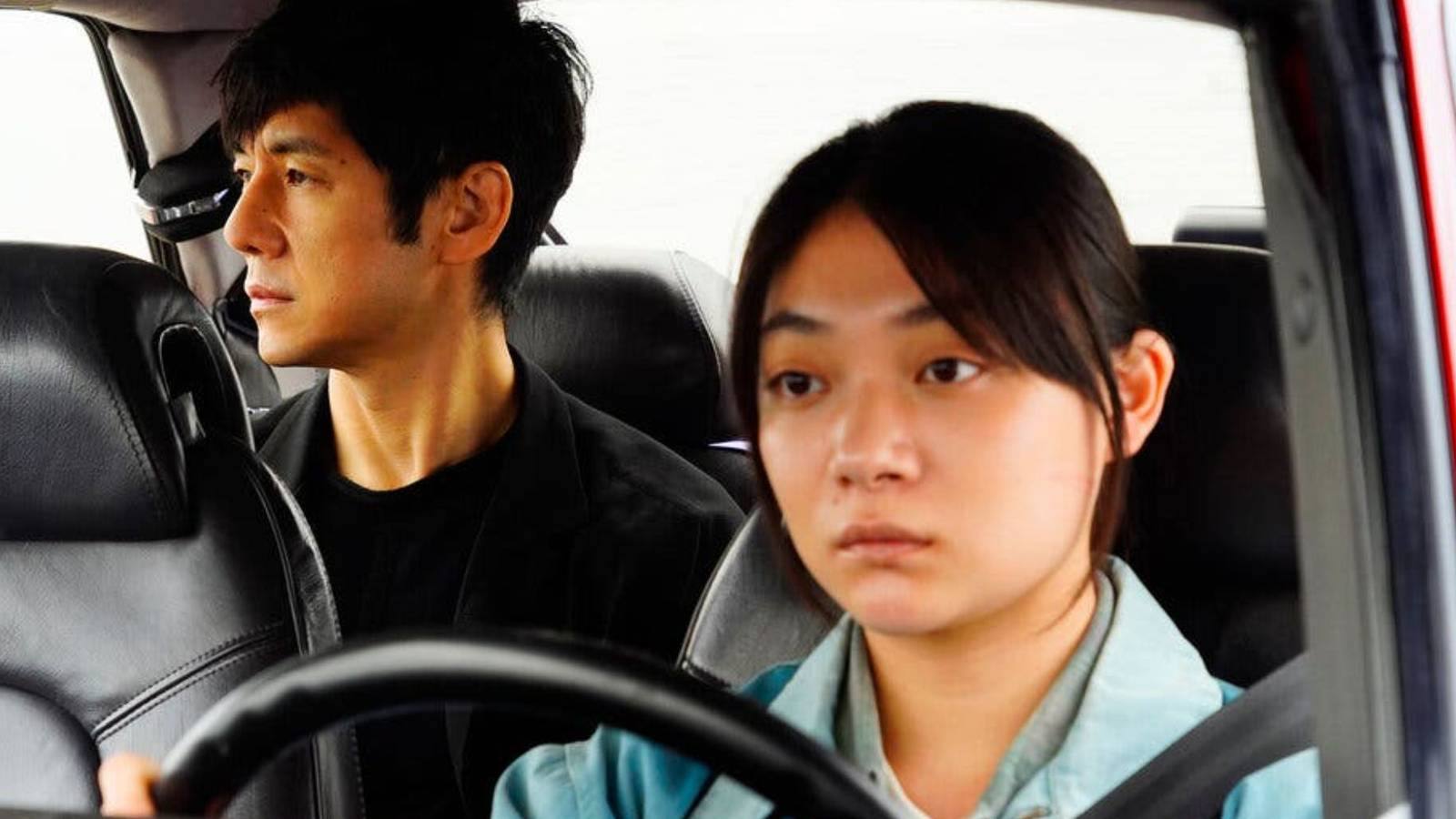
Actually, let's reconsider. The decade's best international film so far might be Drive My Car (2021). Ryusuke Hamaguchi's three-hour meditation on grief, art, and connection follows a theater director (Hidetoshi Nishijima) who, after his wife's death, stages a multilingual production of Uncle Vanya with a young driver (Toko Miura). The film's quiet power builds slowly, culminating in a catharsis that feels earned. It's a work of profound empathy, proving that cinema can bridge cultural and linguistic divides. That's why it takes the top spot.
These six films—from the romantic chaos of The Worst Person in the World to the haunting restraint of The Zone of Interest—showcase the decade's boldest filmmaking. They remind us that the best stories don't need to be in English to resonate. So, next time you're scrolling, don't let subtitles scare you off. You might just find your new favorite film.