Hard science fiction is a rare breed in cinema—a genre that dares to ground its wildest ideas in real-world physics, astronomy, and technology. Since the turn of the millennium, visionary directors like Christopher Nolan, Denis Villeneuve, and Spike Jonze have pushed the boundaries, delivering films that feel both plausible and profoundly human. These movies don't just entertain; they make us ponder our place in the universe, the ethics of artificial intelligence, and the resilience of the human spirit. Here are the six best hard sci-fi movies released since 2000, ranked for their scientific rigor, emotional impact, and lasting influence.
6. Ex Machina (2014)
Alex Garland's directorial debut is a masterclass in minimalist sci-fi. Ex Machina centers on Caleb (Domhnall Gleeson), a young programmer invited to the secluded estate of his CEO, Nathan (Oscar Isaac), to administer a Turing Test on a humanoid robot named Ava (Alicia Vikander). The film's brilliance lies in its restraint—no explosions, no alien invasions, just a tense psychological drama that explores consciousness, manipulation, and the ethics of creation. Vikander's performance earned widespread acclaim, and the film's grounded depiction of AI feels eerily plausible. It's a must-watch for anyone fascinated by the intersection of technology and humanity.

5. Gravity (2013)
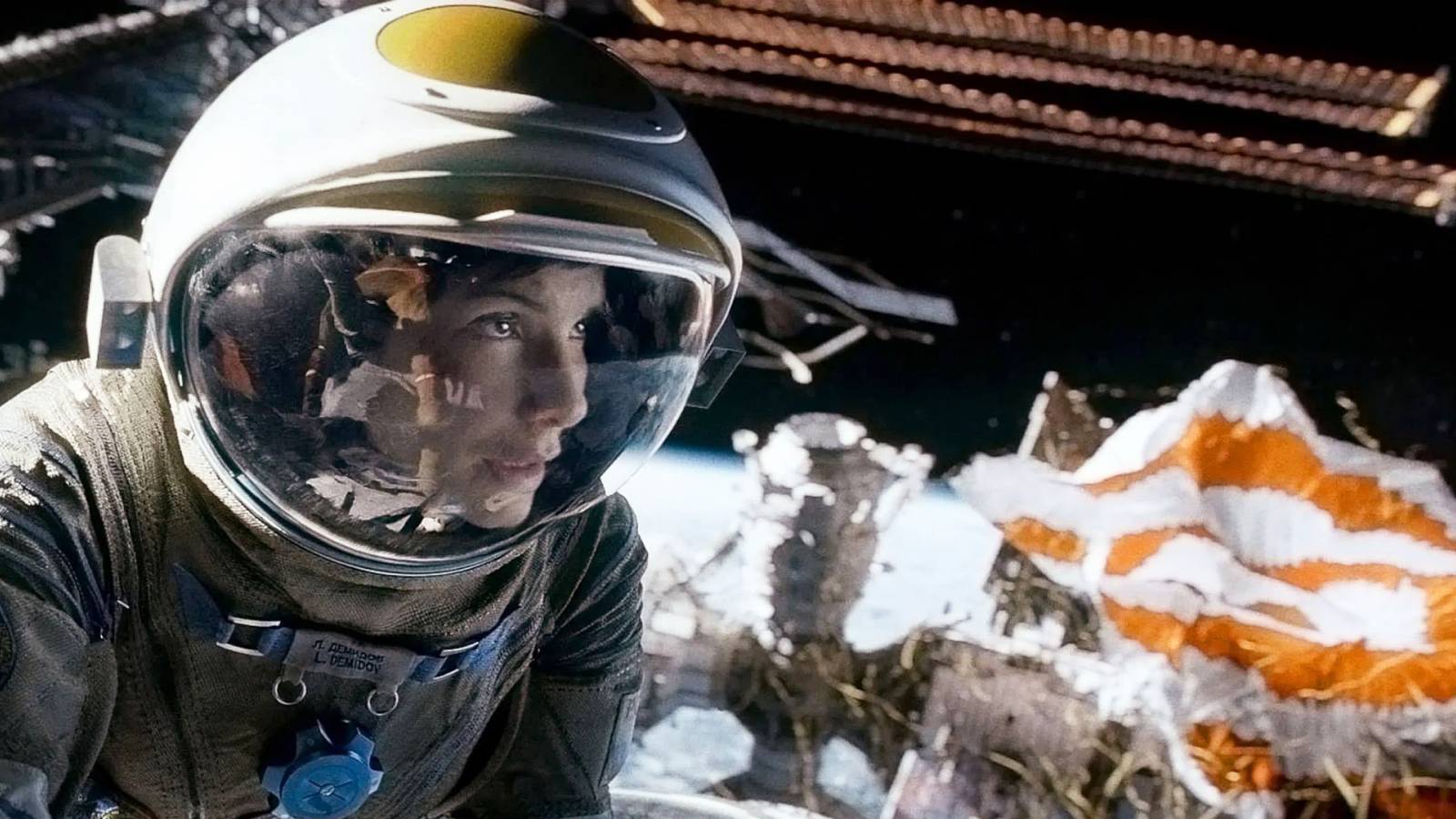
Alfonso Cuarón's Gravity is a visceral survival story set in the unforgiving vacuum of space. Sandra Bullock plays Dr. Ryan Stone, a medical engineer stranded after a debris field destroys her shuttle, with George Clooney as her seasoned astronaut companion. The film's commitment to realistic orbital physics—endorsed by NASA astronauts like Buzz Aldrin—makes every moment of silence and every tumbling spin feel terrifyingly authentic. While it takes a few narrative liberties, its seven Academy Awards, including Best Director and Best Visual Effects, underscore its technical and emotional achievement. Gravity proves that hard sci-fi can be both a blockbuster and a deeply personal journey.
4. Her (2013)
Spike Jonze's Her reimagines artificial intelligence not as a threat, but as a source of intimacy and heartbreak. Joaquin Phoenix stars as Theodore, a lonely writer who falls in love with Samantha (voiced by Scarlett Johansson), an advanced operating system. The film's near-future setting feels just around the corner, with AI that learns, adapts, and forms emotional bonds. Her earned five Oscar nominations, winning for Best Original Screenplay, and remains a poignant exploration of love, loneliness, and what it means to connect in a digital age. It's a gentle reminder that the best sci-fi often asks the most human questions.
3. Arrival (2016)
Denis Villeneuve's Arrival is a linguistic and philosophical puzzle wrapped in an alien-invasion thriller. Amy Adams plays Dr. Louise Banks, a linguist tasked with communicating with heptapods whose language alters human perception of time. The film's hard sci-fi credentials shine through its respectful treatment of linguistics, physics, and the Sapir-Whorf hypothesis. Unlike typical alien movies, Arrival focuses on understanding rather than conflict, delivering a deeply emotional twist that redefines the genre. It earned eight Oscar nominations, including Best Picture, and is a testament to how science and storytelling can merge seamlessly.
2. The Martian (2015)
Ridley Scott's The Martian is a triumphant celebration of problem-solving and resilience. Matt Damon stars as Mark Watney, an astronaut stranded on Mars after a mission goes awry. The film meticulously depicts the science of botany, chemistry, and orbital mechanics as Watney uses his wits to survive. Its upbeat tone and focus on real-world solutions—rather than melodrama—make it a standout in the genre. The Martian received seven Oscar nominations, including Best Picture, and remains a crowd-pleaser that proves hard sci-fi can be both educational and exhilarating.
1. Interstellar (2014)
Christopher Nolan's Interstellar is the gold standard for 21st-century hard sci-fi. Matthew McConaughey plays Cooper, a pilot turned farmer who must travel through a wormhole to save humanity from a dying Earth. The film's scientific advisor, physicist Kip Thorne, ensured that concepts like time dilation, black holes, and gravitational anomalies were portrayed with unprecedented accuracy. Yet, at its core, Interstellar is a story about love, sacrifice, and the bonds that transcend space and time. Its stunning visuals, Hans Zimmer's haunting score, and emotional depth make it a cinematic masterpiece. For fans of pure adrenaline or thoughtful drama, this is essential viewing.
These six films represent the best of hard sci-fi since 2000, each proving that scientific accuracy and emotional resonance can coexist. Whether you're a science buff or a casual viewer, they offer a journey into the possible—and the profound.