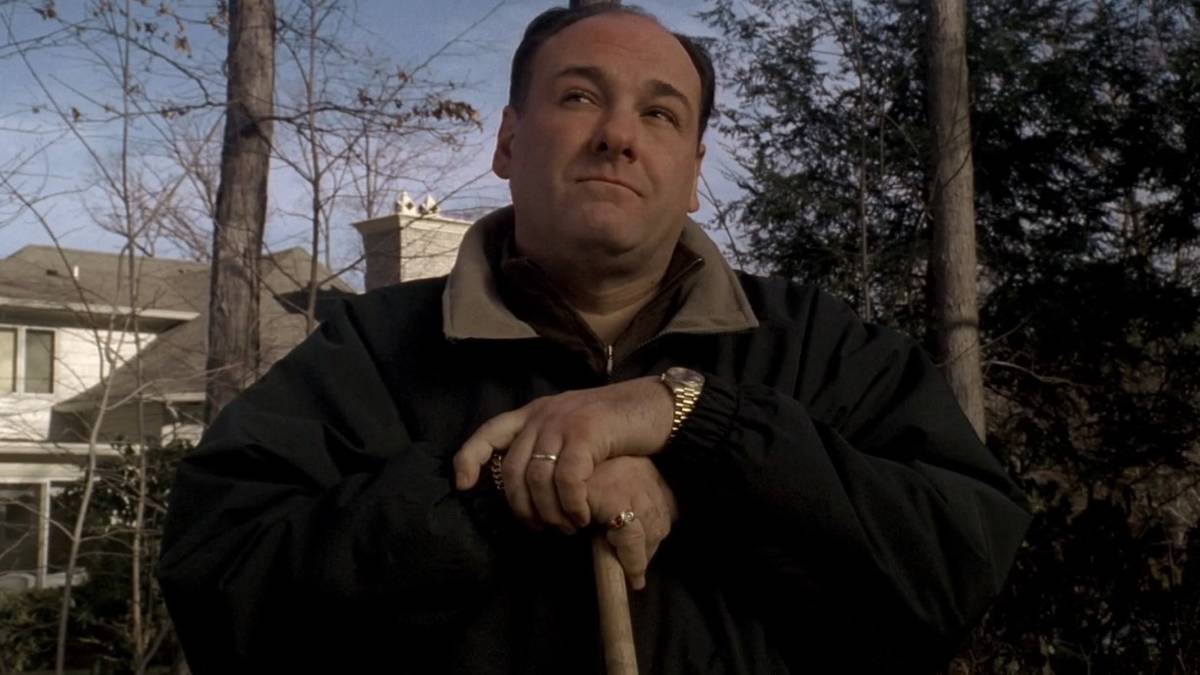
Tony Soprano (James Gandolfini) had a gift for making the most devastating choices sound like inevitable twists of fate. In Dr. Jennifer Melfi's (Lorraine Bracco) office, even his moments of clarity often became justifications. In Season 1, Episode 7, "Down Neck," he delivers one of his most revealing lines: "You're born into this s**t; you are what you are."
He's talking about his father, Johnny Boy Soprano (Joseph Siravo), and the childhood that steered him into a life of crime. But this isn't just a trip down memory lane. Tony is in therapy because of his son, A.J. (Robert Iler), and Melfi asks what Tony was like at that age. In trying to explain his son, he ends up telling stories about his own past.

It's a telling choice. Tony recognizes that his childhood was shaped by forces beyond his control, but he fails to see that A.J. is growing up in a completely different world—one where Tony is the father. The quote suggests Tony has made peace with his past, but it also reveals he doesn't believe in real change.
Johnny Boy Was Tony's First Model of Manhood
Tony's memories of his father are complicated, but Johnny Boy's influence is undeniable. He was a gangster whose life was steeped in violence and intimidation, and Tony witnessed that world up close. He remembers the softer details: his father's love of food, his zest for life, his charm. Tony doesn't see his father as a one-dimensional thug; he sees a man he respected, even as he acknowledges that what made him admirable also made him dangerous.
His mother, Livia (Nancy Marchand), offered little comfort. Their relationship was strained, and Tony often struggles to recall his childhood. The family showed little warmth, so it's understandable that Tony views his life as a product of circumstances he couldn't control.
But here's the thing: Tony had options. He was smart and athletic enough to pursue a different path, to escape his father's shadow. His self-image as someone who simply became what he was meant to be is a convenient fiction.
Tony Wants A.J. to Be Nothing Like Him—Except When It Matters
The irony of "Down Neck" is that Tony is recounting his childhood to address A.J.'s struggles. He fears A.J. might follow him into the mob, but he also sees that A.J. is softer, perhaps not cut out for that life.
Despite his good intentions, Tony's idea of protection is twisted. Meadow (Jamie-Lynn Sigler) and A.J. enjoy the luxuries of his criminal career without knowing its dark origins. Tony believes he can give them everything while keeping them shielded from the truth. He lies to his kids, making them feel entitled to a life they didn't earn.
A.J. is particularly telling because Tony worries his son might inherit his own issues, yet he ignores his own parenting. Kids don't need to inherit bad traits to pick them up from watching their parents. Tony frets about A.J.'s future but doesn't model the behavior he wants his son to follow.
The Sopranos Doesn't Let Tony Off the Hook
One reason the show remains so compelling is that it takes Tony's mind seriously. His therapy sessions are a space to explore his childhood, panic attacks, and lingering demons. For a while, we believe therapy might actually help him. But Melfi eventually realizes the truth: in the penultimate episode, "The Blue Comet," she ends their sessions after learning that sociopaths often use therapy to become better manipulators.
That moment crystallizes the difference between self-awareness and self-improvement. Tony understands himself, but he has no interest in changing. His famous quote isn't a plea for sympathy—it's a confession that he's chosen to remain exactly who he is.
For more on the show's legacy, check out our ranking of every season and why the divisive finale still beats Game of Thrones.