HBO has spent decades building a reputation for prestige television. And luckily for them, their efforts haven't been in vain, as a good handful have managed to reach a level of universal admiration. We're talking winning over almost everyone—critics, casual viewers, and hardcore TV fans alike. Indeed, there are the shows that people don't just praise out of obligation or cultural momentum, they genuinely love them for what they are.
Whether it's a sprawling crime saga, a razor-sharp political comedy, or a devastating historical drama, each show feels fully realized from the moment it begins. They're ambitious without losing emotional clarity, stylish without sacrificing substance, and endlessly quotable without feeling manufactured. More than anything, they represent HBO at its absolute best: television that feels carefully crafted, deeply human, and almost impossible to stop watching.
8. 'Boardwalk Empire' (2010–2014)
Set during the Prohibition era, Enoch "Nucky" Thompson (Steve Buscemi)—the powerful and politically connected treasurer of Atlantic City—secretly runs the city's bootlegging operations. But as federal agents, rival gangsters, and ambitious protégés close in, Nucky is forced to balance his public image with his increasingly dangerous criminal empire.
What makes Boardwalk Empire so widely admired is its meticulous craftsmanship, and we're not just talking about how the production design alone is staggering. Indeed, on the most part, it is the slow-burn character work that gives the show its weight. Nucky falls among the great, iconic crime bosses. He's calculating, often emotionally distant, and constantly trying to maintain control in a world that refuses to stay stable. Better still, the show doesn't rush its arcs, allowing power shifts and betrayals to unfold with a quiet inevitability.
7. 'Band of Brothers' (2001)
Based on real events, Band of Brothers chronicles the journey of Easy Company, a group of U.S. paratroopers during World War II, from their initial training through some of the war's most significant battles, including D-Day and the Battle of the Bulge. Following the soldiers across Europe, the show captures both the scale of the conflict and the deeply personal experiences of the men fighting it.
As one of the best war stories to ever be put on screen, Band of Brothers sets the tone by its ability to humanize history without ever diminishing its scale. Each episode focuses on different members of the Company, allowing the audience to understand not just the events, but the people enduring them. The camaraderie feels lived-in, the losses hit hard, and the show never loses sight of the cost of war. It's often believed to be one of the greatest miniseries ever made—and for good reason. It's immersive, respectful, and emotionally devastating in a way that still resonates years later.
6. 'Chernobyl' (2019)
Dramatizing the 1986 nuclear disaster in the Soviet Union, Chernobyl follows the explosion at the Chernobyl power plant and the subsequent efforts to contain the fallout. In particular, the show centers on figures like scientist Valery Legasov (Jared Harris), government official Boris Shcherbina (Stellan Skarsgård), and nuclear physicist Ulana Khomyuk (Emily Watson), as they navigate a system built on secrecy and denial.
On a grand scale, the show's impact undoubtedly comes from its relentless focus on truth—both scientific and political. Rather than turning the disaster into a spectacle, Chernobyl zeroes in on the human cost of misinformation and institutional failure. Every decision feels heavy, and every mistake becomes catastrophic. It's gripping without needing traditional action, building tension through inevitability rather than surprise. The result is a series that's as horrifying as it is illuminating, and one that lingers long after it ends.
5. 'Deadwood' (2004–2006)
Set in the late 1800s, in the lawless mining town of Deadwood, South Dakota, the town's inhabitants live complex lives. Between the ambitious saloon owner, Al Swearengen (Ian McShane), and the newly arrived, straight-laced former marshal Seth Bullock (Timothy Olyphant), the folks must navigate their place as they carve out power, survival, and identity in a place where formal authority barely exists.
In true HBO fashion, Deadwood shines in its moral complexity. The dialogue is dense, profane, and almost Shakespearean, turning conversations into performances of power. Better still, the characters are rarely defined as purely good or evil, allowing the show to thrive in its gray areas. Sure, it's not always easy viewing, but it rewards patience with its rich character development and thematic depth. How this show got canceled will always baffle its fans, especially since it had built such a strong foundation. Thankfully, they got their follow-up film to round everything out.
4. 'Veep' (2012–2019)
The life of Selina Meyer (Julia Louis-Dreyfus)—a former senator—changes when she becomes Vice President of the United States. The only issue? She quickly discovers that the job is a lot less glamorous and far more chaotic than she expected. And when surrounded by a staff of bumbling, self-serving aides, Selina's quest for power becomes a hilarious and cynical ride through the absurdities of American politics.
Veep is universally beloved for its razor-sharp writing and the comedic genius of its cast. Julia Louis-Dreyfus delivers a career-defining performance, earning multiple Emmys for her portrayal of the ambitious yet perpetually frustrated Selina. The show's humor is relentless, often cringe-inducing, and always on point. It's a political satire that doesn't just mock politicians but also the entire system, making it a timeless classic that remains relevant with each election cycle.
3. 'Succession' (2018–2023)
The Roy family, owners of a global media empire, are locked in a constant battle for control. When patriarch Logan Roy (Brian Cox) begins to step back, his four children—Kendall (Jeremy Strong), Shiv (Sarah Snook), Roman (Kieran Culkin), and Connor (Alan Ruck)—vie for the throne, each with their own strengths and fatal flaws. The show is a brutal, darkly comedic exploration of wealth, power, and family dysfunction.
Succession quickly became a cultural phenomenon, praised for its sharp writing, complex characters, and Shakespearean drama. The show's ability to make viewers root for deeply unlikable characters is a testament to its brilliance. Every episode is a masterclass in tension and dialogue, with the Roys' power struggles feeling both epic and intimately personal. It's a show that defines the modern era of prestige television, and its impact will be felt for years to come.
2. 'The Wire' (2002–2008)
Set in Baltimore, The Wire explores the city's drug trade, law enforcement, political system, and education system through a multi-layered narrative. The show follows both the criminals and the police, offering a nuanced look at the systemic issues that plague urban America. With a sprawling ensemble cast, including Dominic West, Idris Elba, and Michael K. Williams, the series is a gritty, realistic portrayal of life in the inner city.
Often hailed as one of the greatest TV shows of all time, The Wire is universally beloved for its depth and authenticity. The show doesn't offer easy answers or moral clarity; instead, it presents a complex web of characters and institutions, each with their own motivations and flaws. Its influence on television is immeasurable, and its legacy continues to grow as new audiences discover its brilliance. For those who haven't seen it, The Wire is a must-watch for anyone interested in the best of what TV has to offer.
1. 'The Sopranos' (1999–2007)
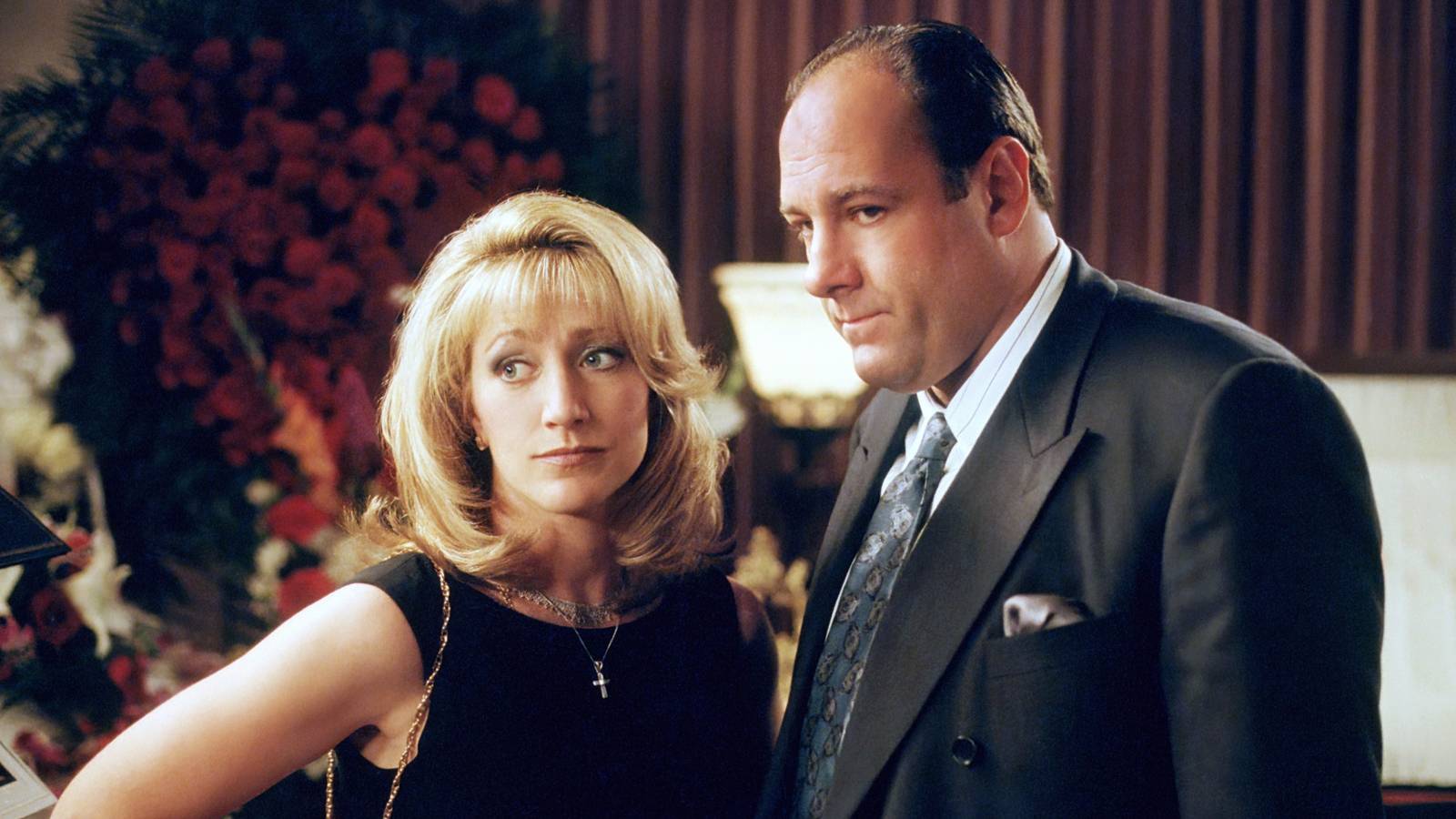
Tony Soprano (James Gandolfini) is a New Jersey mob boss struggling to balance the demands of his criminal empire with the pressures of family life. When he begins seeing a therapist, Dr. Jennifer Melfi (Lorraine Bracco), the show delves into his psyche, exploring themes of identity, morality, and the American Dream. The series is a groundbreaking blend of crime drama and psychological study, with a cast that includes Edie Falco, Michael Imperioli, and Steven Van Zandt.
The Sopranos is widely considered the show that launched the golden age of television. Its complex characters, innovative storytelling, and willingness to tackle difficult subjects set a new standard for the medium. James Gandolfini's performance as Tony is iconic, bringing depth and vulnerability to a character who could have been a one-dimensional villain. The show's influence is everywhere, from the anti-hero trend to the serialized storytelling that dominates modern TV. It remains the most universally beloved HBO show of all time, a masterpiece that continues to captivate audiences decades after its debut.