When Gary Larson drew his final Far Side comic on January 1, 1995, he could have gone the sentimental route—thanking readers, reuniting beloved characters, or just delivering one last absurd gag. Instead, he crafted a farewell that was quintessentially Far Side: a two-panel masterpiece that turned the entire 15-year run into a punchline about itself.
By then, The Far Side was a cultural institution, appearing in nearly 2,000 newspapers and translated into over 17 languages. Its single-panel cartoons featured talking cows, bewildered humans, cavemen, aliens, scientists, and monsters in scenarios that defied logic. So it made perfect sense that Larson's grand finale would suggest none of it ever really happened.
A Wizard of Oz-Inspired Farewell
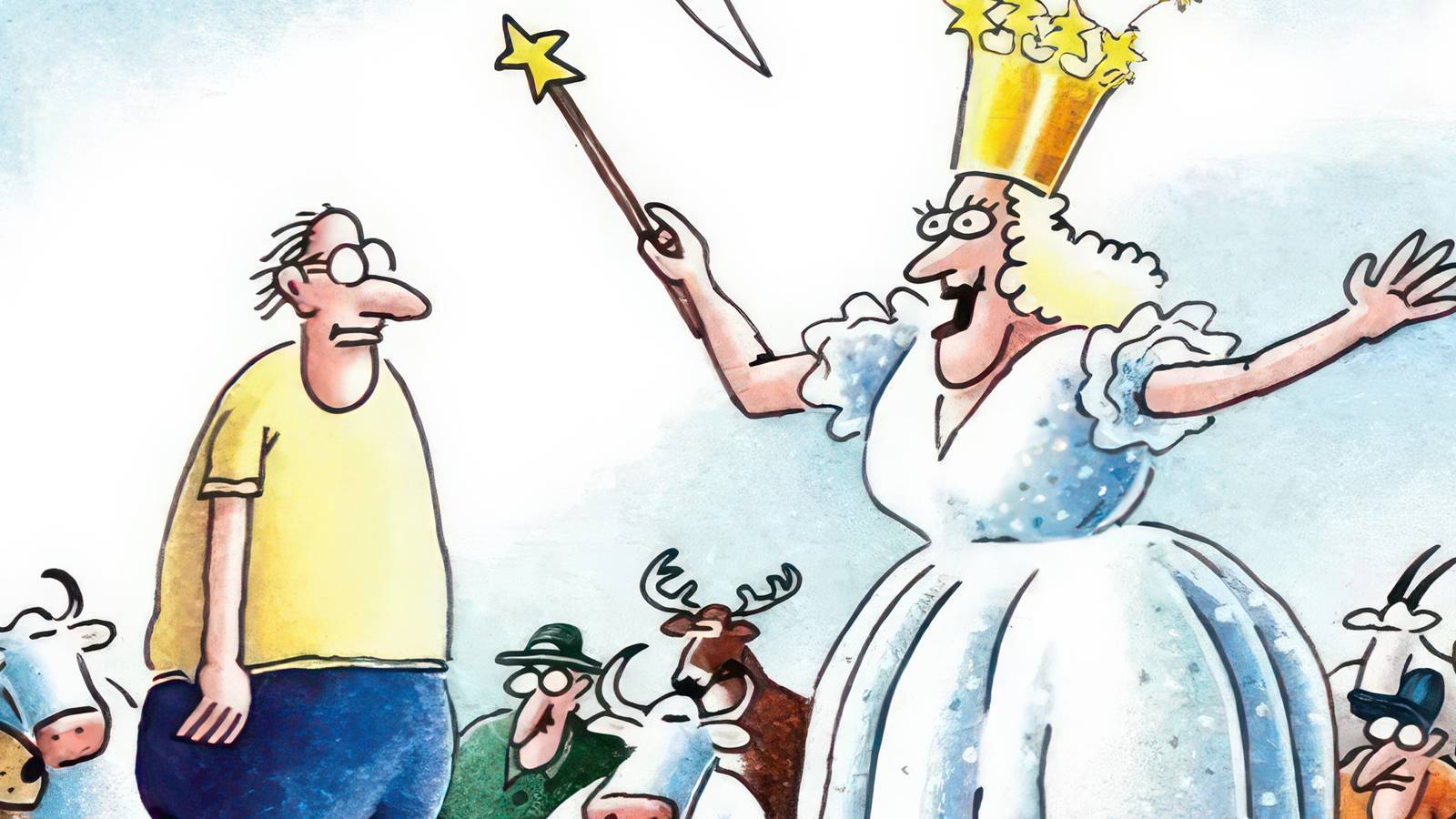
The strip broke format immediately—The Far Side was almost always a single panel, but Larson gave readers two. The first panel is staged like the climax of The Wizard of Oz. Larson stands on a platform beside a parody of Glinda the Good Witch, surrounded by a crowd of his signature characters: cows, cavemen, nerdy kids, the Devil, and various human archetypes that had populated his work for years.
Glinda gives Larson a variation of Dorothy's advice: close his eyes, say “There's no place like home,” and instead of clicking his heels, quack three times. It's a brilliant twist—replacing one of the most iconic moments in American pop culture with a silly duck joke. Ducks were a recurring motif in The Far Side, so the gag works on two levels: it's a parody of Oz, and a final nod to the bizarre animal humor that defined his strip.
The visual trick is equally clever. The first panel is in color, while the second switches to black and white, echoing the movie's famous transition from Oz to Kansas.
The Dream Reveal That Wasn't
The second panel drops Larson into bed at home, surrounded by family and friends. But the joke isn't that his adventure was imaginary—it's that the people around him resemble the characters from his cartoons. His relatives correspond to the women, cows, cavemen, and nerdy children he's supposedly been dreaming about. What looks like a conventional “it was all a dream” ending is actually Larson pretending the entire comic strip was an extended hallucination inspired by ordinary life.
Larson never wanted The Far Side to be a character-driven strip. He resisted recurring characters, believing they would limit his creativity. His characters existed to serve the joke, not to build a narrative. The finale turns that philosophy into one last stunt.
Dream endings usually exist to recontextualize everything that came before—to make you question reality or tie loose ends. But The Far Side had no sprawling continuity to resolve. Larson takes a device meant for huge revelations and applies it to a comic that never needed one. The punchline is simply that all those ridiculous things were imaginary—a fourth-wall break that's uniquely Far Side.
After 15 years and 4,337 cartoons, Larson didn't pretend he'd been building toward some grand conclusion. He announced his retirement in October 1994, citing fatigue and a fear that continuing would diminish the strip's quality. The final comic looks like a farewell to the strange world he created, but the punchline is that there was never really a world there at all—just a series of jokes, and one final, perfect one.
For fans of classic comic strips, this ending is a masterclass in leaving on your own terms. It's a reminder that sometimes the best way to say goodbye is with a laugh—and a quack.