Tilda Swinton doesn't fit neatly into any box. She's not just a lead or a supporting player, not merely a villain or a muse. She's a shapeshifter, an arthouse icon, and a prestige weapon all rolled into one. Her screen presence can be icy, funny, wounded, alien, romantic, maternal, cruel, or completely unreadable—sometimes all in the same film. These five movies define why she's one of the most fascinating actors of her generation.
5. 'I Am Love' (2009)
Luca Guadagnino's I Am Love is a slow-burn masterpiece about a Russian woman, Emma Recchi, who marries into a wealthy Milanese family. Swinton learned Italian and Russian for the role, and that dedication shows. Emma feels like someone who has lived inside refinement for so long that even desire arrives as a shock to her body. The film begins with family order and slowly becomes a story about appetite, identity, and the terrifying cost of wanting a life that belongs to you.
The romance with Antonio (Edoardo Gabbriellini) changes everything. Food, touch, sunlight, fabric, and silence carry more force than formal conversations. Swinton gives Emma an emotional awakening that feels dangerous before anyone calls it scandalous. I Am Love earns its place here through that collision: a woman rediscovering herself inside a world designed to turn her into decoration.
4. 'Orlando' (1992)
Orlando could collapse instantly if the central performance felt unsure. The story begins in the Elizabethan era and follows Orlando across centuries, through love, inheritance, poetry, war, social expectation, and a change in sex that the film treats with elegance. Swinton carries the whole impossible idea as if time itself is just another room she has learned to walk through.
What makes Orlando so classic is the balance between playfulness and pain. The film has wit, beauty, costumes, and direct address, yet underneath sits a brutal question about who gets freedom and who gets trapped by gender, property, and power. Swinton lets Orlando feel curious before anything else. That curiosity keeps the film alive across every era and makes it more than a bold literary adaptation—it feels like a person trying to stay intact while history keeps changing the terms of existence.
3. 'Only Lovers Left Alive' (2013)
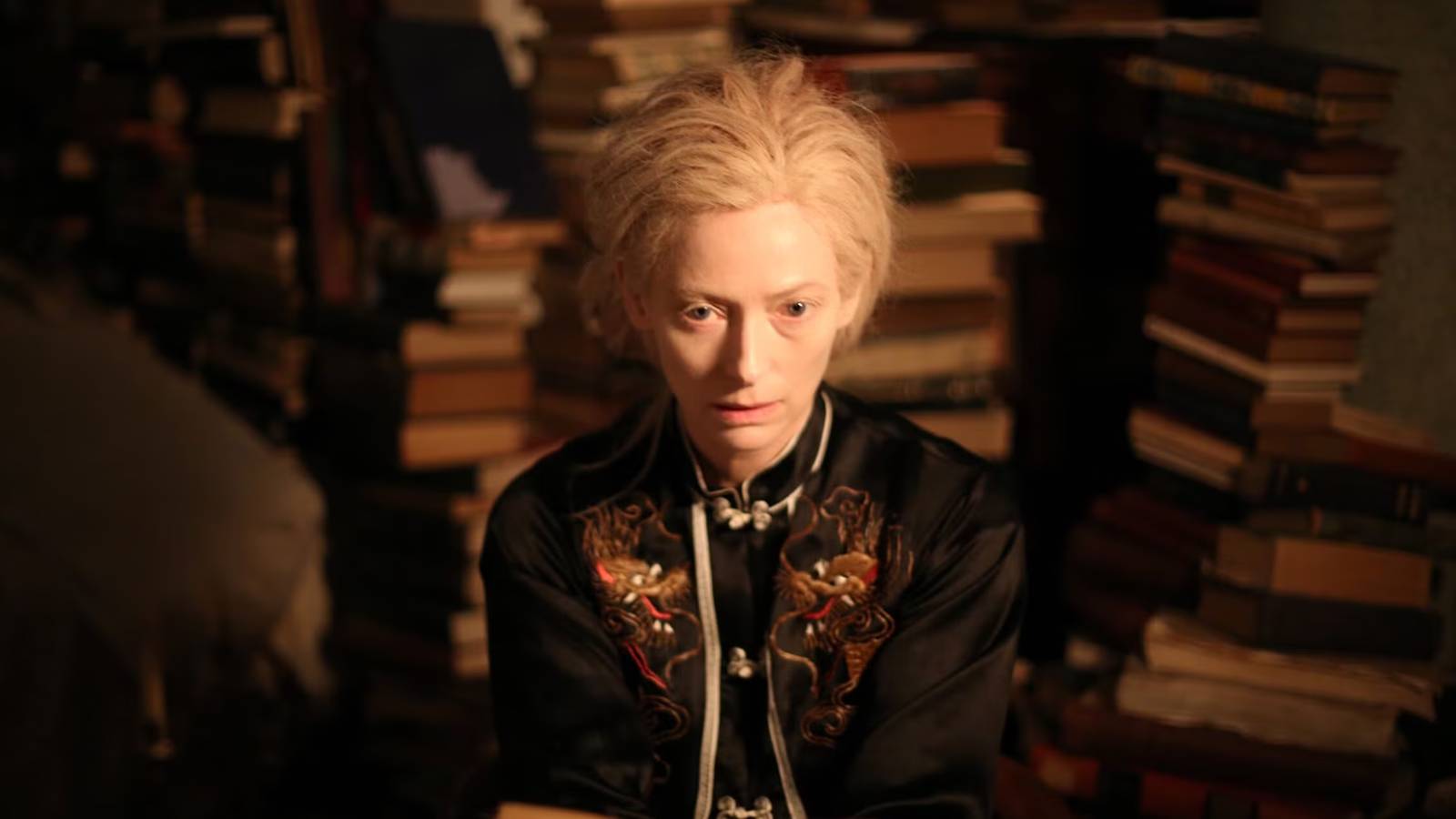
Jim Jarmusch's Only Lovers Left Alive turns vampires into exhausted artists who have watched humanity ruin the world and still cannot detach from its beauty. Swinton's Eve lives with books, music, memory, and a patience that feels ancient without becoming stiff. Across from Adam (Tom Hiddleston), she gives the film one of the coolest screen relationships of the 2010s: two lovers who have survived centuries and still need each other like a private language.
The genius is how little the movie cares about vampire spectacle. Blood matters, danger exists, and Ava (Mia Wasikowska) brings chaos, but the deeper pull comes from mood, taste, and survival as an aesthetic choice. Swinton's Eve has warmth, humor, intelligence, and that gorgeous sadness of someone who has seen too much and still believes in art. Only Lovers Left Alive understands immortality as romance, boredom, grief, and curation. Being alive forever would be unbearable without something worth loving.
2. 'Michael Clayton' (2007)
Michael Clayton is a legal thriller about rot inside powerful institutions, and Karen Crowder (Swinton) is one of its sharpest creations. Swinton turns a corporate attorney into a portrait of panic wearing professional clothes. Karen has the title, the language, the boardroom fluency, and the job of protecting U-North from a disaster. She also has sweat, insomnia, rehearsal notes, bathroom breakdowns, and a moral collapse she keeps trying to package as responsibility.
That tension makes the character unforgettable. Karen is competent enough to scare people, frightened enough to make terrible choices, and ambitious enough to cross lines she cannot uncross. Swinton won an Oscar for it, and every scene shows the violence of corporate life without needing a gun in the room. Michael Clayton (George Clooney) moves through the film as a fixer who knows the system is poisoned. Karen shows what happens to someone still trying to survive inside that poison. Michael Clayton is a masterpiece of pressure, and Swinton turns fear into one of its most dangerous forces.
1. 'We Need to Talk About Kevin' (2011)
We Need to Talk About Kevin is a nightmare about motherhood, memory, guilt, and the impossible question of what a parent is supposed to know before catastrophe becomes history. Eva Khatchadourian (Swinton) lives after her son Kevin (Ezra Miller) has committed a school massacre, and the film moves through the past like a wound that refuses to close. Every scene carries the awful pressure of hindsight. Every small cruelty, every cold stare, every moment of doubt becomes unbearable.
Swinton's performance is devastating. She shows a mother trying to survive the aftermath of an unspeakable act while wrestling with her own complicity. The film doesn't offer easy answers, and Swinton never lets Eva become a saint or a monster. She's a woman trapped between love and horror, and that ambiguity is what makes the performance so powerful. We Need to Talk About Kevin is a masterpiece of psychological terror, and Swinton anchors it with a performance that will haunt you long after the credits roll.
For more on the best in entertainment, check out our list of 10 Overlooked Animated Gems That Deserve Your Attention, Ranked and From Alien to Amnesia: The All-Time Greatest Horror Video Games.