Ranking the greatest movie performances is a fool's errand, because the craft shifts entirely from one role to the next. Sometimes an actor vanishes into an ordinary person so completely that you forget you're watching a performance. Other times, they step into a blockbuster and somehow steal the spotlight from a cultural icon. There's no single formula for greatness, which is why these lists always spark debate.
But the standard here is total possession of the role. These performances don't just elevate their films—they redefine them. They survive endless rewatches, and their details are so specific that imitation usually turns into caricature. You can copy the voice or the costume, but you can't replicate the thinking underneath. These six actors achieved that rare alchemy.
6. Frances McDormand in Fargo (1996)
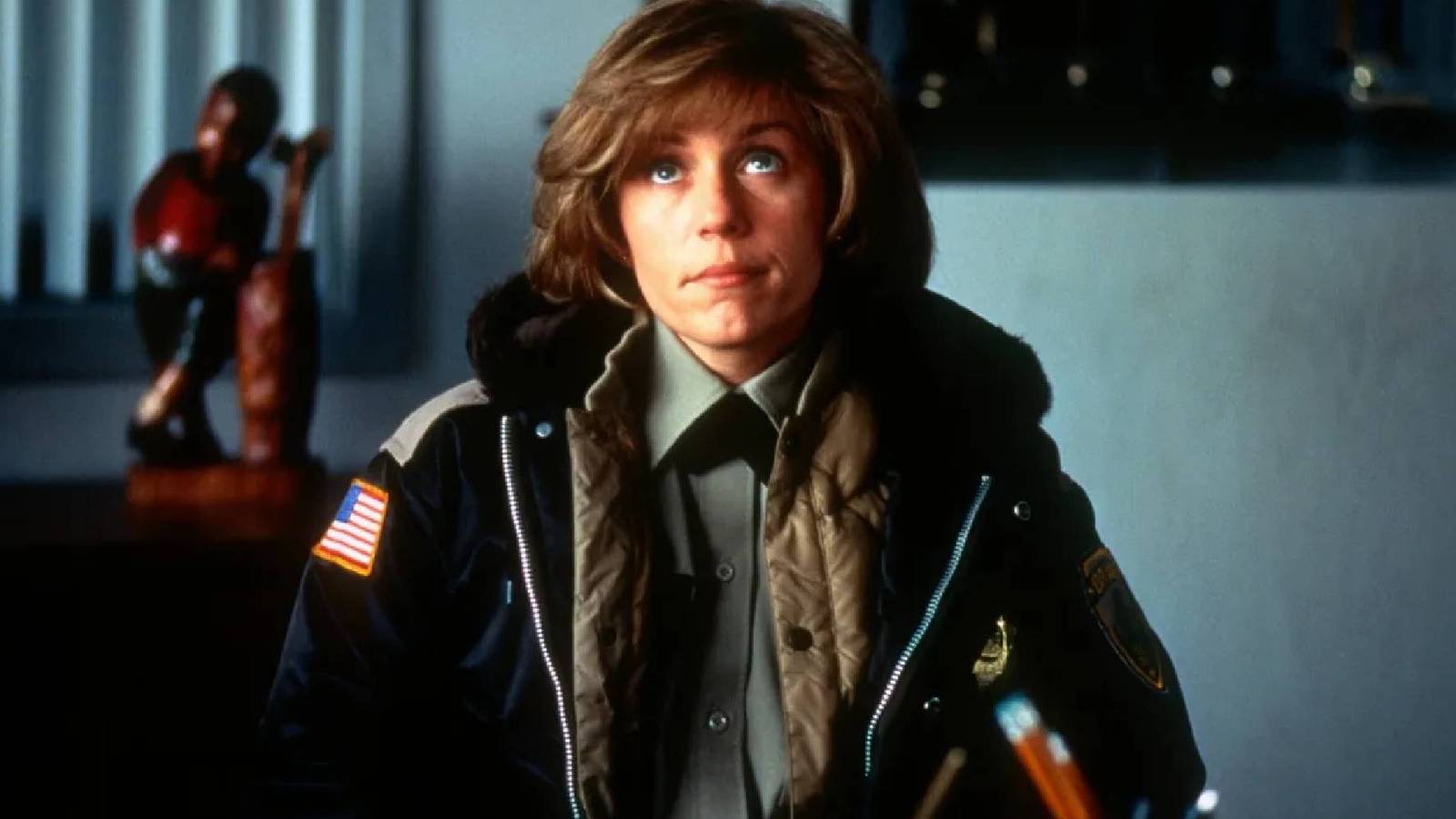
Fargo opens with a bungled kidnapping scheme by car salesman Jerry Lundegaard (William H. Macy), whose plan to extort his wealthy father-in-law ends in multiple deaths. Enter police chief Marge Gunderson (Frances McDormand), heavily pregnant and disarmingly pleasant, investigating the carnage with a calm that seems almost out of place. That contrast is the key to her brilliance. Marge can examine a corpse in the snow, discuss homicide over breakfast, and politely dismantle a suspect's story without ever adopting the hardened demeanor typical of movie detectives. McDormand won the Best Actress Oscar for this role.
Her intelligence emerges through observation, not grand speeches. She studies tire tracks, notices inconsistencies, and lets suspects talk until their nervousness becomes evidence. The famous Minnesota accent isn't just comic relief—it's a tool that makes people underestimate her. The subplot with Mike Yanagita (Steve Park) adds another layer: a seemingly sincere man who constructs a fantasy world, teaching Marge that appearances can deceive. That lesson quietly informs her investigation. Decades later, a cheerful “yah” still evokes her character instantly.
5. Charlize Theron in Monster (2003)
Monster dramatizes the life of Aileen Wuornos (Charlize Theron), a sex worker convicted of murdering several men in Florida. Patty Jenkins' film meets Aileen at her lowest point, then follows her relationship with Selby Wall (Christina Ricci) as hope, poverty, and violence intertwine. The movie never asks us to forget Aileen's victims, but it insists that the human being behind the headlines existed before the tabloids turned her into a monster.
Theron's physical transformation got the headlines, but the real achievement is in her behavior. Aileen walks with hunched shoulders, occupies space aggressively, laughs too hard, and seems to expect rejection before it happens. Her attempts at conventional employment are painfully revealing—she genuinely wants a different life but lacks the tools to build one. The romance with Selby gives that desperation a focus, making love feel hopeful, selfish, and dangerous all at once. Theron won the Oscar, and the role permanently changed how audiences saw her. Forget the makeup and watch Aileen trying to convince herself that tomorrow can be different. That's where the performance truly hurts.
4. Denzel Washington in Training Day (2001)
Training Day earned Denzel Washington his second Oscar, and its lines became pop culture staples, especially his furious “King Kong” speech. But the quotes are just the surface. The real depth lies in how desperately Alonzo Harris (Washington) needs everyone to believe the mythology he's built around himself.
The film follows rookie cop Jake Hoyt (Ethan Hawke) through one day with narcotics detective Alonzo. Jake expects an evaluation; Alonzo delivers an initiation into a world where intimidation, theft, and criminal ties are justified as necessities. The genius is that Alonzo can't simply look corrupt from the start—Jake has to understand why officers follow him before he sees the rot. Alonzo's charisma does the recruiting. He turns threats into jokes, crimes into lessons, and a room full of dangerous people into an audience. The restaurant scene establishes the power imbalance immediately, and the day keeps shifting what Jake thinks he's agreed to. Alonzo is a masterclass in controlled menace.
3. Heath Ledger in The Dark Knight (2008)
Heath Ledger's Joker in The Dark Knight isn't just a villain—he's an agent of chaos who redefines the superhero genre. Ledger disappears into the role, creating a character who is unpredictable, terrifying, and strangely compelling. His performance earned a posthumous Oscar and set a new standard for comic book movie acting.
The Joker's philosophy is pure anarchy, and Ledger embodies it with every twitch, slur, and monologue. He doesn't just threaten Batman—he challenges his moral code, forcing the hero to confront his own limits. Ledger's Joker is a force of nature, and his scenes are so electric that they overshadow everything else. This is a performance that doesn't just elevate the film; it defines it.
2. Daniel Day-Lewis in There Will Be Blood (2007)
Daniel Day-Lewis is known for his immersive method acting, and his portrayal of oilman Daniel Plainview in There Will Be Blood is his crowning achievement. Plainview is a man consumed by greed and ambition, and Day-Lewis captures every layer of his ruthlessness with chilling precision.
From the film's opening silence to the infamous “I drink your milkshake” scene, Day-Lewis commands the screen. He makes Plainview's descent into madness feel inevitable, and his performance is so powerful that it transcends the film itself. This is acting as pure art, and it's no surprise he won the Best Actor Oscar.
1. Meryl Streep in The Devil Wears Prada (2006)
Meryl Streep's Miranda Priestly in The Devil Wears Prada is a masterclass in controlled power. Streep doesn't just play a demanding boss—she creates an icon. Her delivery of the “cerulean” monologue is a perfect example of how a single scene can define a character.
Miranda is terrifying not because she yells, but because she whispers. Streep's performance is all in the eyes and the subtle shifts in tone. She makes Miranda both monstrous and human, and her final smile is one of cinema's most ambiguous moments. This is a performance that has become part of the cultural lexicon, and it's the best of the past three decades.