Some movies you simply admire. Others quietly become part of how you understand people. You see someone flattering a powerful person and think of Goodfellas. You walk into a home where wealth is displayed a little too aggressively, and Parasite starts humming in the back of your mind. Someone tells a lie so confidently that everyone accepts the new reality, and suddenly Quentin Tarantino doesn't seem so exaggerated after all.
This list isn't about flawless filmmaking—perfection can be sterile. These six films have blood in them: vanity, greed, shame, loneliness, cruelty, appetite, guilt, fantasy, self-deception. They understand that people are capable of extraordinary tenderness and absolutely ridiculous behavior within the same afternoon. That's why you can return to them after ten or twenty years and find a different movie waiting. The film stayed the same. You didn't.

6. Spirited Away (2001)
Spirited Away follows ten-year-old Chihiro (Rumi Hiiragi) after her parents wander into an abandoned-looking amusement park, eat food meant for spirits, and are transformed into pigs. Forced to work in a supernatural bathhouse, she must navigate a world where almost nobody stops to explain the rules simply because she is frightened. That's exactly why her growth feels so real. Chihiro begins by clinging to her parents and crying when the world stops making sense. Later, she's cleaning a revolting 'stink spirit' while everyone around her gags, riding a train across flooded fields toward a witch she's never met, and refusing to abandon Haku (Miyu Irino) even after she understands the danger. My favorite thing is that she never becomes fearless. She becomes useful while afraid. Even No-Face (Akio Nakamura) changes around her because she's one of the few people who doesn't want anything from him. Then Chihiro crosses back through the tunnel and her parents remember none of it. Childhood can be brutally unfair like that. Sometimes you become a different person and nobody who raised you sees the moment it happened.
5. Parasite (2019)
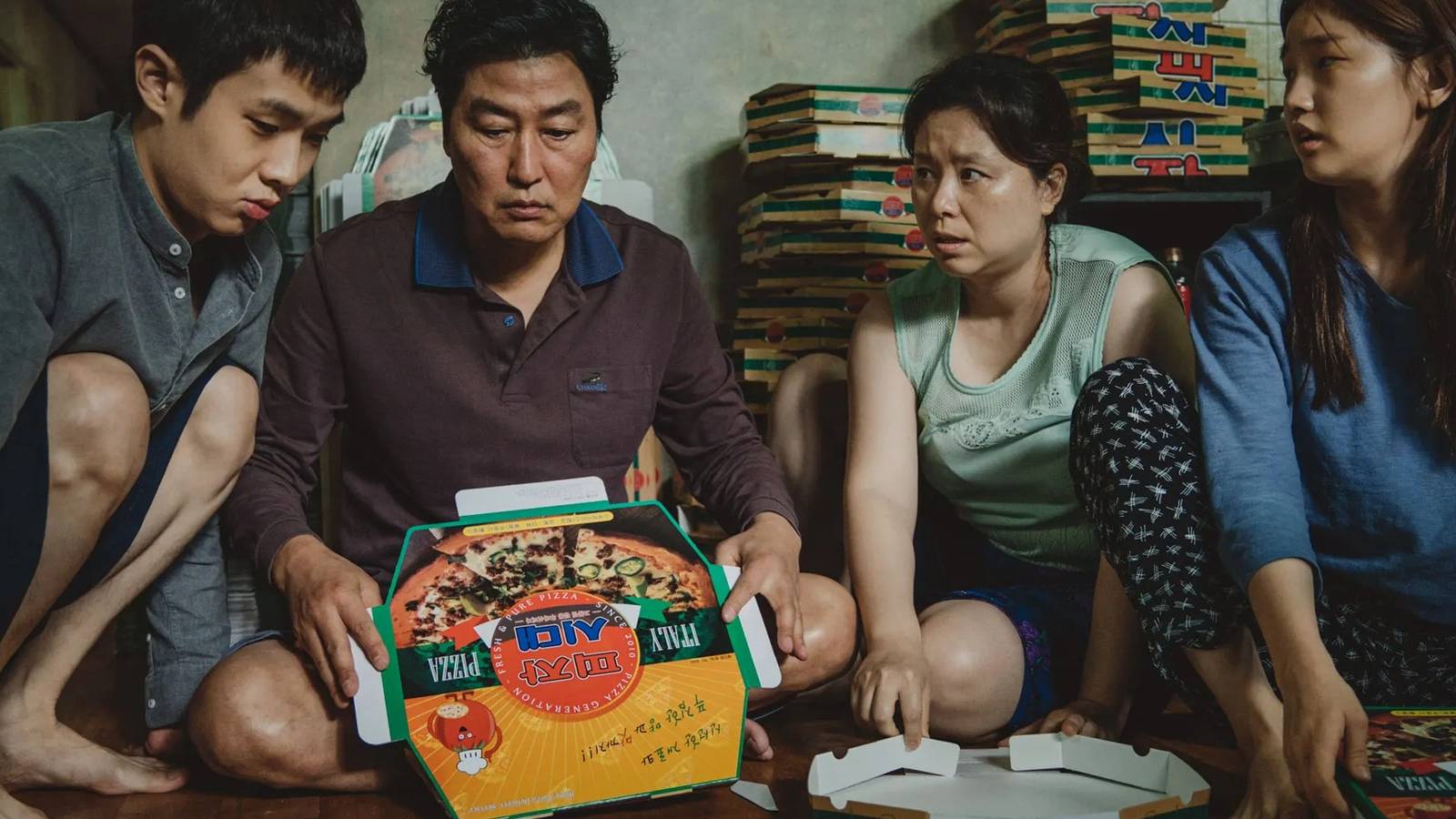
Parasite follows the struggling Kim family as they gradually infiltrate the wealthy Park household by posing as unrelated professionals, only for their clever scheme to expose a secret inside the house that changes the balance between everyone living above and below it. Director Bong Joon Ho makes the con so enjoyable that for a while you almost forget what the Kims are actually doing. Then it rains. For the Parks, the storm ruins a camping trip and leaves the garden beautifully clear for a birthday party. For the Kims, that same rain sends sewage flooding into their semi-basement apartment. Ki-jung (Park So-dam) sits on the toilet lid trying to stop waste from erupting into the room while their belongings float around her, and the next morning Mrs. Park (Cho Yeo-jeong) talks happily about how the rain cleaned the air. That is Parasite in one cruel contrast. Nobody needs to give a speech about class because two families have just experienced the same weather as completely different events. Even the famous smell becomes devastating because poverty has followed the Kims somewhere they thought performance could hide it. You can fake credentials. You can rehearse manners. Your clothes can be clean. Mr. Park (Lee Sun-kyun) still notices.
4. Goodfellas (1990)
Goodfellas follows Henry Hill (Ray Liotta) from his teenage fascination with the mob through his years inside organized crime, where money, friendship, violence, drugs, and status gradually turn the life he once worshipped into something he can barely survive. Martin Scorsese clearly understands that Henry would never have entered this world if it looked miserable from the beginning, so the first half seduces you right alongside him. That Copacabana entrance is still dangerous because it makes corruption look fantastic. Henry takes Karen (Lorraine Bracco) through the kitchen, past people who know him, straight to a table placed in front of the stage as if normal rules simply move aside for him. Of course she's impressed. Of course he's addicted to that feeling. Then watch what happens years later during the cocaine-fueled day when Henry is cooking dinner, moving guns, taking drugs, worrying about helicopters, dealing with associates, and trying to maintain the illusion that he still has control. The lifestyle hasn't fundamentally changed. His experience of it has. Tommy (Joe Pesci) makes violence frightening because a joke can become murder before the room catches up. Henry's real tragedy is quieter. He gets everything teenage Henry wanted and eventually learns exactly what it was worth.
3. Schindler's List (1993)
Schindler's List follows Oskar Schindler (Liam Neeson) as he arrives in Nazi-occupied Poland hoping to profit from the war, employs Jewish workers because they are cheap labor, and gradually begins using his factory, money, influence, and connections to keep those workers from being murdered. What breaks me is that Schindler's transformation isn't a sudden epiphany. It's a slow, agonizing accumulation of small horrors that finally pierce his self-serving shell. The film doesn't let you look away from the brutality, but it also shows how one man's greed can be repurposed into salvation. The famous final scene, where Schindler breaks down over how much more he could have done, is devastating because it reveals that even a hero feels he didn't do enough. This is a film that demands to be seen, not just for its historical importance, but for its unflinching look at human capacity for both evil and redemption.
2. There Will Be Blood (2007)
There Will Be Blood follows Daniel Plainview (Daniel Day-Lewis), a silver miner turned oilman, as he builds an empire in early 20th-century California. His relentless pursuit of wealth and power consumes everything in its path, including his own humanity. The film is a towering achievement of performance and direction, with Paul Thomas Anderson crafting a portrait of American capitalism as a kind of religious fervor. Plainview's famous 'I drink your milkshake' speech is a chilling climax to a character who has sacrificed every human connection for the sake of winning. The film's final line, 'I'm finished,' is both a confession and a curse. It's a movie that doesn't offer easy answers, but it lingers in your mind long after the credits roll, a dark mirror held up to the American dream.
1. The Shawshank Redemption (1994)
At number one, The Shawshank Redemption follows Andy Dufresne (Tim Robbins), a banker wrongly convicted of murder, as he navigates life in Shawshank State Penitentiary. Over two decades, he forms an unlikely friendship with fellow inmate Ellis 'Red' Redding (Morgan Freeman) and finds a way to maintain hope in the face of despair. The film is a masterclass in storytelling, with Frank Darabont's direction and a script that balances gritty realism with profound optimism. What makes it the best film since 1990 is its universal message: that hope is a thing you can hold onto even in the darkest places. The final act, where Andy's plan comes to fruition, is one of the most cathartic moments in cinema. It's a film that doesn't just entertain; it inspires. It reminds us that even in a world of corruption and cruelty, the human spirit can endure and triumph. That's why it remains a beloved classic, and why it tops this list.
These six films are more than just great movies—they're transformative experiences. They challenge us, haunt us, and ultimately change how we see the world. Whether you're revisiting them or discovering them for the first time, they're essential viewing for anyone who loves cinema. For more cinematic masterpieces, check out our list of the greatest horror films ever made or our ranking of universally beloved movies.