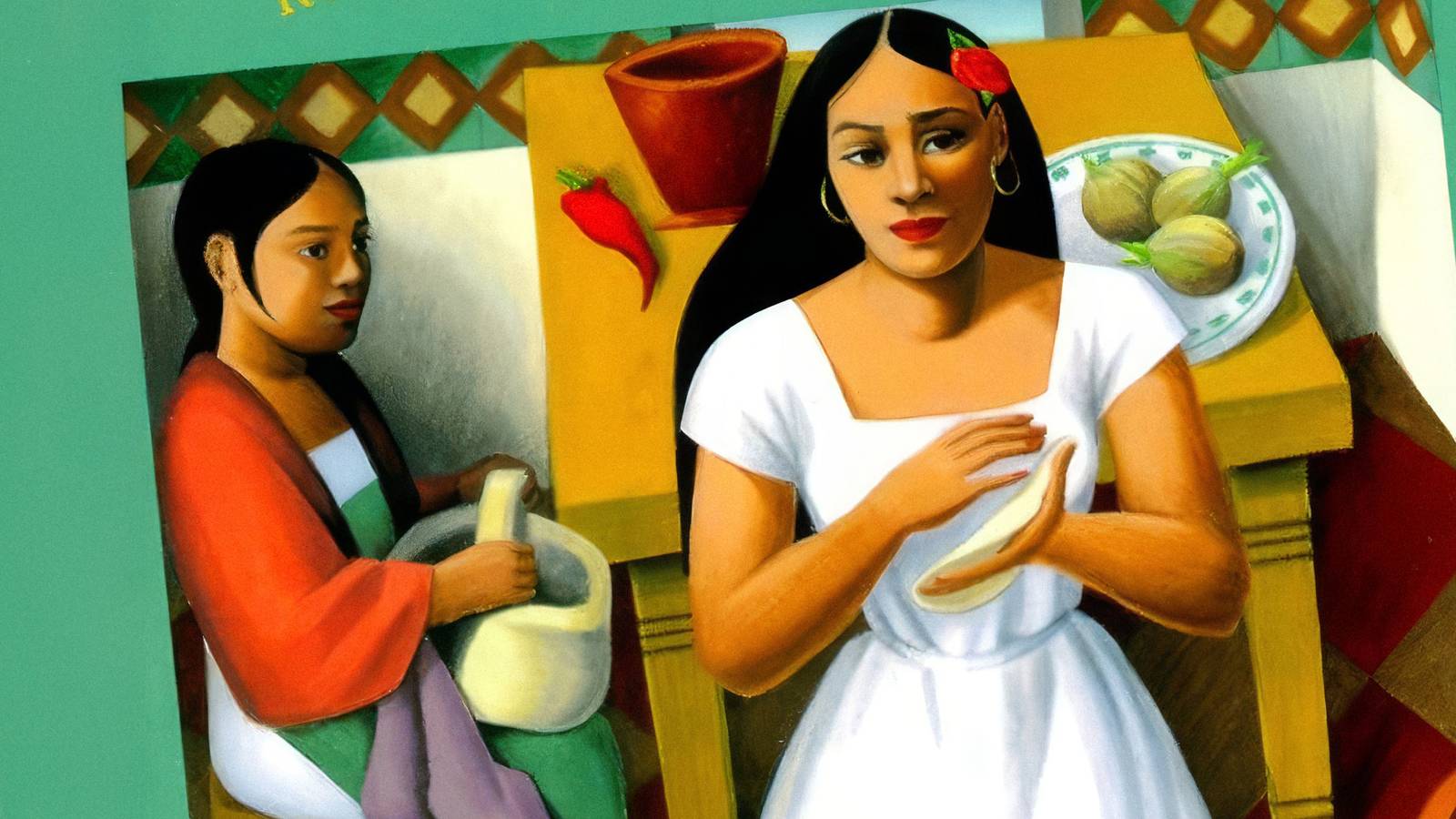
Magical realism is a genre that dances on the edge of reality, where the mundane and the miraculous coexist without a blink. It's a literary tradition that has given us some of the most unforgettable stories, where ghosts, impossible events, and supernatural occurrences are woven into the fabric of everyday life, often serving as metaphors for deeper human truths. Here, we celebrate the finest examples of this enchanting genre, from timeless classics to contemporary triumphs.
10. Exit West (2017)
Mohsin Hamid's Exit West is a poignant allegory for our times, following Nadia and Saeed, two lovers forced to flee their war-torn homeland through mysterious black doors that appear around the world, instantly transporting people across borders. The doors are never explained, and that's the point—they symbolize displacement, globalization, and the sudden upheavals that define modern migration. Hamid's subtle magic enhances the emotional and political depth of the story, making it a powerful commentary on border politics and human resilience. It's a book that has already sparked critical acclaim and will only grow in relevance.

9. Klara and the Sun (2021)
Kazuo Ishiguro's Klara and the Sun is a haunting exploration of love, mortality, and what it means to have a soul, narrated by Klara, an Artificial Friend who observes humanity with innocent wonder. Set in a dystopian future, the novel uses Klara's unique perspective to blur the lines between technology and magic, treating the sun as a divine, life-giving force. With a film adaptation starring Jenna Ortega and Amy Adams on the horizon, this is a story that continues to resonate.
8. Like Water for Chocolate (1989)
Laura Esquivel's Like Water for Chocolate is a landmark of magical realism, set during the Mexican Revolution. Tita, the youngest daughter, is forbidden to marry by family tradition and must care for her mother. She channels her emotions into her cooking, and her meals have supernatural effects on those who eat them—tears become salt, passion ignites flames. This novel seamlessly blends recipes, romance, and folklore, making food a language of its own. The recent HBO adaptation, produced by Salma Hayek, has brought this story to a new generation.
7. The House of the Spirits (1982)
Isabel Allende's debut novel, The House of the Spirits, is a sweeping family saga that spans generations of the Trueba family, with Clara, a woman with psychic abilities, at its heart. Set against Chile's turbulent political history, the novel weaves ghosts, prophecy, and clairvoyance into a realistic narrative, deepening themes of love, memory, and political violence. Allende draws on the tradition of Gabriel García Márquez while forging her own voice, and the recent Amazon Prime adaptation is a worthy tribute.
6. Kafka on the Shore (2002)
Haruki Murakami's Kafka on the Shore is a masterpiece of magical realism, alternating between the stories of teenage runaway Kafka Tamura and elderly Nakata, who can communicate with cats. As their paths converge, we encounter talking animals, raining fish, and dreamlike encounters that defy explanation. Murakami's calm prose makes the extraordinary feel ordinary, exploring themes of loneliness, identity, and fate. It's a gripping, page-turning journey that showcases his imaginative genius.
5. One Hundred Years of Solitude (1967)
Gabriel García Márquez's magnum opus, One Hundred Years of Solitude, is the quintessential magical realism novel, chronicling the Buendía family over seven generations in the mythical town of Macondo. The novel is a tapestry of miracles, prophecies, and absurdities, all treated with matter-of-fact narration. It's a profound meditation on history, memory, and the cyclical nature of human existence, and it has influenced countless writers since its publication.
4. Pedro Páramo (1955)
Juan Rulfo's Pedro Páramo is a foundational work of magical realism, a ghostly tale set in the desolate town of Comala, where the dead whisper their secrets. The novel follows Juan Preciado as he searches for his father, Pedro Páramo, only to find a world of spectral voices and fragmented memories. Rulfo's innovative narrative structure and poetic prose have made this a classic that continues to inspire.
3. The Master and Margarita (1967)
Mikhail Bulgakov's The Master and Margarita is a satirical masterpiece that blends the devil's visit to Soviet Moscow with a retelling of Pontius Pilate's trial of Jesus. The novel is a wild ride of black magic, talking cats, and philosophical debates, all wrapped in a critique of Soviet society. It's a testament to the power of magical realism to challenge authority and explore the human condition.
2. Beloved (1987)
Toni Morrison's Beloved is a haunting tale of slavery's legacy, centered on Sethe, a former slave who is haunted by the ghost of her dead daughter. The novel uses supernatural elements to explore the trauma of slavery, memory, and the search for identity. Morrison's prose is both lyrical and brutal, making this a powerful and unforgettable read.
1. The Tin Drum (1959)
Günter Grass's The Tin Drum is a monumental work of magical realism, narrated by Oskar Matzerath, a man who decides to stop growing at age three and communicates through his tin drum. Set against the backdrop of Nazi Germany and post-war Europe, the novel is a surreal, satirical exploration of history, guilt, and the human capacity for evil. It's a challenging but rewarding read that redefines the genre.
These books, from the 1980s' best fantasy books to modern classics, showcase the enduring power of magical realism. Whether you're a longtime fan or new to the genre, these novels offer a gateway to worlds where the impossible becomes possible, and the ordinary is never quite what it seems. For more literary rankings, check out our list of cult classic books that define devotion or explore the 2000s' greatest fantasy novels.