Terry Gilliam has never been one for the ordinary. Give him a mundane office and he'll fill it with grotesque ducts. Hand him a slice of medieval history and he'll send a band of thieves scrambling through it. Drop him in Las Vegas and somehow the city becomes even more unhinged than it already is. His films possess a glorious refusal to behave, as if he looks at reality and thinks, Surely we can make this stranger. And the best part? He usually does.
There's a certain joy in sharing a Gilliam film with someone, partly because you need to see how their brain reacts. Do they laugh at the right absurd bureaucratic joke? Do they get genuinely sad at the unexpected moments of tenderness? His work is a chaotic blend of humor, anger, childish wonder, and startling beauty—often all within the same five minutes. No one else makes movies quite like his, and these four stand as his masterpieces.

4. Fear and Loathing in Las Vegas (1998)
Journalist Raoul Duke (Johnny Depp) and his attorney Dr. Gonzo (Benicio del Toro) head to Las Vegas to cover a motorcycle race, but the assignment quickly becomes a drug-fueled descent into hallucination and chaos. The film barely pretends Duke is doing any journalism after the first stretch; instead, it's an excuse to keep moving while both men chemically sever their ties to reality.
The movie is hilarious until it suddenly isn't. Duke's acid-fueled lobby scene, where everyone transforms into reptiles, remains one of the funniest depictions of a bad trip ever put on screen. But Gonzo's bathtub demand for “White Rabbit” while Duke realizes his friend expects him to toss a plugged-in radio into the water? That's something else entirely. Even the narcotics convention becomes perfect Gilliam absurdity, with two men carrying a pharmacy sitting among cops discussing dangerous drugs. Beneath all the filth and screaming lies a surprisingly sad story about people who believed the 1960s were leading somewhere better—and ended up in Vegas trying to remember what happened.
3. Time Bandits (1981)
Eleven-year-old Kevin (Craig Warnock) lives with parents more interested in appliances than in him, until six small thieves burst through his bedroom carrying a map stolen from the Supreme Being (Ralph Richardson). Time Bandits sends Kevin through holes in time with Randall (David Rappaport) and his crew as they rob historical figures, encounter Napoleon (Ian Holm), Robin Hood (John Cleese), and Agamemnon (Sean Connery), and eventually attract the attention of Evil (David Warner), who desperately wants the map for control over creation.
There's so much childish joy packed into this film that the darker moments catch you off guard. Kevin meets Agamemnon in ancient Greece and, for a little while, seems to have found the interested father he never had at home. Then the Bandits drag him away because there's more treasure to steal. Gilliam keeps refusing the polite version of a children's adventure. Robin Hood smiles pleasantly while his men punch poor people after handing them gifts. Evil spends his time complaining that God wasted creation on things like nipples and slugs. And the ending is unbelievably mean—Kevin gets home, his parents find a leftover piece of concentrated Evil, ignore his warning, touch it, and explode. Then the fireman who rescues Kevin looks exactly like Agamemnon. Imagine being a kid and getting handed that ending. Brilliant.
2. 12 Monkeys (1995)
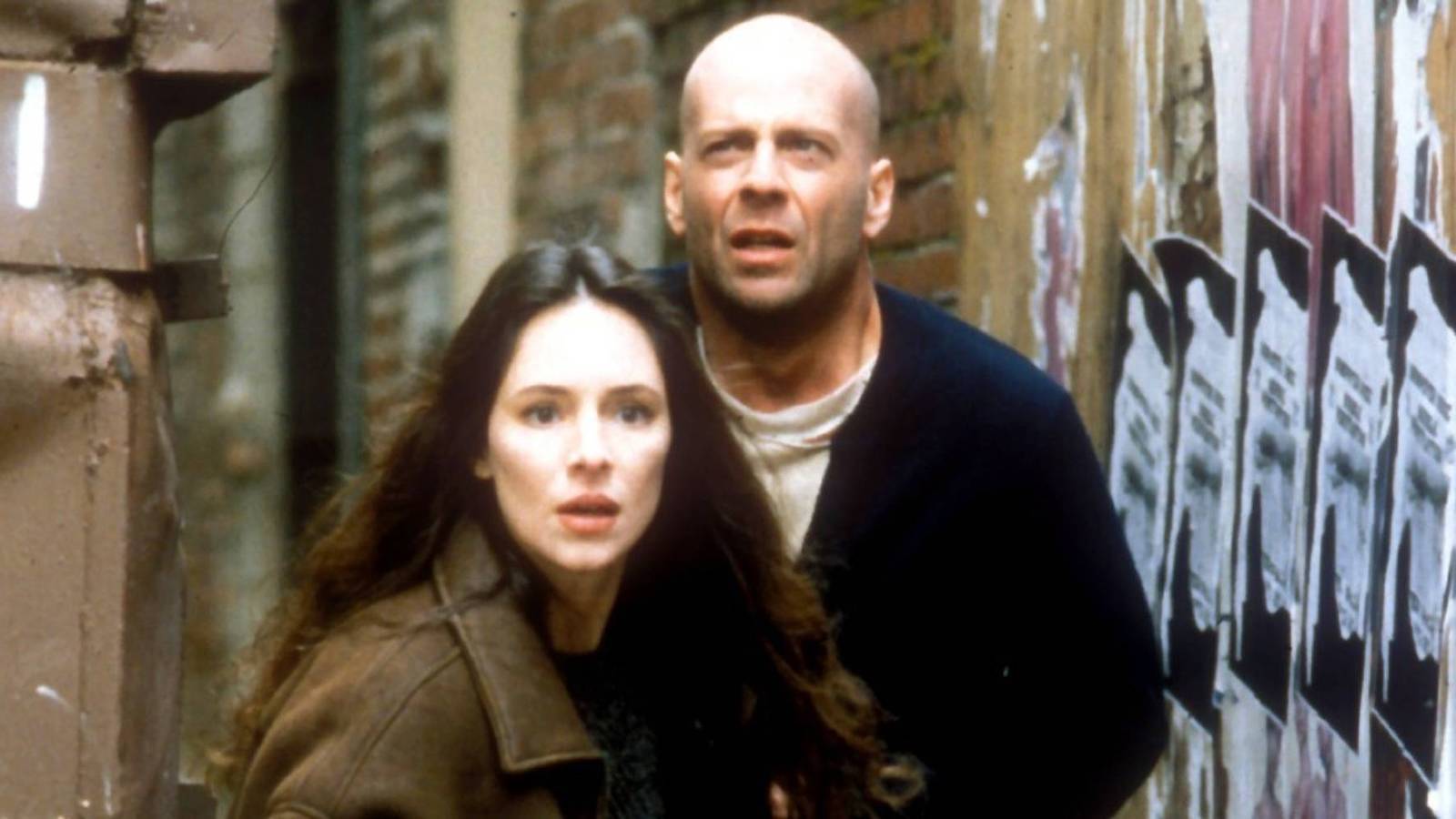
James Cole (Bruce Willis) is a prisoner living underground in 2035 after a virus has wiped out most of humanity. Scientists send him back through time to gather information about the outbreak, particularly a mysterious group called the Army of the Twelve Monkeys. 12 Monkeys keeps throwing Cole into the wrong years, where psychiatrist Kathryn Railly (Madeleine Stowe) thinks he's delusional, and unstable patient Jeffrey Goines (Brad Pitt) appears suspiciously connected to the group Cole is investigating.
What wrecks me about this one is Cole gradually realizing that the past feels more real to him than the future he's supposedly trying to save. He hears “Blueberry Hill” on the radio and becomes emotional because music itself feels miraculous after years underground. Kathryn slowly moves in the opposite direction, from diagnosing him to realizing that some of his impossible claims keep coming true. And sitting beneath everything is Cole's recurring childhood memory of watching a man get shot at an airport. Eventually you understand exactly who that man is. The movie has been telling you the ending from the beginning, and somehow that only makes arriving there worse. Time travel usually sells the fantasy that history can be corrected. 12 Monkeys makes you watch someone struggle desperately enough to believe it, then closes the door.
1. Brazil (1985)
Sam Lowry (Jonathan Pryce) is a minor government employee in a society where bureaucracy has swallowed almost every part of daily life. When a clerical error caused by a dead insect changes suspected terrorist Archibald Tuttle (Robert De Niro)'s name to Archibald Buttle (Brian Miller), an innocent man is arrested and killed by the state. Brazil follows Sam as he tries to correct the mistake, only to find himself drawn into a surreal, nightmarish world where the system is the true enemy.
This is Gilliam at his most visionary—a dystopian satire that's both hilarious and horrifying. The film's blend of retro-futurism and oppressive bureaucracy creates a world that feels utterly unique. Sam's dream sequences, where he becomes a winged hero, contrast sharply with the grim reality of his existence. The ending, which offers a glimmer of hope before snatching it away, is one of the most devastating in cinema history. Brazil is not just a movie; it's an experience that lingers long after the credits roll.
For more cinematic perfection, check out our list of must-see movies from 1980 to 2000, which includes some of Gilliam's contemporaries. And if you're a fan of mind-bending sci-fi, our ranking of hard sci-fi movies that redefined the genre is a must-read.