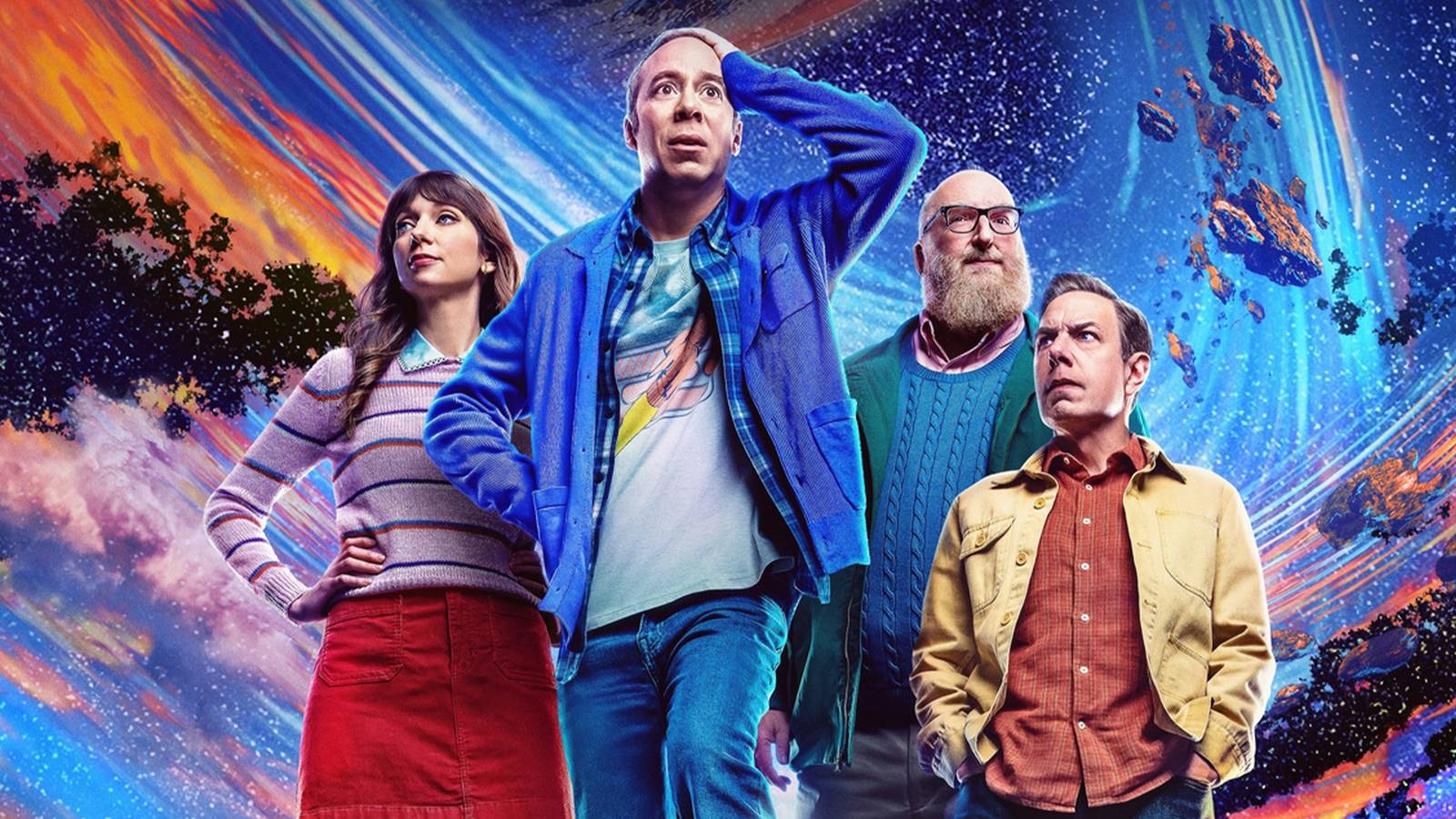
If you thought The Big Bang Theory had mined every possible story from its universe, think again. Stuart Fails to Save the Universe takes the franchise in a wildly unexpected direction, turning its most downtrodden character into the hero of a multiverse-spanning saga. The result? A charming, self-aware sci-fi comedy that’s far more ambitious than anyone could have predicted.
The premise sounds like something straight out of a fan’s fever dream: comic book store owner Stuart Bloom (Kevin Sussman) accidentally breaks a dimension-hopping device built by Sheldon Cooper (Jim Parsons) and Leonard Hofstadter (Johnny Galecki). Suddenly, he’s responsible for stopping a “multiverse Armageddon.” It’s a bizarre setup, but one that pays off in surprising ways, especially given the success of previous expansions like Young Sheldon and Georgie & Mandy’s First Marriage.

Finally, the Underdogs Get Their Due
For 12 seasons, Stuart was the ultimate punching bag—a struggling comic book store owner who moved in with Howard and Bernadette after his shop burned down. He was defined by his lack of options, making him the perfect lead for a story about infinite possibilities. Kevin Sussman slips back into the role effortlessly, delivering all the quirks fans love while finally giving Stuart more depth than just being the butt of the joke.
He’s joined by familiar faces from the original series: Bert Keppler (Brian Posehn), who gets to shine with a hilariously bizarre CGI shark, and the insufferable Barry Kripke (John Ross Bowie), who steals scenes with his lecherous one-liners. Even Ryan Cartwright and Josh Brener return in new roles as comic book store customers, their characters shifting across dimensions. It’s a treat for longtime fans, but the show also introduces fresh dynamics that keep things interesting.
A Sci-Fi Commitment That Pays Off
Unlike The Big Bang Theory, which treated sci-fi as a hobby, Stuart Fails to Save the Universe fully embraces the genre. The multiverse is brought to life with impressive production design—from a post-apocalyptic Pasadena stalked by a giant moth to a 1950s-style psychiatric institution that feels unsettlingly real. Each dimension is packed with Easter eggs, from wacky comic book titles like “Doctor Strange Colorectal Surgeon” to clever background details that reward repeat viewings.
The show’s commitment to worldbuilding is one of its strongest assets. It feels less like a sitcom and more like a puzzle box, with every new reality offering something visually distinct and narratively engaging. The momentum rarely lets up, making it easy to overlook any minor plot holes. After all, when you’re hopping between dimensions with a penguin in tow, logic takes a backseat to fun.
Room for Improvement
For all its strengths, the spin-off falls into the same trap as its predecessor when it comes to female characters. Lauren Lapkus’s Denise brings plenty of physical comedy, but she’s often reduced to being the object of Stuart’s affection or Barry’s unwanted advances. In a show that celebrates nerd culture, it’s disappointing that Denise isn’t given more agency within that world.
Still, Stuart Fails to Save the Universe is a welcome addition to the franchise. It’s a love letter to the underdogs, a celebration of sci-fi, and a reminder that even the most overlooked characters can have epic adventures. For fans of The Big Bang Theory and newcomers alike, this is a journey worth taking.