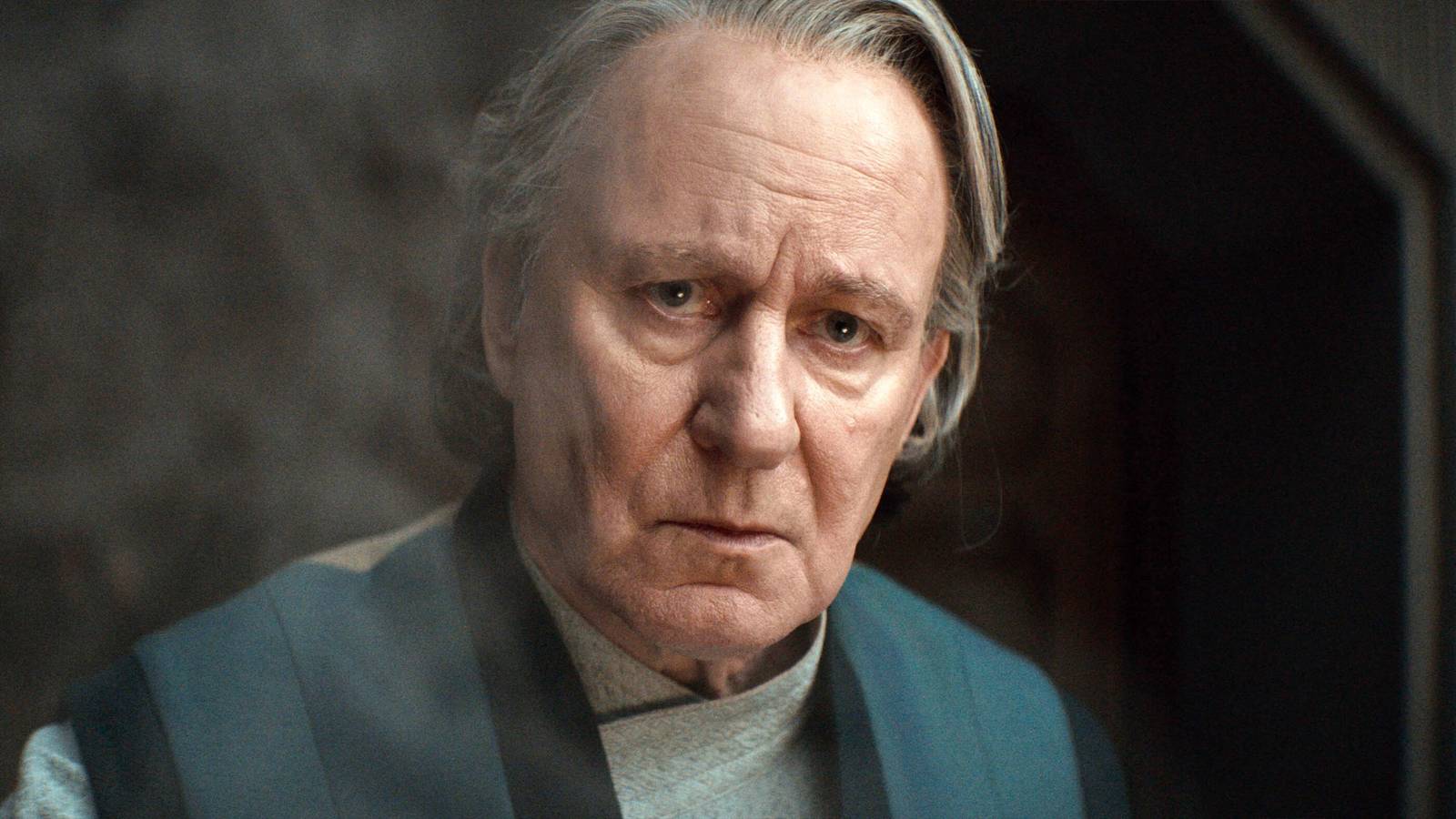
For a moment, it seemed Star Wars had finally shed its reputation for being a bit too silly to be taken seriously. George Lucas's universe is a sharp critique of fascism, but it's also pure entertainment, filled with aliens and outlandish names that keep it from being viewed with complete sincerity. That wasn't the case with Andor, the two-season sci-fi series that returned with a vengeance. It was savage in its political commentary and became the best war series of its time. Co-lead Stellan Skarsgård, for his part, had no illusions about the character he was playing. Luthen Rael was committed to the cause and delivered some of the most moving monologues ever put to screen.
Miraculously, that wasn't the best fans would see from the acclaimed actor. Skarsgård would go on to star in another pointed commentary, this time as Baron Vladimir Harkonnen, the brutal villain of the Dune franchise. Denis Villeneuve's approach to Frank Herbert's immersive world was masterful, starting with the villain to beat all villains.
Stellan Skarsgård Steals the Show As Baron Harkonnen
Stellan Skarsgård's role in Dune is startling and a complete departure from his rebel leader on Andor. Instead of being a bright vision for the future, he represents a capitalistic machine that crushes lives on the desert planet of Arrakis. The Baron is the irredeemable head of House Harkonnen, greedy in their mining of the spice mélange that only occurs on Arrakis. This is the way things were for generations until he conspired with the Emperor of the Imperium to tear down rival House Atreides.
The Baron is gluttonous in appearance, but his support of a corrupt system is what defines him. He believes himself to be the sole steward of Arrakis and the prime owner of spice. The Fremen, who are the indigenous people of the planet, are less than rats to him. He is the type of figure that Luthen would be fighting against, and he steals every scene doing it.
Harkonnen's assassination of Duke Leto Atreides (Oscar Isaac) is full of quiet menace that is terrifying to watch. He continues his reign of literal tyranny into Dune: Part Two, as he raises his nephew, the na-Baron Feyd-Rautha (Austin Butler), as his successor. His brutality is endless as the oppressor of the Dune world. This changes upon his death, and as satisfying as it is, it only ushers in a new form of fascism.
Dune Is the Ultimate War Commentary
Andor may have been sharp in its merciless commentary, but it has been surpassed by Denis Villeneuve's version of Dune. This makes sense since George Lucas took a lot of inspiration from Frank Herbert's book for Star Wars. Villeneuve was the first to officially pull off Paul Atreides' (Timothée Chalamet) tragic but horrifying downward spiral.
Stellan Skarsgård's portrayal of the Baron shows how war is a cycle. Paul himself acknowledges that to defeat his grandfather, he has to become him. Become him he does, but in some ways, is even a worse version of Harkonnen. Although Paul liberates the Fremen and empowers them to take their planet back, billions of lives are lost because of it. The people of Arrakis worship Paul like a messiah and sterilize any and all planets that do not accept him as the new Emperor.
The Baron was evil but on a much smaller scale. Villeneuve's Dune analyzes how anyone who accepts power is corrupted by it. This isn't necessarily because power is inherently corrupt but has more to do with the fact that charismatic people are drawn to these elevated positions. Even as Paul insists that he doesn't want to take power for himself, that is exactly what ends up happening.
The Dune saga fires on all cylinders, and its commentary on war is just a small facet of that. The series takes place in a galaxy that mirrors that of the viewers, which is what makes it an excellent sci-fi venture. Villeneuve outpaces all others in the genre because of this commentary, but also writing, cinematography, and music. Dune when Dune: Part Three concludes the trilogy on December 18, 2026.
For more gripping sci-fi and thriller recommendations, check out our list of thrillers that refuse to let go or dive into why Mindhunter remains the gold standard.