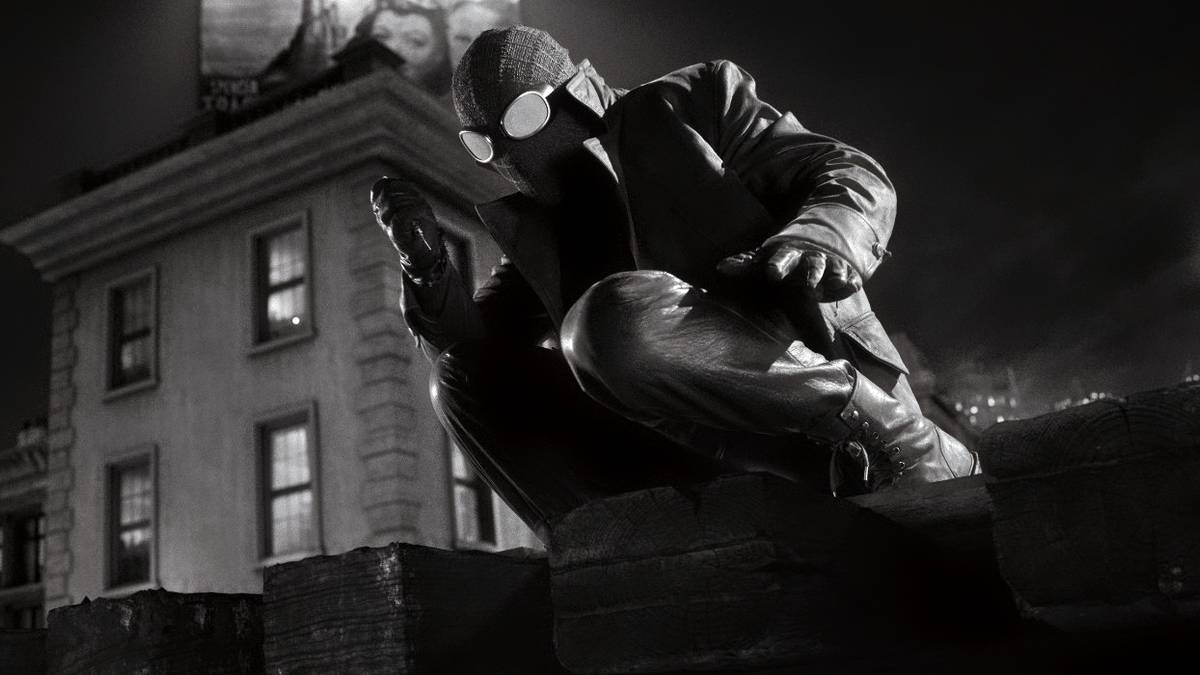
Sony Pictures has long struggled to replicate the Marvel Cinematic Universe's interconnected magic with its own Spider-Man spin-offs. Movies like Morbius, Madame Web, and Kraven the Hunter have stumbled, largely because they couldn't feature the web-slinger himself—Tom Holland's Peter Parker remains firmly in the MCU. But Prime Video's new live-action series, Spider-Noir, finally offers a winning formula: forget the crossovers, focus on a singular, compelling story.
A Self-Contained Noir Tale
From its first episode, Spider-Noir acknowledges the Spider-Verse—thanks to a voiceover from Ben Reilly (Nicolas Cage)—but quickly moves on. Series creator Oren Uziel has confirmed this version of the character is distinct from the animated Into the Spider-Verse Spider-Man Noir, and the show wastes no time diving into Reilly's personal journey. Set in a gritty, alt-history 1930s New York, the series follows a retired hero grappling with the death of his girlfriend, Ruby (Amanda Schull). It's a hard-boiled, film-noir story that prioritizes emotional depth over multiverse shenanigans.
This focus is a breath of fresh air. Instead of teasing future crossovers or setting up spin-offs, Spider-Noir tells a complete, self-contained arc about a man rediscovering his purpose. As we noted in our review, Nicolas Cage's 'Spider-Noir' Soars on Prime Video, Filling the Superhero Void After 'The Boys', the series proves that a strong character story can stand on its own.
Why Sony's Previous Strategy Failed
Sony's earlier attempts to build a universe around Spider-Man's rogues' gallery were hampered by the inability to include the hero himself. Venom: Let There Be Carnage teased a crossover with the MCU that never materialized, while Morbius and Madame Web made vague allusions to Spider-Man without ever delivering a satisfying connection. The result was a series of films that felt incomplete, always hinting at something bigger that never arrived.
Spider-Noir sidesteps this trap entirely. By setting its story in a distinct time and place—a pulp-inspired 1930s—it frees itself from the need to reference modern events or tie into existing continuity. This standalone approach allows the series to breathe and tells a story that feels complete on its own terms.
The Obvious Next Step: Spider-Man 2099
With Spider-Noir as a model, Sony's next live-action spin-off becomes clear: a Spider-Man 2099 series. Just as Spider-Noir jumps to the past, a 2099 show could leap into the future, focusing on Miguel O'Hara, a Spider-Man who has never been depicted in live-action. The futuristic setting would allow for a fresh, self-contained story free from the baggage of current continuity.
This approach aligns with what fans have been asking for: more Spider-heroes, not more villain-centric stories. As we argued in a recent piece, Prime Video Must Revive 'Silk: Spider Society' After 'Spider-Noir' Success, the success of this series proves there's an appetite for focused, character-driven superhero tales.
A New Blueprint for Sony
Spider-Noir is more than just a good show—it's a roadmap for Sony's entire Spider-Man universe. By telling a compelling, standalone story about an alternate-reality Spider-Man, the series proves that crossovers aren't necessary for success. If you build a strong narrative around a beloved character, the connections will naturally follow.
For now, Spider-Noir stands as a testament to what Sony's universe could have been all along: a collection of unique, self-contained stories that celebrate the many faces of Spider-Man. It's a lesson the studio would be wise to heed.