Great science fiction can wow you with spectacle, amaze you with concepts, or haunt you with its vision of the future. But the rarest achievement is a script so perfectly constructed that every element—character, dialogue, structure, and theme—works in flawless harmony. These are films where not a single scene is wasted, and every narrative choice tightens the story's grip.
We're celebrating ten sci-fi movies that achieve this difficult balance. They take ambitious, often sprawling ideas and distill them into clean, compelling human stories where the writing itself is the star. You stop just admiring the world and start noticing the meticulous craft in every scene transition and emotional beat.
10. ‘Minority Report’ (2002)
Steven Spielberg's film takes a high-concept premise—a police unit that arrests murderers before they commit the crime—and immediately makes it personal. The genius of the script is how it transforms complex world-building into a relentless survival thriller. By making protagonist John Anderton (Tom Cruise) the next target, every explanation of the PreCrime system becomes urgent and personal, not dry exposition. His grief over his lost son isn't just backstory; it's the emotional engine that makes the film's questions about free will and destiny resonate deeply.
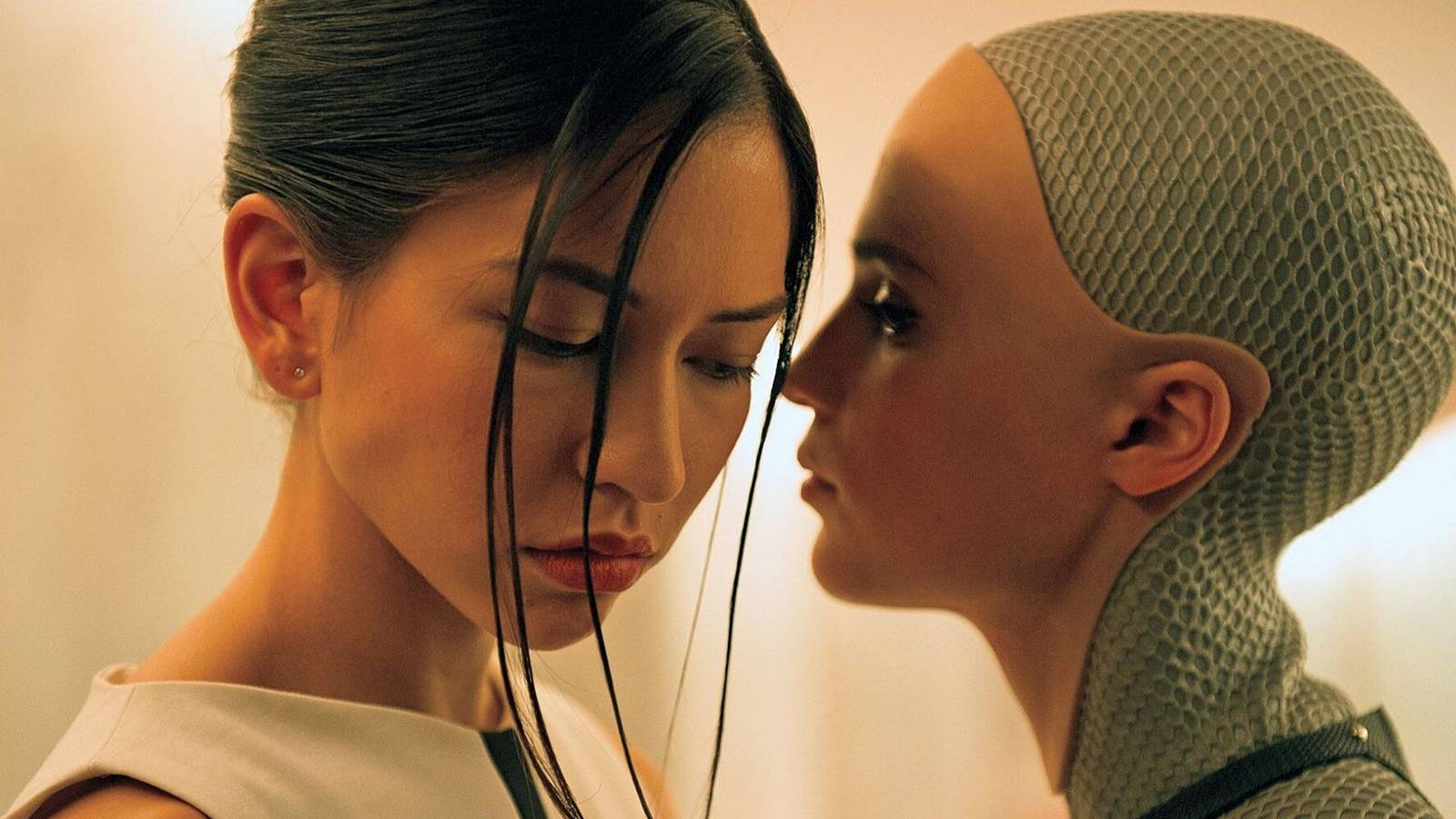
9. ‘Ex Machina’ (2014)
Confined almost entirely to a remote estate, Alex Garland's directorial debut is a masterclass in psychological tension and economical storytelling. The script understands that the real horror isn't in robotic rebellion, but in the terrifyingly human flaws of ego, desire, and self-deception. Every conversation between Caleb, Nathan, and Ava serves multiple purposes, revealing character, advancing the plot, and quietly shifting power dynamics. The dialogue is sharp, controlled, and loaded with subtext, making the final, chilling payoff feel both shocking and inevitable.
8. ‘Her’ (2013)
Spike Jonze's poignant film succeeds because its screenplay treats an unconventional love story with complete sincerity. It never winks at the audience or reduces its central relationship—between a lonely man and an AI operating system—to a joke. Instead, it builds a genuine, evolving connection. The writing is exact in its portrayal of modern isolation, using Theodore's job (writing personal letters for others) to brilliantly establish his emotional state. The film's true devastation comes not from technology gone wrong, but from its honest exploration of how two consciousnesses can grow together, and then apart.
7. ‘Gattaca’ (1997)
Andrew Niccol's dystopian thriller is a model of narrative efficiency. In a society obsessed with genetic perfection, the story of Vincent, a "faith-born" man pretending to be elite to achieve his dreams, is told with almost no wasted motion. Every detail, from the daily eyelash cleanup to the relentless stair-climbing, reinforces theme and character. The script weaves its central metaphor—the triumph of the human spirit over predetermined destiny—so tightly into the plot that the film feels both intellectually rigorous and deeply moving. For more films that masterfully blend genre with profound themes, check out our look at Sunshine: The Danny Boyle Sci-Fi Gem That Deserves Its Cult Status.
6. ‘Eternal Sunshine of the Spotless Mind’ (2004)
Charlie Kaufman's script is a breathtaking feat of emotional and structural engineering. It uses a sci-fi premise—a procedure to erase painful memories—to dissect the very nature of love, loss, and identity. The non-linear narrative, which mirrors the fragmented process of memory loss, is complex but never confusing. Each scene in Joel's disintegrating mind reveals another layer of his relationship with Clementine, building toward a heartbreakingly beautiful conclusion about why we cling to pain. It's a perfect marriage of high-concept innovation and raw, universal feeling.
5. ‘The Matrix’ (1999)
Beyond its groundbreaking visuals, The Wachowskis' screenplay is a remarkably tight action mythos. It introduces a incredibly dense fictional reality but parcels out its rules with perfect pacing, using Neo's journey as our guide. Every major beat—from "follow the white rabbit" to "there is no spoon"—serves both the immediate plot and the larger philosophical themes. The dialogue has entered the cultural lexicon for a reason: it's purposeful, memorable, and perfectly balanced with the film's relentless action.
4. ‘Arrival’ (2016)
Eric Heisserer's adaptation of Ted Chiang's story is a profound meditation on language, time, and choice. The brilliance of the writing lies in its dual structure: a first-contact narrative unfolding in parallel with intimate, emotional flashbacks. The audience pieces together the truth alongside linguist Louise Banks, making the film's stunning revelation about the nature of time a deeply personal emotional payoff, not just a clever twist. It's sci-fi that uses its conceptual framework to explore the most human of conditions: grief, connection, and the courage to embrace a destined path.
3. ‘Blade Runner 2049’ (2017)
Decades later, the sequel to a classic managed to expand its universe without betraying its soul. The screenplay by Hampton Fancher and Michael Green is patient, atmospheric, and thematically rich. Officer K's investigation is a slow-burn detective story that gradually peels back layers to ask profound questions about memory, authenticity, and what makes a life meaningful. Every character, from the replicant love interest Joi to the enigmatic Niander Wallace, serves the central mystery and themes. The sparse dialogue carries immense weight, making the visual storytelling and emotional silences even more powerful.
2. ‘Children of Men’ (2006)
Alfonso Cuarón's dystopian masterpiece is writing of relentless forward momentum. The world-building is delivered not through exposition, but through the background details of a society collapsing from global infertility. The plot is simple—transport a miraculously pregnant woman to safety—but this simplicity allows the script to delve deep into themes of hope, faith, and sacrifice amidst chaos. The famous long-take action sequences are thrilling because they're grounded in Theo's very real, desperate fear and his growing commitment to a cause. It's a technically dazzling film built on a rock-solid, human-scale story.
1. ‘Planet of the Apes’ (1968)
The original film's enduring power lies in the sharpness of its social allegory and the efficiency of its storytelling. Michael Wilson and Rod Serling's script drops astronaut Taylor into a bizarre inverted world and lets the horrifying truth dawn on him—and the audience—with perfect timing. The dialogue is crisp, often laced with cynical wit that makes Taylor a compelling guide. The famous ending is one of cinema's greatest twists not because it's a cheap shock, but because it's the devastating, logical culmination of every theme the film has carefully established about human nature, arrogance, and destiny.
These films prove that the most lasting sci-fi is built on the foundation of impeccable writing. They show us incredible worlds, but they make us care through perfectly structured stories about the people within them. For more expertly crafted viewing, explore our Your Perfect Netflix Weekend: 3 Must-Watch Movies for April.