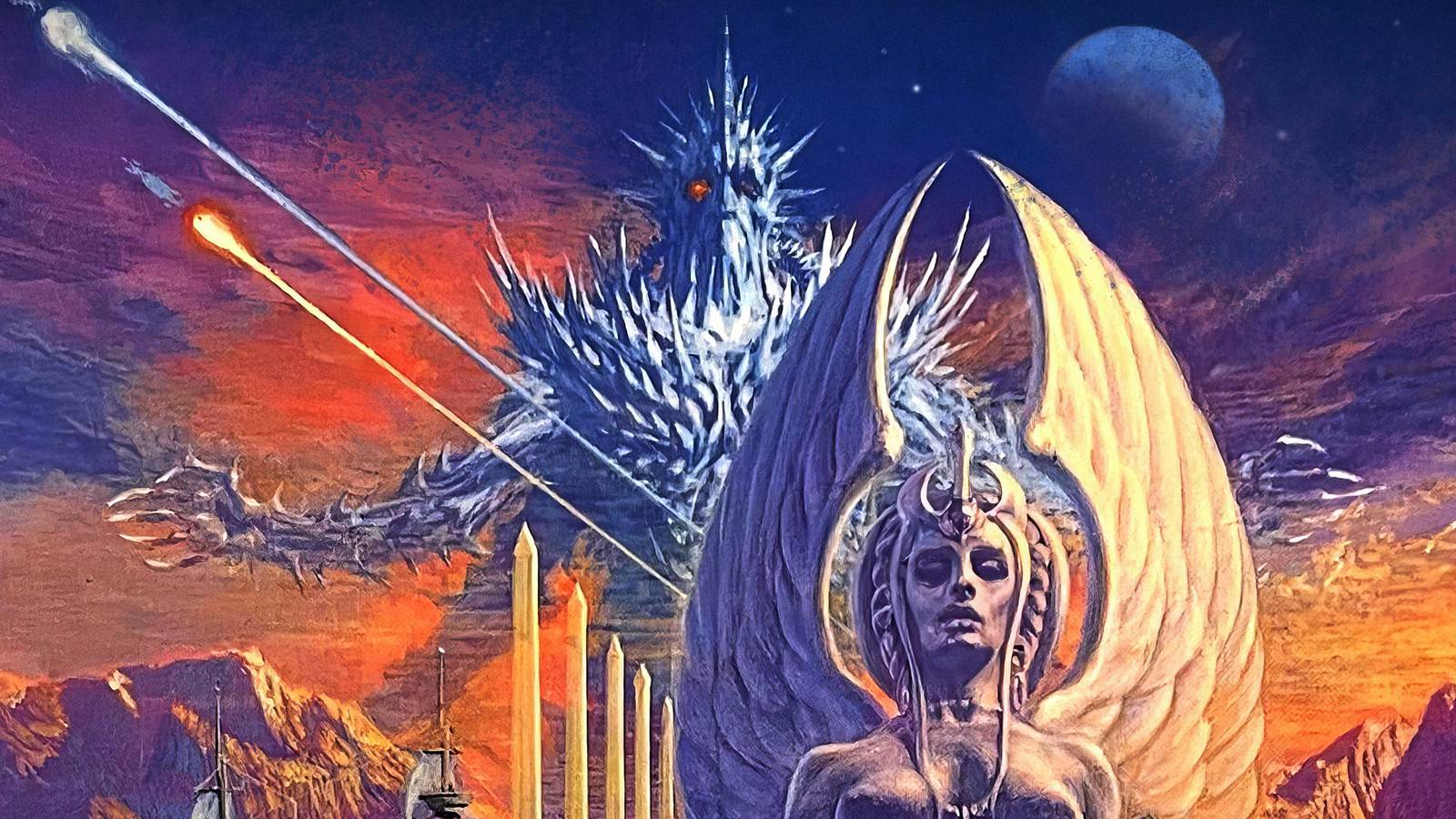
Great science fiction doesn't just tell a story—it builds a universe. The best sci-fi books transport readers to worlds that feel as real as our own, with histories, cultures, and technologies that are meticulously crafted. Worldbuilding is the backbone of the genre, and these ten novels are the ultimate masterclasses in creating immersive, unforgettable settings.
10. House of Suns (2008)
Alastair Reynolds is a titan of modern hard sci-fi, and House of Suns is his sprawling space opera masterpiece. The narrative spans millions of years, following a cloned dynasty as they traverse a galaxy teeming with ancient mysteries. Reynolds' scientific rigor makes every star system, every alien race, and every piece of technology feel plausible and awe-inspiring. It's a dense, atmospheric read that rewards patient readers with a universe you can get lost in for days.

9. Snow Crash (1992)
Neal Stephenson's Snow Crash is a cyberpunk classic that predicted the Metaverse decades before it became a buzzword. Set in a hyper-capitalist dystopia where the line between reality and virtual reality blurs, the novel is a whirlwind of linguistics, history, and philosophy. Stephenson's world is so meticulously researched that it feels eerily prophetic, making it a must-read for anyone interested in the intersection of technology and society.
8. Children of Time (2015)
Adrian Tchaikovsky's Children of Time is a modern sci-fi triumph, winning the Arthur C. Clarke Award for its breathtaking worldbuilding. The novel follows humanity's last survivors as they encounter a planet where evolution has taken a radically different path—spiders have become the dominant intelligence. Tchaikovsky builds an entire alien civilization from the ground up, with a level of scientific detail and creativity that sets a new standard for the genre.
7. Hyperion (1989)
Dan Simmons' Hyperion is a Hugo Award-winning epic that redefines the space opera. Structured like The Canterbury Tales, it follows a group of pilgrims on a journey to the mysterious Time Tombs, each telling their own story. Simmons weaves together horror, mystery, and military sci-fi into a rich tapestry that spans a galactic empire. The worldbuilding is so intricate that it can support these diverse tones without ever feeling disjointed.
6. The Left Hand of Darkness (1969)
Ursula K. Le Guin's The Left Hand of Darkness is a landmark of feminist and sociological sci-fi. Set on the planet Gethen, where inhabitants are genderless except during a monthly cycle, the novel explores themes of identity and society. Le Guin's worldbuilding is subtle but profound, creating a culture that feels alien yet deeply human. It's a book that challenges readers to rethink their assumptions about gender and society.
5. Dune (1965)
Frank Herbert's Dune is the gold standard of sci-fi worldbuilding. The desert planet Arrakis is a character in itself, with its ecology, politics, and religion all intricately interwoven. Herbert's universe is vast, spanning multiple planets, factions, and millennia of history. It's a dense, complex read that rewards multiple visits, and its influence can be seen in everything from Star Wars to Game of Thrones.
4. Neuromancer (1984)
William Gibson's Neuromancer is the definitive cyberpunk novel, and its worldbuilding is nothing short of revolutionary. The Sprawl, a massive urban expanse, and the Matrix, a virtual reality network, are so vividly realized that they've become archetypes for the genre. Gibson's vision of a future dominated by corporations and hackers feels more relevant than ever, making it a timeless classic.
3. Foundation (1951)
Isaac Asimov's Foundation is a cornerstone of sci-fi, introducing the concept of psychohistory—a mathematical science that can predict the future of large populations. The novel spans centuries, following the rise and fall of empires across the galaxy. Asimov's worldbuilding is grand in scale, but it's the intellectual depth that sets it apart. It's a book that makes you think about the nature of civilization itself.
2. The Left Hand of Darkness (1969)
Wait, we already mentioned this one—but it's so good it deserves a second mention. Le Guin's masterpiece is a perfect example of how worldbuilding can be used to explore deep philosophical questions. The planet Gethen, with its unique biology and culture, is a mirror for our own world, and the novel's themes of duality and unity resonate just as strongly today.
1. Dune (1965)
Yes, we're listing Dune twice because it's that good. Frank Herbert's epic is the ultimate achievement in worldbuilding, creating a universe that feels both ancient and futuristic. The intricate politics, the ecology of Arrakis, the Bene Gesserit's scheming—every detail is meticulously crafted. It's a book that has inspired generations of writers and filmmakers, and it remains the benchmark for sci-fi worldbuilding.
These ten books are essential reading for any sci-fi fan. They don't just tell stories—they build worlds that stay with you long after you've turned the last page. For more on the best of sci-fi, check out our list of the best sci-fi TV shows of the 21st century.