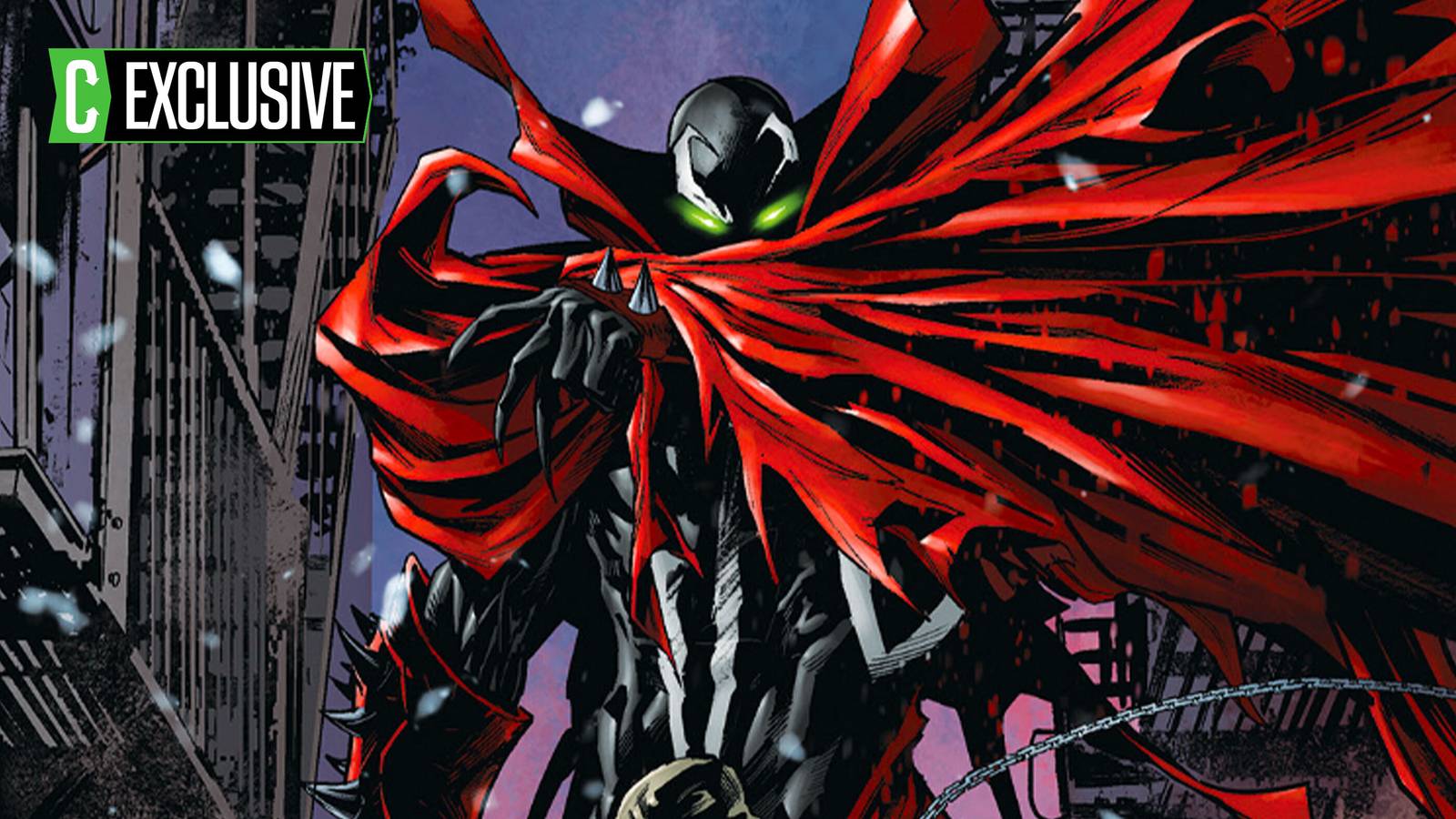
Reading a Christmas slasher set in the Spawn Universe, the last thing I expected to worry about was whether Santa could keep a 911 dispatcher on the line. But in I Saw Santa, that's exactly the kind of tension that makes the story sing. Nicholas, aka Santa, stumbles upon the Anderson family's murder on Christmas Eve and calls for help. The dispatcher asks him to make a sound if he can hear her. He tries to give the family's name, but from her end, silence. From his, he hears a perfectly reasonable woman explain why she's about to hang up. It's a brutal moment for a guy who still has four time zones of presents to deliver.
When I spoke with Todd McFarlane, Chris Killian, and Andrew Sanders about I Saw Santa and its sequel I Saw Spawn #1, Killian revealed that the call came from a question they had to answer: "If he knows who the killer is, why is he not warning anybody through all this?" Nicholas does warn people—he writes to authorities, contacts Interpol, even tries the Vatican. But most adults know exactly what to do with a letter from Santa, and they have every reason to be suspicious. Getting on the phone should help, except Killian and Sanders took a familiar piece of Christmas lore at its word. As Killian put it, "If you don't believe in him, you can't see him, you can't hear him. And how horrifying is that for him?"
Santa's Laurie Strode Problem
What makes the 911 call so effective is that the dispatcher is probably good at her job, but the Andersons are no closer to help. Artist Thomas Nachlik lets us see both sides of the conversation on the page—we can read the name Santa gives her, so when she asks him to speak up, there's a moment where it feels like all he has to do is say it again. That sliver of hope is worth preserving for as long as she stays on the line. McFarlane brought up John Carpenter's The Thing when describing how horror can make even rescue work against its characters. Sometimes, he said, "the cavalry is not coming." Or if it is, it's half an hour away.
McFarlane points out that most horror stories stretch out that half hour. Here, Santa gets the length of a phone call, and that's where McFarlane saw another Carpenter movie in Nicholas's predicament. Killian and Sanders had found something that "basically isolates this horror and puts Santa on his own," he explained. Once that happens, "now he just becomes Jamie Lee Curtis. Now what do I do?" It's a fair question for a man whose job requires him to keep visiting houses on the very night a killer knows where to find him. When I suggested they'd made Santa the final girl, Killian laughed: "That was exactly what we did."
The nastiest part of the whole thing is that Charlie Kohl is one of the few people (who isn't a child) who still believes. He stayed up hoping to catch Santa coming down the chimney and saved everything Nicholas ever brought him. Unfortunately for Santa, what he brought Charlie was coal, and the boy has been looking forward to giving every piece of it back. Killian described the coal as something Nicholas hopes will "help bad children sort of find their way out of the dark." But in this case, and probably several others, those intentions have been misinterpreted. Charlie has had years to sit with the knowledge that somebody saw what he did, judged him for it, and would be back at his house next Christmas Eve. Of all the people Santa needs to convince he exists, the one who's kept the receipts is the one he has reason to fear.
Krampus's Grievance
Krampus has always been more my speed at Christmas, so one of the pleasures of I Saw Spawn is discovering that he has apparently spent years nursing a grievance over the direction of the family business. In Killian and Sanders's version of Christmas, Krampus and Santa are brothers, and Nicholas made a fairly consequential decision about what the holiday ought to look like without securing his brother's vote. As Killian put it, "I think Krampus is actually a little hurt by it," which is understandable considering he's been locked away while his brother went on to become one of the most beloved figures in the world.
What sells their falling-out is that I Saw Santa has already given Krampus an infuriatingly good example to cite. Nicholas spent years leaving coal for Charlie Kohl in the hope that the boy would turn his life around—imagine how that looks to the brother who used to be in charge of dealing with naughty children. Killian had a pretty good handle on the argument Krampus would make in his own defense: "Because if I'd been around, you know, eating naughty kids, then this maybe wouldn't have been a problem."
Somewhere in the middle of a perfectly reasonable objection to eating children, Santa now has to concede that his brother has a point about Charlie. That's a far better use of Krampus than bringing him out at Christmas to give somebody a scare, and it's also where I Saw Spawn feels most like a sequel worth picking up on its own. The first comic lets us see why Nicholas keeps giving Charlie another chance, and the second gives us somebody who's known Nicholas long enough to be thoroughly unimpressed by that quality in him. Even the sight of the brothers together raises a question about who got to te...
For more on the twisted world of Spawn, check out our analysis of dark finales and thriller recommendations that keep you up at night.