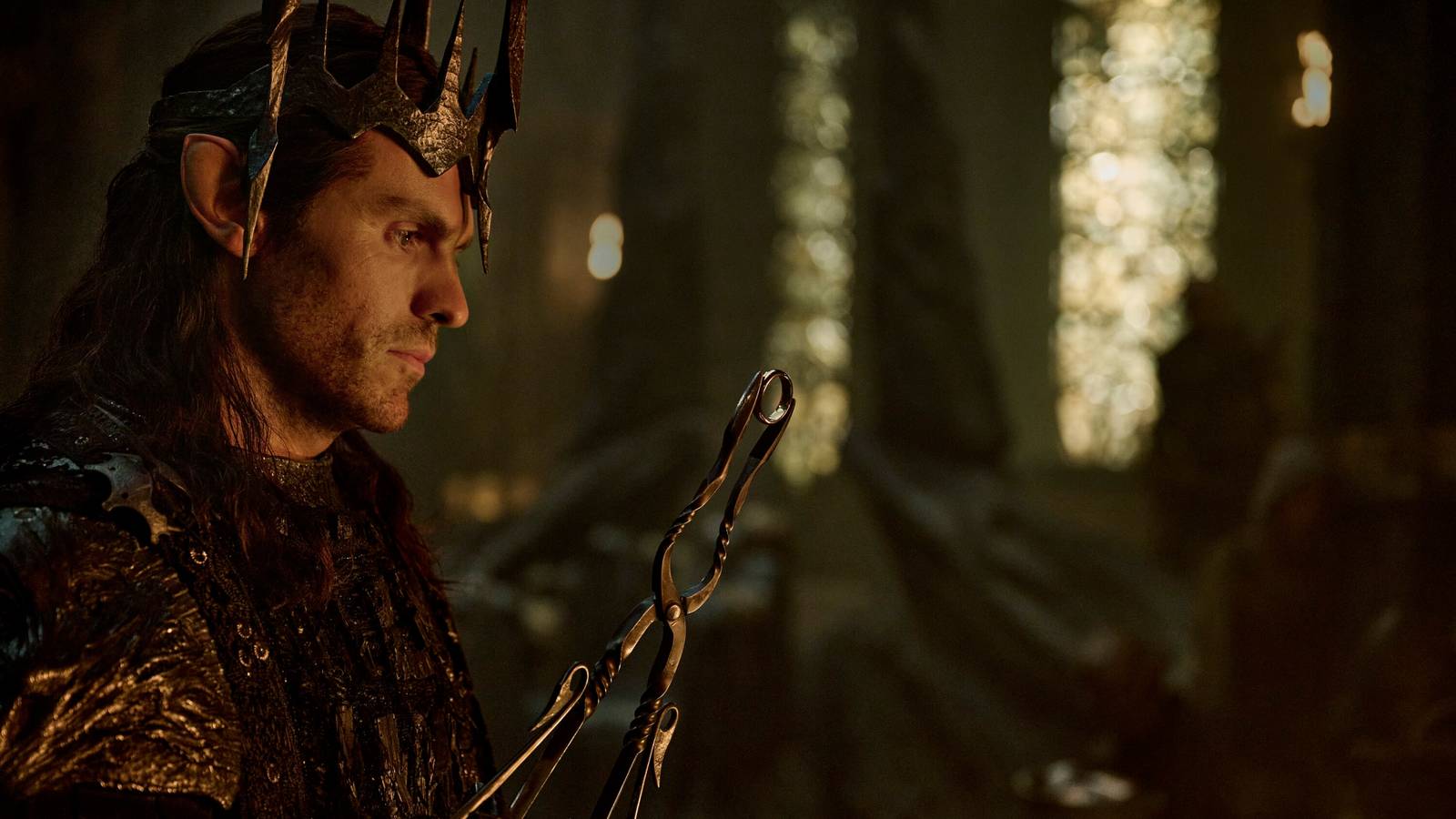
The final episodes of The Lord of the Rings: The Rings of Power Season 3 have arrived, and with them, the long-awaited forging of the One Ring. Sauron (Charlie Vickers) has finally crafted the master ring that will rule them all, a moment that fans have been anticipating since the series first premiered. But while the show has only now unveiled this pivotal event, it turns out the opening credits have been hiding a subtle clue about the One Ring's creation from the very beginning.
The opening credits of The Rings of Power are more than just a stylish intro—they tell the story of Middle-earth's creation through sound and visual artistry. Set to a score by Howard Shore, the sequence uses cymatics to shape swirling particles, depicting the Music of the Ainur that brought the world into being. In Season 1, the credits show the formation of the rings for Men, Dwarves, and Elves, along with Sauron's own ring. Season 2's intro follows a similar pattern, with the sand and dust forming different constructs each time. But the process itself remains a constant, and it's in that very process that Sauron's forging is foreshadowed.

In the penultimate episode of Season 3, Sauron finally creates the One Ring in the fires of Mount Doom. Using Fëanor's hammer, stolen from Celebrimbor (Charles Edwards), he strikes the anvil with gold and silver from Valinor, sending a massive vibration through the volcano. As the shockwave ripples outward, the particles of soot and dirt shift and swirl, eventually forming the Ring itself. The visual resemblance to the opening credits is unmistakable—though Sauron's version is far more chaotic and desperate than the smooth, elegant movements of the Ainur.
This contrast is intentional, according to the show's creators. The opening credits represent the divine, harmonious creation of the Ainur, while Sauron's forging is a frantic, angry attempt to sub-create. He argues with the ghost of Celebrimbor, whether in his own mind or as a genuine manifestation, as he struggles to master the craft. Unlike the Ainur, Sauron isn't naturally in tune with creation, and the Season 3 credits reflect this—they're more explosive and focused on the borders of Mordor than on life-giving generative forces, centering solely on the One Ring.
In Tolkien's original lore, as detailed in The Silmarillion, Sauron's forging of the One Ring happened at a different time. He deceived the Elves into making the rings of power under the guise of Annatar, the Lord of Gifts, and then left Eregion to forge the One Ring in secret. The Elven rings, crafted without Sauron's influence, were unmarred, but when Sauron put on the One Ring, the Elves sensed his deception and removed their own rings. This moment is depicted in Season 3's penultimate episode, aligning with the source material.
The exact details of Sauron's forging are left vague in Tolkien's writings, but it's clear he had the skill, having studied under Aulë, the Smith of the Valar. He imbued the One Ring with his own fëa (soul), linking his fate to it. This is why, when the Ring is destroyed in The Return of the King, Sauron is permanently vanquished. The Rings of Power has set the stage for that eventual downfall, and the opening credits have been a quiet reminder of the Ring's significance all along.
For more on the making of this pivotal moment, check out our interview with the director on the weight of forging the One Ring. And if you're wondering what's next for Middle-earth, we've got the latest on Season 4's renewal.
The Lord of the Rings: The Rings of Power Season 3 is now streaming on Prime Video, with Season 4 expected to premiere at a later date.