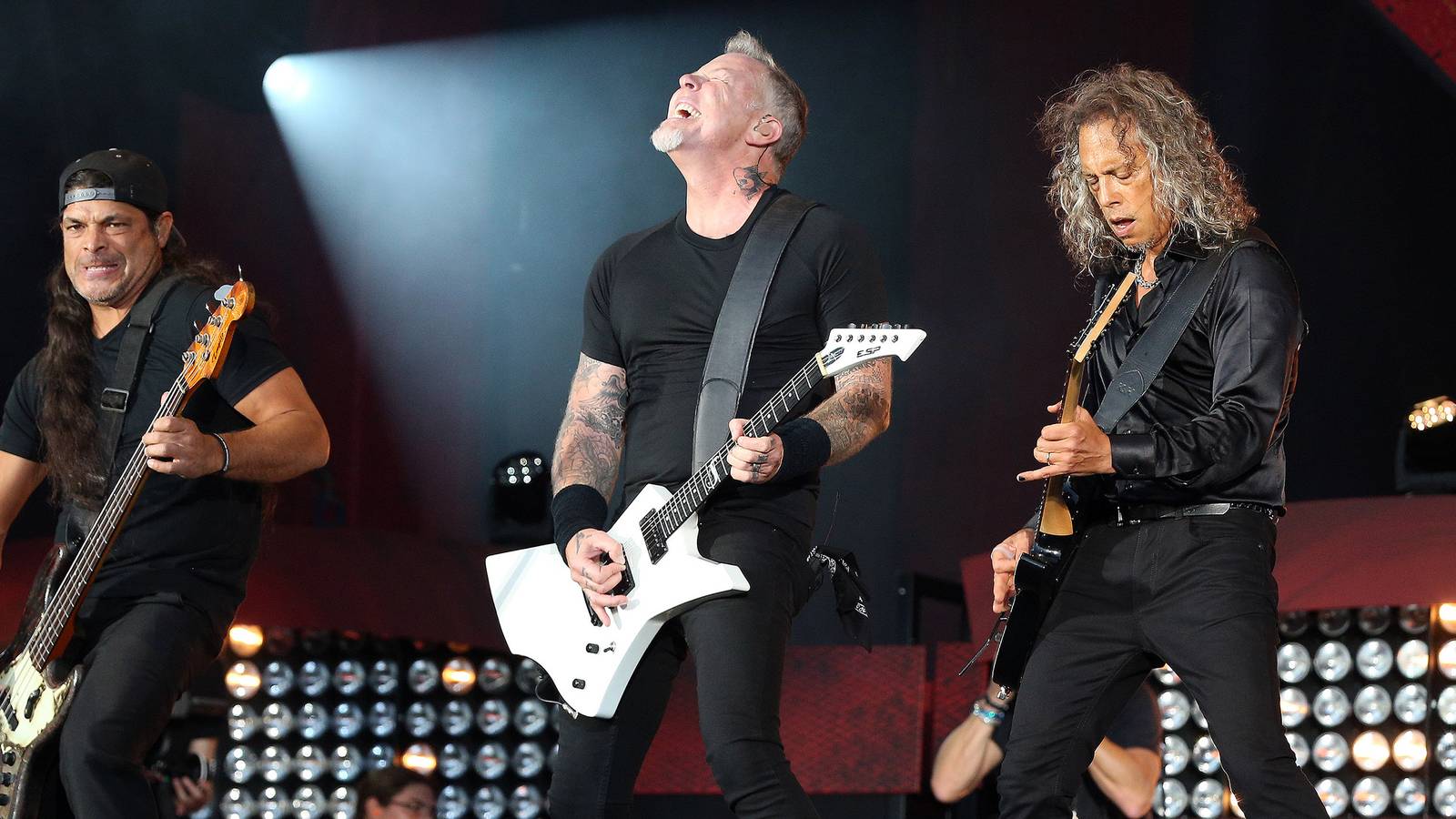
Since the release of their self-titled fifth album in 1991—commonly known as the Black Album—Metallica has been a dominant force in rock and metal. That record catapulted them to global superstardom, and every subsequent studio album (except one) has debuted at No. 1 on the Billboard 200. With nine Grammy Awards, two albums in the Grammy Hall of Fame, and a 2009 Rock and Roll Hall of Fame induction, the band's legacy is secure. But not all their post-1991 efforts are created equal. Here's our definitive ranking of every Metallica studio album from the last three decades, excluding the 1998 covers project Garage Inc. and the 2011 Lou Reed collaboration Lulu.
7. St. Anger (2003)
Few albums in metal history have sparked as much debate as St. Anger. Recorded during a period of intense turmoil—bassist Jason Newsted had just left, frontman James Hetfield entered rehab for alcoholism, and drummer Lars Ulrich was frustrated by the band's limited recording schedule—the album captures a group in crisis. The documentary Some Kind of Monster chronicles these struggles, and the music reflects the chaos: abrasive, raw, and devoid of guitar solos, with a notoriously clanging snare drum sound. While it won a Grammy for Best Metal Performance and sold millions worldwide, it remains a polarizing entry in the band's catalog, a brave but flawed experiment that doesn't hold up against their best work.
6. Reload (1997)
Following the massive success of Load, Metallica returned with Reload, a collection of songs that didn't make the cut for its predecessor. The album continues the band's shift toward hard rock, with slower grooves and a departure from their thrash roots. Tracks like the high-octane "Fuel" and the sequel "The Unforgiven II" show the band exploring familiar territory, while "The Memory Remains" features backing vocals from Marianne Faithfull, a first for the group. Despite some strong moments, Reload feels like a B-sides collection, lacking the cohesion and punch of Load and their later work.
5. Death Magnetic (2008)
After the divisive St. Anger, Metallica returned with Death Magnetic, produced by Rick Rubin. This album marked a deliberate return to their thrash roots, featuring longer, more progressive songs with intricate guitar harmonies and complex structures. Highlights include the Grammy-winning "My Apocalypse," the epic "Suicide & Redemption," and the third installment of the "Unforgiven" trilogy. With Robert Trujillo now on bass, the band sounded reinvigorated, delivering a record that harkened back to the glory days of Master of Puppets and ...And Justice for All.
4. 72 Seasons (2023)
Released 40 years after their debut, 72 Seasons finds Metallica still vital and relevant. The title refers to the first 18 years of life, a concept Hetfield explores in the lyrics. The album is riff-heavy and progressive, with standout tracks like the Grammy-winning title track and the epic closer "Inamorata," the band's longest song at over 11 minutes. While it didn't debut at No. 1, breaking a six-album streak, it proved that Metallica can still deliver compelling music after four decades.
3. Hardwired... to Self-Destruct (2016)
Eight years after Death Magnetic, Metallica returned with Hardwired... to Self-Destruct, a double album that continues their progressive thrash approach. The record is aggressive and tight, with tracks like the blistering opener "Hardwired" and the groove-laden "Moth Into Flame" showing the band at their most focused. It's a worthy addition to their catalog, proving they could still write memorable riffs and anthemic choruses.
2. Load (1996)
Following the massive success of the Black Album, Metallica took a bold left turn with Load. The album saw the band embracing a more bluesy, hard rock sound, complete with a controversial new image and a departure from their thrash roots. While it divided fans, Load contains some of the band's most mature songwriting, with tracks like "Until It Sleeps," "Hero of the Day," and the epic "Bleeding Me" showcasing a new depth. It's a record that has aged well, and its influence can be heard in modern rock.
1. Metallica (The Black Album, 1991)
It's impossible to overstate the impact of the Black Album. Produced by Bob Rock, it streamlined Metallica's sound into a more accessible, radio-friendly format without sacrificing their heaviness. The album spawned massive hits like "Enter Sandman," "Sad but True," and "The Unforgiven," and has sold over 30 million copies worldwide. It's the album that turned Metallica into household names and remains a cornerstone of rock radio. Even after three decades, it stands as their greatest post-1991 achievement, a timeless classic that continues to resonate with old and new fans alike.
For more on the band's legacy, check out our ranking of the greatest grunge anthems, or explore classic American horror films for a different kind of scare.