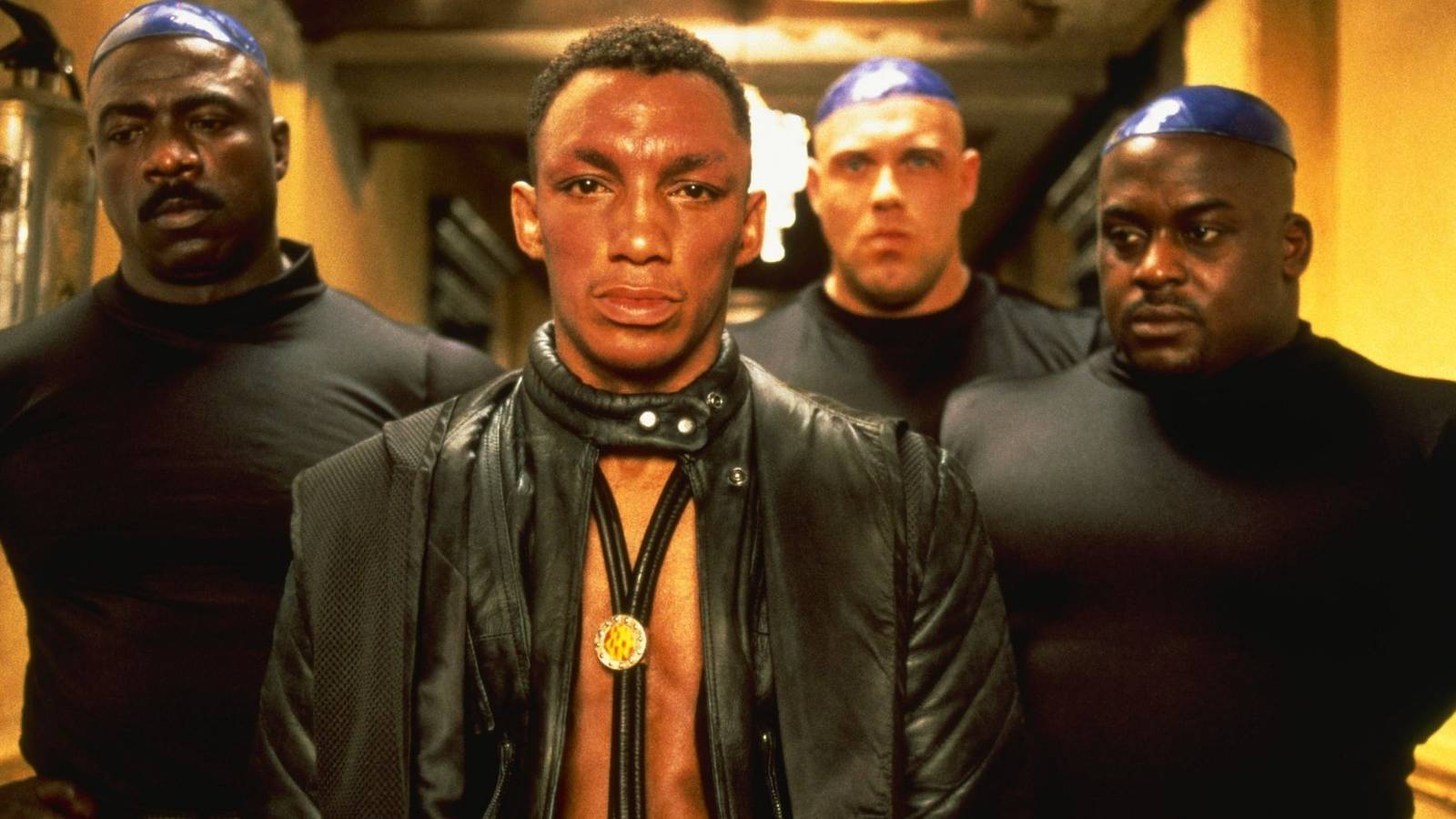
In the long wait for the next epic chapter of Dune, there's a gap in the universe for truly bizarre and imaginative science fiction. Sure, you could revisit a certain iconic galaxy, but why not take a detour down a far weirder, more colorful cosmic path? Your next essential stop is already on Netflix: Luc Besson's 1997 cult phenomenon, The Fifth Element.
This isn't your standard space opera. The Fifth Element presents a future where flying cabs zip through skyscrapers, alien divas perform intergalactic opera, and an unhinged Gary Oldman schemes as the villainous industrialist Jean-Baptiste Emanuel Zorg. It's a world bursting with practical creature effects and prosthetic makeup that feels even more impressive in today's CGI-saturated landscape. The film holds a 71% critics score and an 87% audience score on Rotten Tomatoes, a testament to its enduring, eccentric appeal.

What Is 'The Fifth Element' Actually About?
Every 5,000 years, a great evil returns to threaten existence. The only defense is a cosmic weapon comprised of four elemental stones and a mysterious "fifth element" contained in a human-sized pod. When the ship carrying this secret weapon is attacked by Zorg, all that remains is a single, severed hand. Using advanced technology, scientists reconstruct the person it belonged to: Leeloo (Milla Jovovich), a bewildered being clad in iconic white bandages.
Leeloo's chaotic path collides with Korben Dallas (Bruce Willis), a weary New York cab driver who suddenly finds himself as humanity's unlikely last hope. Together, they must evade Zorg's forces, decipher the mystery of the fifth element, and prevent universal annihilation. Their frantic journey is a hallmark of the kind of high-concept, star-driven action that defined an era, much like Bruce Willis' Forgotten '90s Thriller Striking Distance.
A Symphony of Sci-Fi Weirdness
The adventure escalates to a luxurious space cruise liner hosting an alien opera singer, where they're forced to partner with the flamboyant, shrieking media personality Ruby Rhod (Chris Tucker). The film's commitment to its own bizarre internal logic is its greatest strength, creating a universe that feels both lived-in and utterly fantastical. It's a cinematic experience that stands apart from more conventional blockbusters, similar to how Frank Grillo's 'Boss Level' carves its own niche in the time-loop genre.
From Zorg's multi-barreled firearm to the dense cityscapes and alien markets, The Fifth Element is a triumph of physical production design. The film builds to a climax that delivers a simple, powerful message about the nature of love and humanity—a conclusion that viewers have debated as either brilliantly straightforward or charmingly blunt for decades.
In an era where many sci-fi films can feel homogenized, The Fifth Element's fearless originality shines brighter than ever. It's a reminder that big-budget science fiction can be playful, romantic, and wildly inventive all at once. So if you're craving a spectacle that prioritizes pure, unadulterated imagination over familiar tropes, your next great Netflix watch has been waiting for you since 1997. Just be prepared for a future that's far stranger—and more fun—than you remember.