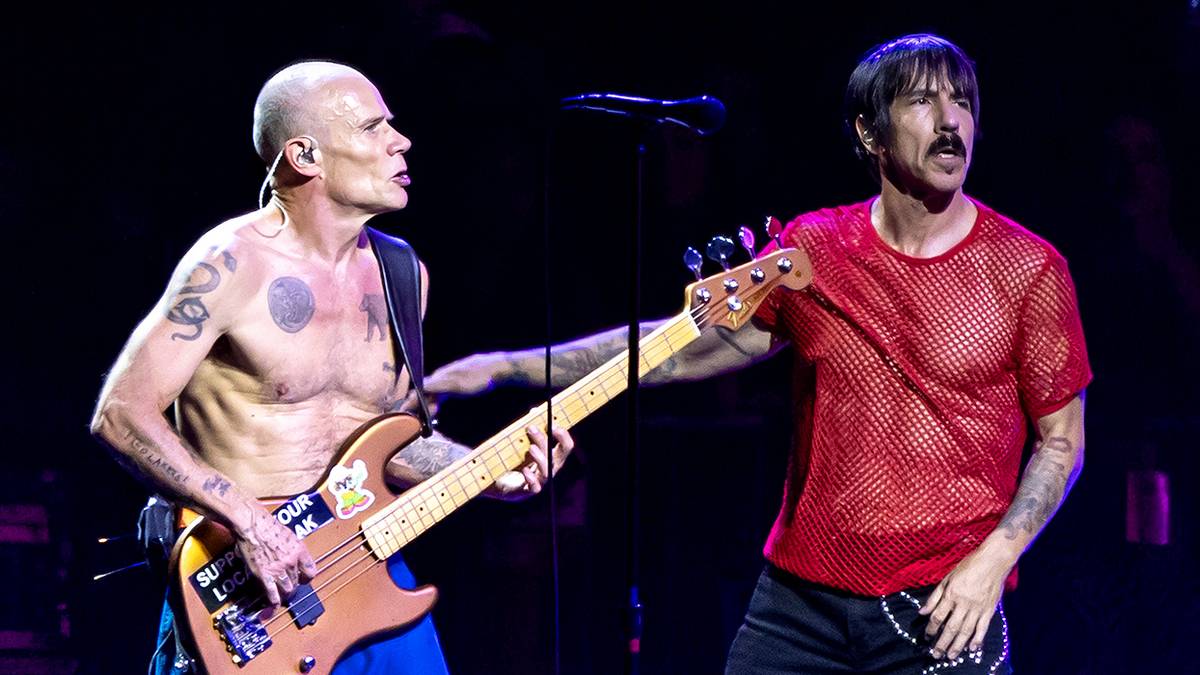
Few bands embody the spirit of Los Angeles like the Red Hot Chili Peppers. For decades, Anthony Kiedis, Flea, and company have soundtracked the city's sun-soaked highs and shadowy lows, from the Hollywood critique of 'Californication' to the raw isolation of 'Under the Bridge.' But their love for LA isn't all grit and cynicism. A fiery, lifelong passion for the city's purple and gold heart—the Los Angeles Lakers—spawned one of their most enduring early anthems.
From High School Chant to Funk-Rock Tribute
The story of 'Magic Johnson' begins not in a recording studio, but on a high school field. The track's origins trace back to a marching-band chant from Flea and Anthony Kiedis's days at Fairfax High, initially titled 'Fairfax High.' The band transformed this raw, rhythmic foundation into a full-throttle funk-rock tribute to Lakers superstar Earvin 'Magic' Johnson, recording it for their 1989 album Mother's Milk. The timing was perfect: Johnson was at the peak of his powers, having just secured NBA MVP honors.
Music and sports have always shared a powerful connection, from stadium anthems to victory songs. Yet, the Chili Peppers' homage stands out for its direct, personal fervor. In the song, Kiedis proudly declares he watches the Lakers 'on the telly,' shouting out franchise greats James Worthy and Kareem Abdul-Jabbar while making it clear Magic was the maestro. This wasn't just fandom; it was a musical coronation.
A Fandom Forged in the Forum
The band's devotion came full circle in 2003 when they performed at the iconic Kia Forum, the Lakers' former home. During the show, Flea proclaimed Magic Johnson the greatest of all time, cementing a bond between the band's music and their basketball heroes. For Flea, this love story started in 1975 when his mother took him to a Lakers game. Watching Kareem Abdul-Jabbar from the nosebleed seats was one thing, but witnessing Magic Johnson's revolutionary play—his fast breaks and legendary no-look passes—was a revelation that shaped his fandom forever.
Like any true fan relationship, it hasn't been without its drama. Kiedis was once ejected from a courtside seat for yelling at an opposing player, and Flea has publicly criticized the team's management during rough patches. This passion underscores that their support is deeply genuine, mirroring the intense, sometimes chaotic energy of their music. It's a loyalty that extends beyond one player, as seen when the band mourned the loss of Kobe Bryant. Flea, who performed a uniquely fuzzy bass rendition of the national anthem at Bryant's final game, remembered him as a leader who evolved from a bold teenager into a humble champion.
The legacy of 'Magic Johnson' is a testament to how personal inspiration can fuel iconic art. It captures a specific moment in the band's career and the city's culture, blending adolescent energy with professional admiration. In a catalog filled with explorations of love, loss, and Los Angeles, this track remains a vibrant, bouncing snapshot of pure sports joy.
This kind of enduring, culture-defining work is rare. It shares a certain timeless quality with other genre gems, like the way 'American Vandal' perfected true crime satire or how 'The Last Man on Earth' mastered post-apocalyptic comedy. These creations, whether a song or a series, resonate because they are utterly authentic to their creators' vision.
So, the next time you hear the driving bassline and chanted chorus of 'Magic Johnson,' remember it's more than a deep cut. It's a funk-rock time capsule, a love letter to LA, and proof that for the Red Hot Chili Peppers, the magic was always in the mix of music, city, and sport.