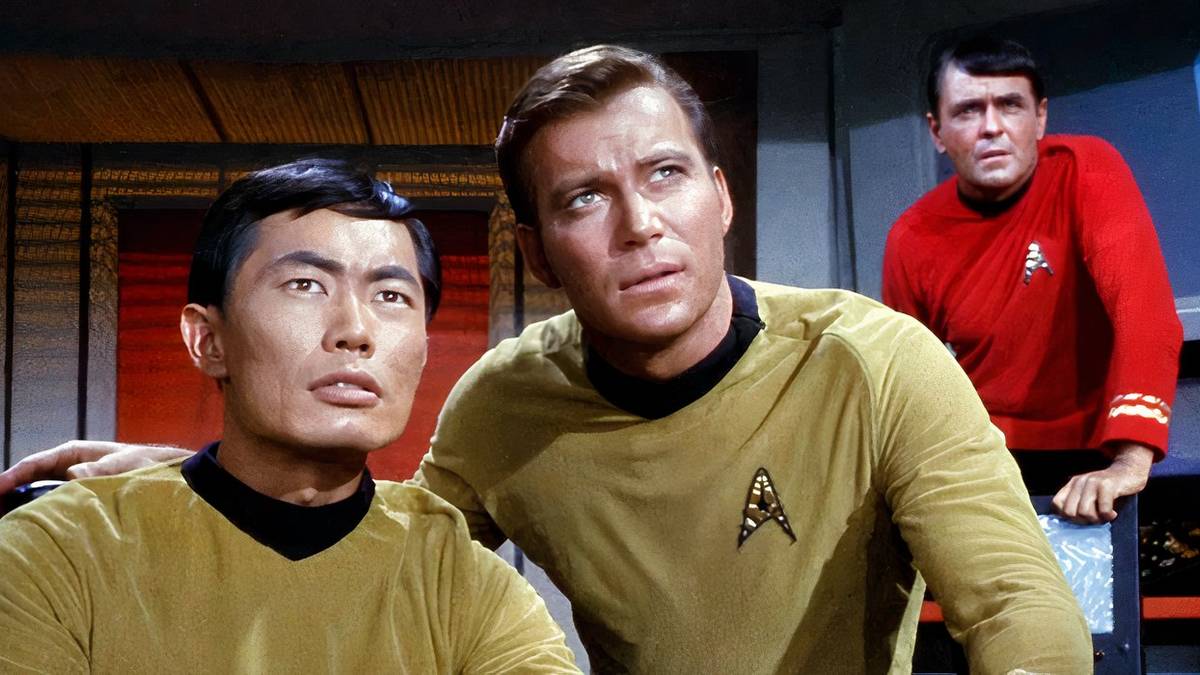
Star Trek has officially hit the big 6-0, and while that's a milestone for any franchise, one particular episode from the original series is also celebrating a diamond anniversary. 'Balance of Terror,' which first aired in December 1966, is widely considered a high point of the show's first season. Written by Paul Schneider and directed by Vincent McEveety, the episode introduced the Romulans as a formidable new adversary, setting up a tense cat-and-mouse game between Captain Kirk (William Shatner) and an unnamed Romulan commander, played by Mark Lenard (who later became Sarek in The Next Generation).
Like much of Gene Roddenberry's creation, 'Balance of Terror' is a product of its time, but it also carries themes that remain strikingly relevant. Schneider drew inspiration from Cold War tensions and submarine films, crafting a story full of psychological warfare, secrecy, and the ever-present threat of mutual destruction. At its core, though, the episode tackles prejudice head-on, and from that exploration emerges one of Kirk's most defining lines.

The Setup: A Century of Mistrust
Set roughly a hundred years after the Earth-Romulan War, the episode finds the Enterprise patrolling near the Neutral Zone, a demilitarized buffer between Federation and Romulan space. No one from either side has ever seen the other face-to-face, and they know each other only through reputation and fear. The Romulans are seen as ruthless conquerors, while the Federation's own views are equally skewed. Lieutenant Stiles (Paul Comi), a one-off character, harbors a deep hatred for Romulans because his ancestors died in the war, even though he's never met one.
When three Federation outposts are destroyed, the Enterprise investigates and discovers a Romulan warship using a cloaking device. As the crew tries to track the invisible vessel, Stiles' prejudice boils over, and he directs his venom at Spock (Leonard Nimoy), noting the physical resemblance between Vulcans and Romulans. He accuses Spock of being a spy, and the tension on the bridge is palpable.
Kirk, ever the steady hand, calmly orders Stiles to repeat his accusation loudly and clearly. Then comes the line that has echoed through six decades of Trek: 'Leave any bigotry in your quarters. There's no room for it on the bridge.' It's a simple, direct command, but its weight is immense. In that moment, Kirk isn't just reprimanding a subordinate; he's establishing a moral code for the entire crew and, by extension, for the audience.
Why This Quote Still Matters
Star Trek has always worn its ideals on its sleeve, and 'Balance of Terror' is a prime example of that sincerity. The episode doesn't shy away from showing that even in the future, humanity hasn't fully conquered its own demons. Stiles' bigotry is a reminder that progress isn't linear, and that the fight against intolerance is ongoing.
Schneider's script reinforces Kirk's rebuke through a series of poignant moments: the crew debates the ethics of attacking the Romulan ship, Uhura (Nichelle Nichols) takes over at the helm, and Kirk offers to beam the wounded Romulan crew aboard for medical aid. The episode culminates in a haunting conversation between Kirk and the Romulan commander, who says, 'I regret that we meet in this way. You and I are of a kind. In a different reality, I could have called you friend.' It's a moment that underscores the tragedy of conflict born from misunderstanding.
Kirk's line has become a touchstone for the franchise, a reminder of what Star Trek aspires to be. It's no wonder that Picard's best quotes often echo similar themes of diplomacy and understanding. And while other sci-fi properties have their own iconic lines, few carry the same moral clarity as Kirk's command.
As Star Trek continues to evolve, with new series and films exploring different corners of the galaxy, 'Balance of Terror' remains a benchmark. It's a story that proves the franchise's power lies not just in its futuristic gadgets or alien worlds, but in its ability to hold a mirror to our own humanity. Kirk's rebuke is as relevant today as it was in 1966, and it's a reminder that some ideals are timeless.
For those who want to revisit this classic episode, it's available on streaming platforms, and it's well worth a rewatch. And if you're in the mood for more Trek wisdom, check out our ranking of Picard's most memorable lines or dive into other sci-fi masterpieces that push the boundaries of the genre.