Long before binge-watching and DVRs, television was a scheduled event. In 1978, the top-rated drama, ABC's Eight Is Enough, pulled in just under 18.5 million viewers, while the sitcom Laverne & Shirley led all half-hours with 22.7 million. So imagine a single episode that convinced more than 80 million Americans—and over 300 million people worldwide—to stop everything and watch. That's exactly what Dallas achieved 46 years ago, and it took only two minutes to do it.
Dallas Rewrote the Prime-Time Rulebook
When Dallas premiered on CBS on April 2, 1978, it revived a genre that had been dormant since Peyton Place went off the air in 1969. In between, episodic TV—case-of-the-week dramas and sitcoms—had become the norm. Dallas bucked that trend, bringing serialized storytelling back to prime time with glossier production values than its daytime soap cousins.
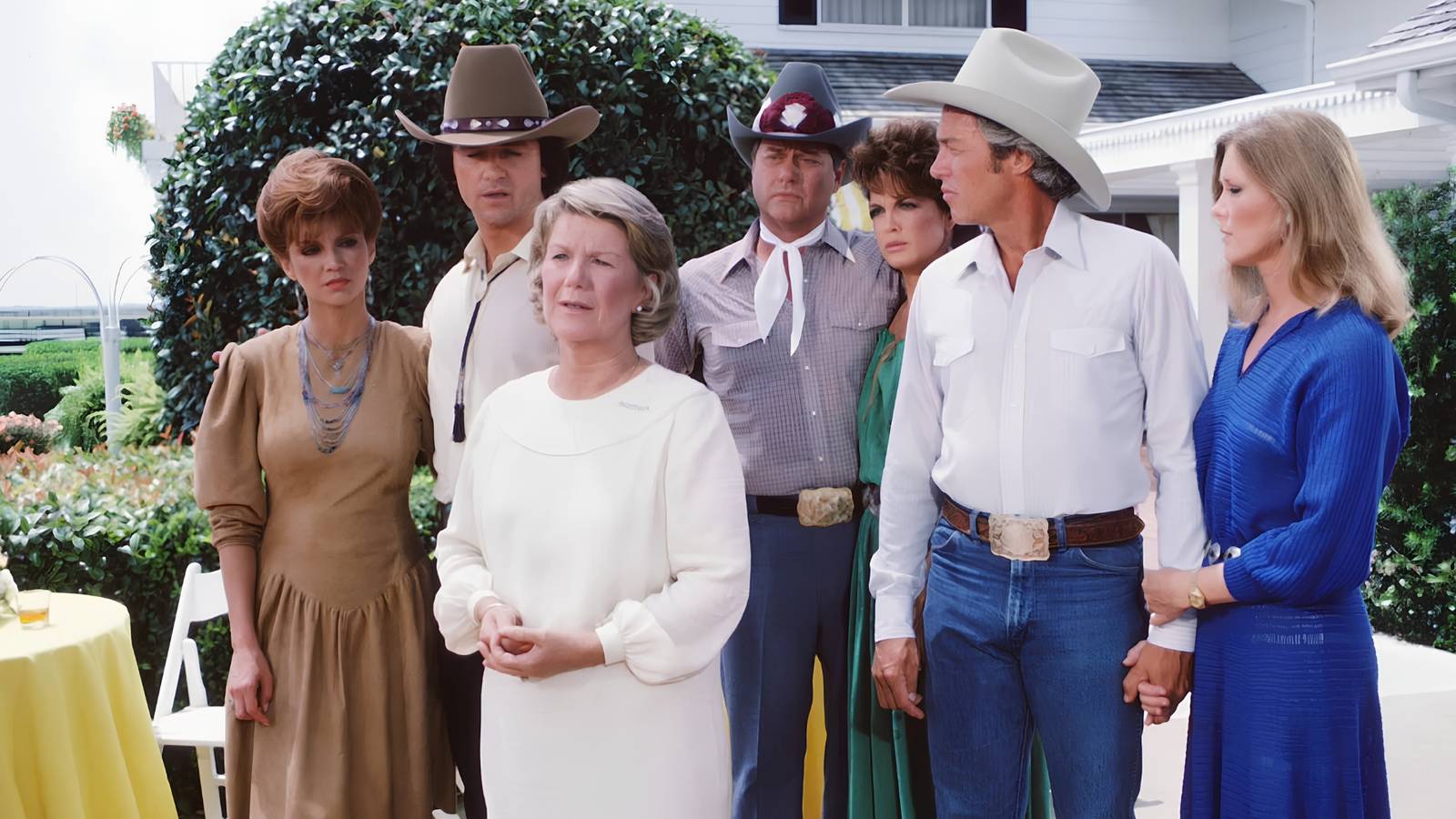
The series followed the Ewing family of Texas, owners of Ewing Oil and the Southfork ranch, and their bitter feud with the Barnes family. It kicked off with the elopement of Bobby Ewing (Patrick Duffy) and Pamela Barnes (Victoria Principal), a union that reignited the families' long-standing war and set up the central conflict between upright Bobby and his scheming older brother, J.R. (Larry Hagman). The mix of wealth, sex, power plays, and dysfunction proved irresistible, and Dallas began its climb to the top.
J.R. Ewing: The Villain Everyone Loved to Hate
A huge part of the show's appeal was Hagman's breakout performance as J.R. Ruthless, manipulative, and utterly without principles, J.R. should have been unwatchable. Instead, Hagman made him mesmerizing. You never knew what J.R. would do next, but you knew it would be morally questionable—and you couldn't look away. But a man like J.R. makes enemies, and in the final two minutes of the third season, one of them finally struck.
The Cliffhanger That Gripped the World
In the episode "A House Divided," J.R.'s shady dealings and countless betrayals have pushed everyone to the brink. Cliff Barnes (Ken Kercheval) joins a growing list of suspects—including Sue Ellen (Linda Gray), Kristin Shepard (Mary Crosby), Alan Beam (Randolph Powell), and Vaughn Leland (Dennis Patrick)—after J.R. shuts down 23 profitable oil wells just to spite Cliff. As the hour winds down, J.R. works late in his office, hears a noise, and steps out to investigate. Two gunshots ring out, and he collapses. The shooter remains unseen.
No one would know who pulled the trigger until the next season. In just two minutes, Dallas created the cliffhanger to end all cliffhangers, and "Who Shot J.R.?" dominated pop culture for the next eight months. Saturday Night Live spoofed it. T-shirts reading "Who Shot J.R.?" and "I Shot J.R." sold like crazy. Las Vegas bookies took bets on the culprit's identity. Even the 1980 presidential race got in on the act: Republicans wore "Democrats Shot J.R." buttons, while Jimmy Carter joked that his reelection campaign could be funded by revealing the shooter. When Larry Hagman met the Queen Mother at a royal event in London, she asked him, "I don't suppose you could tell me who shot J.R.?" He couldn't—producers kept the secret even from him until the last moment.
The Answer—and Its Aftermath
When "Who Done It?" finally aired on November 21, 1980, an unprecedented audience learned that Kristin Shepard, J.R.'s sister-in-law and former mistress, was the shooter. The massive ratings and media frenzy cemented the season-ending cliffhanger as an industry standard—for better and worse. The infamous Dallas Season 9 cliffhanger, which erased an entire season by revealing it was all a dream, remains a cautionary tale. But the "Who Shot J.R.?" phenomenon became a defining moment in TV history, referenced and parodied ever since, most famously in The Simpsons' "Who Shot Mr. Burns?" arc.
Beyond the parodies, Dallas spawned a wave of prime-time soaps like Dynasty and Knots Landing, made serialized storytelling the new normal, and helped pave the way for the era of the antihero—a lineage that runs straight through to Tony Soprano's enduring reign. It also proved that a single question, asked at exactly the right moment, could unite millions of viewers in a shared obsession—something today's fragmented streaming landscape rarely achieves. As Dexter's recent streaming resurgence reminds us, audiences still crave complex, morally ambiguous characters. J.R. Ewing walked so they could run.