In the vast landscape of science fiction television, the episodic format represents a particular art form. It's a structure that allows creators to explore new worlds and ideas each week, unburdened by serialized storytelling. While many point to classic series like Star Trek as the pinnacle of this approach, the torch was quietly passed in the late 1990s to a series that would refine the formula to near perfection: Stargate SG-1.
The Heir to a Sci-Fi Legacy
By the mid-1990s, traditional episodic sci-fi was at a crossroads. Star Trek was transitioning to film, focusing more on spectacle than the thoughtful, weekly explorations that defined its television roots. Meanwhile, Doctor Who was between eras. Into this void stepped an unlikely successor born from a 1994 film that, while commercially successful, left critics wanting more. The concept—an ancient interstellar portal connecting Earth to distant worlds—proved too rich to abandon. In 1997, Stargate SG-1 launched, not as a reboot, but as a direct continuation that would spend a decade mastering the art of the standalone sci-fi adventure.

The SG-1 Formula: Team and Mission
At its core, the series followed a brilliant premise: a secret U.S. Air Force team explores the galaxy through the Stargate, encountering new civilizations and threats each episode. This military-science framework provided the perfect engine for episodic storytelling. Each mission through the gate presented a fresh "problem of the week"—from alien plagues to ancient puzzles—while maintaining an overarching mythology. This balance allowed viewers to enjoy self-contained stories while investing in a larger narrative, a structure that many modern series struggle to achieve. For fans of tightly-woven sci-fi, this approach makes it a perfect companion to other genre gems like 'For All Mankind'.
A Quartet For the Ages
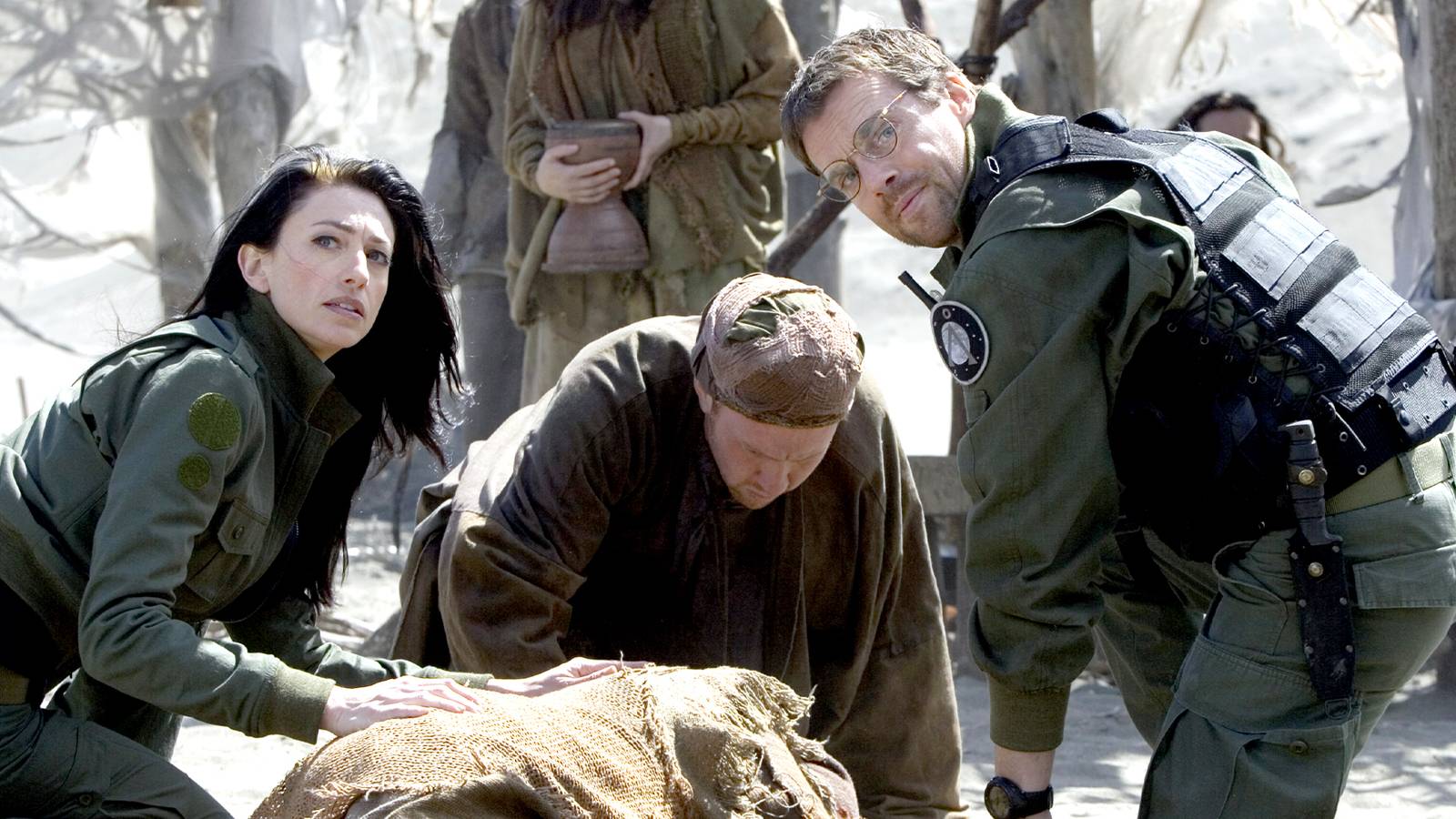
The series' magic largely stemmed from its central team. Led by the sarcastically brilliant Colonel Jack O'Neill (Richard Dean Anderson), the group balanced military precision with genuine camaraderie. Dr. Daniel Jackson served as the moral compass and cultural interpreter, Major Samantha Carter as the scientific genius, and Teal'c as the alien ally seeking redemption for his people. Their chemistry transformed standard missions into character-driven adventures, where the solution often relied as much on their bonds as on technology. This focus on a core ensemble created a reliability that viewers cherished, episode after episode.
Villains with Depth and Dread
SG-1 understood that great episodic television requires compelling antagonists. The primary foes, the Goa'uld, were parasitic beings posing as gods from Earth's ancient mythologies. This clever premise allowed the show to explore historical cultures through a sci-fi lens each week. Later seasons introduced the Replicators—relentless, self-replicating machines—creating a different kind of existential threat. These villains provided consistent danger while allowing for variety in storytelling, from political intrigue with System Lords to survival horror against mechanical swarms. The show's ability to rotate threats kept its episodic format feeling fresh across ten seasons.
The series' success proved that audiences still craved the satisfaction of a complete story in a single sitting, a format that some argue has been overshadowed by today's serialized epics. There's a unique pleasure in the narrative closure of a well-crafted standalone episode, a quality that makes certain limited series so powerful. This is evident in other perfectly packaged stories, like those found in our list of sci-fi miniseries that outshine endless shows.
The Legacy of Perfection
What made Stargate SG-1 the 20th century's greatest episodic sci-fi series was its remarkable consistency. It delivered a reliable blend of adventure, humor, character development, and speculative ideas for over 200 episodes. It demonstrated that an episodic format wasn't a limitation but a canvas for limitless creativity, exploring everything from time loops to alternate realities. In an era increasingly dominated by serialized storytelling, the show stands as a testament to the unique power of the weekly adventure—where each journey through the gate promised something new, yet familiar. It achieved what few series can: a near-flawless execution of its core premise, much like how 'Succession' achieved a perfect run in the drama genre.
For a generation of sci-fi fans, Stargate SG-1 didn't just carry the torch for episodic storytelling; it built a bonfire. It proved that a series could have a grand mythology while still offering satisfying weekly conclusions, that characters could grow over years while remaining true to their core, and that the simple premise of exploring the unknown never grows old. In mastering the episodic format, it created a blueprint for sci-fi adventure that remains unmatched.