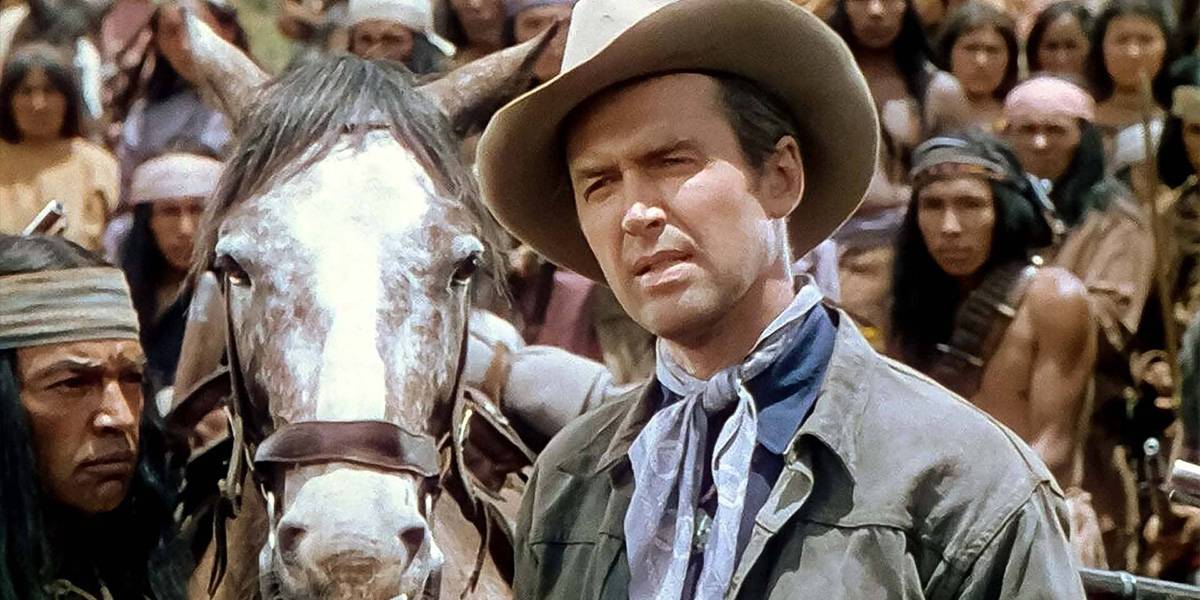
Long before Yellowstone made ranch drama a primetime obsession, another Western was quietly reshaping how Hollywood told stories about the American frontier. Jimmy Stewart, a legend known for his versatility across genres, found one of his most impactful roles in the 1950 film Broken Arrow—a movie that dared to treat Native American characters with dignity and depth, a rarity in its era.
The film, which earned three Oscar nominations and a Golden Globe for promoting international understanding, was based on Elliott Arnold's novel Blood Brothers. It told the story of Tom Jeffords, a white frontiersman who forms a genuine friendship with Apache chief Cochise, played by Jeff Chandler. Unlike earlier Westerns that painted Indigenous people as one-dimensional villains, Broken Arrow gave them a voice and a perspective, tackling issues of tolerance and equality head-on.
Its impact was so profound that just six years later, ABC adapted the story for television. The series, also titled Broken Arrow, premiered in September 1956, but without Stewart in the lead. Instead, John Lupton took on the role of Jeffords, with Michael Ansara—later known as the voice of Mr. Freeze in Batman: The Animated Series—as Cochise. The show ran for 72 episodes across two seasons, becoming a sleeper hit that critics praised for its progressive stance.
At a time when the civil rights movement was gaining momentum, Broken Arrow stood out for its commitment to equality. The series gave Lupton and Ansara nearly equal screen time, a bold choice that highlighted the friendship and mutual respect between their characters. As one reviewer noted, this kind of cross-cultural camaraderie was "very rare in fiction in any form," making the show a refreshing departure from typical Western fare.
The show's creators deliberately built on the film's themes, aiming to bring its message of tolerance to a wider audience. In a 1957 interview, Lupton explained that they initially focused more on Jeffords but quickly realized viewers preferred the balanced dynamic between the two leads. "We've created a happy medium between Jeffords and the Indian leader Cochise," he said, noting that the original format was restored to keep audiences engaged.
Despite its critical acclaim and dedicated fanbase, Broken Arrow was canceled after two seasons. ABC moved the show from its Tuesday night slot—where it aired alongside other popular Westerns—to Sundays midway through the second season, a scheduling change that may have contributed to its decline. Still, the series left a lasting legacy, influencing how Westerns portrayed Native Americans and paving the way for more nuanced storytelling in the genre.
For fans of Westerns looking to explore its roots, Broken Arrow remains a landmark. Its themes of understanding and cooperation feel surprisingly modern, even decades later. And while Stewart's film version is a classic in its own right, the TV adaptation proved that the story's heart could thrive in a different format. As the Western genre continues to evolve, from Elsa Dutton's haunting warnings to modern reinterpretations like Tarantino's Django Unchained, the echoes of Broken Arrow's progressive vision are unmistakable.
Whether you're a fan of Stewart's filmography or curious about the origins of TV's most thoughtful Westerns, Broken Arrow is a must-watch. It's a reminder that even in a genre often defined by gunfights and showdowns, there's room for stories about building bridges instead of burning them.