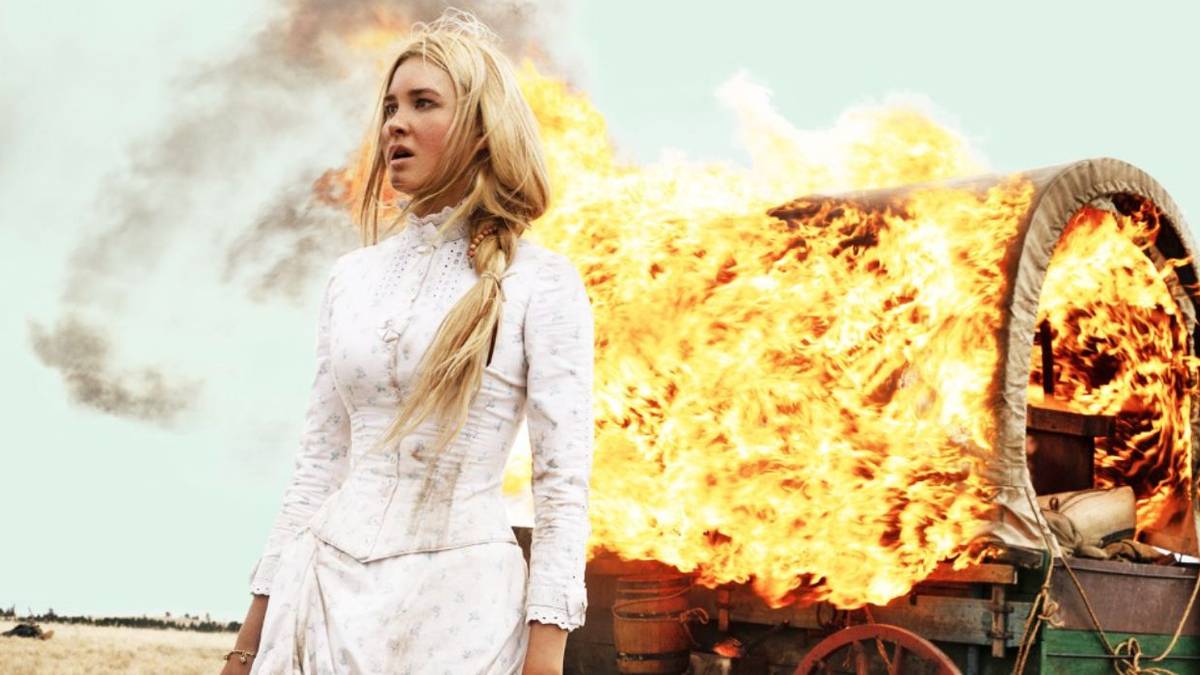
For many viewers, Yellowstone opened a window into the modern American West, but it was the brutal, beautiful prequel 1883 that truly cemented their love for the genre. Taylor Sheridan's frontier epic didn't just tell a story of survival—it laid the emotional and philosophical groundwork for everything that followed. And at the heart of it all is a single line from Elsa Dutton (Isabel May) that cuts deeper than any gunshot or betrayal in the entire franchise.
In the episode "River," as the wagon train faces its first major river crossing, Elsa's voiceover captures both the wonder of the journey and the harsh reality of the world they're entering. Her words—about a world that doesn't care if you bleed or scream, a ground that drinks your blood without a second thought—are more than just poetic narration. They're the thesis of Sheridan's sprawling saga.
The Land Doesn't Care—And Neither Does the Story
That indifference is the cruel truth that every Dutton, from James to John to the next generation, must confront. In 1883, Elsa's own death on the Montana prairie is the ultimate proof. But the sentiment doesn't end there. It carries through 1923, the original Yellowstone, and even into the spinoffs like Dutton Ranch and Marshals. No matter the era, the Duttons fight, bleed, and die for a land that offers no gratitude in return.
Think of the losses: John Dutton (Kevin Costner) assassinated for his stewardship, Lee gunned down defending the ranch, Monica poisoned by the very soil she loved, Colby killed while working the land. Each death is a sacrifice offered to an earth that remains utterly unmoved. It's a sobering reminder that the Dutton legacy is built on blood that the ground simply absorbs.
Elsa's Ghost Haunts the Entire Franchise
Elsa's presence lingers long after her death. She narrates 1883 from beyond the grave, and her spirit appears in 1923 and even in the Yellowstone finale, "Life Is a Promise." She represents the pioneer soul of the family—the reckless hope and determination that drove them west. But she also embodies what was lost: a bright future cut short by the very land she loved.
Her words in "River" are a warning to her descendants, and to us, that the land is not a partner in their dreams. It's an indifferent witness to their struggles. That's what makes the quote so devastating—it strips away any romanticism about the frontier and reveals the cold, hard truth at the center of Sheridan's vision.
As the Yellowstone universe expands, with new chapters like Marshals season 2 and other projects on the horizon, Elsa's words will continue to echo. They remind us that no matter how much the Duttons sacrifice, the land will never love them back. It's a harsh lesson, but one that makes the story all the more compelling.
For those who want to explore more of Sheridan's take on the West, Sicario offers a different kind of frontier brutality, while Dark Winds brings its own supernatural noir to the genre. But for the definitive statement on the Dutton family's tragic bond with the land, Elsa's monologue remains unmatched.