In 1993, Tony Kushner's Angels in America: A Gay Fantasia on National Themes took Broadway by storm. The play, set in New York City during the late 1980s AIDS crisis, wove together the lives of a dying prophet, a troubled couple, a ruthless prosecutor, and a host of others into a sprawling, biblical-scale narrative. It was a theatrical phenomenon, earning the Pulitzer Prize for Drama and multiple Tony Awards. When it came time to adapt it for the screen, the obvious choice might have been a feature film—but as it turned out, only television could contain its vast ambition.
Ten years after its stage debut, HBO released Angels in America as a limited series. The decision was a game-changer. The miniseries format allowed Kushner's dense, lyrical dialogue to breathe, and the result was a production that felt both intimate and epic. With a budget of $60 million, the series boasted a cast that still seems impossibly stacked: Patrick Wilson in a career-defining turn as the closeted Joe Pitt, Jeffrey Wright reprising his Broadway role, and supporting players like Al Pacino, Meryl Streep, and Emma Thompson. It was a showcase of talent that few productions could match.
The road to adaptation was long. Producer Cary Brokaw had been championing a screen version even before the play opened on Broadway, but Kushner initially struggled to condense his work into a single film. The play's intricate plot and thematic depth made cutting nearly impossible. As Kushner himself realized, the only way to honor the material was to give it the time it deserved—and that meant a miniseries. HBO, fresh off the success of Band of Brothers, was the perfect home. The network's willingness to invest in prestige television allowed the production to shoot on location in Rome and employ top-tier talent behind the camera, including director Mike Nichols and composer Thomas Newman.
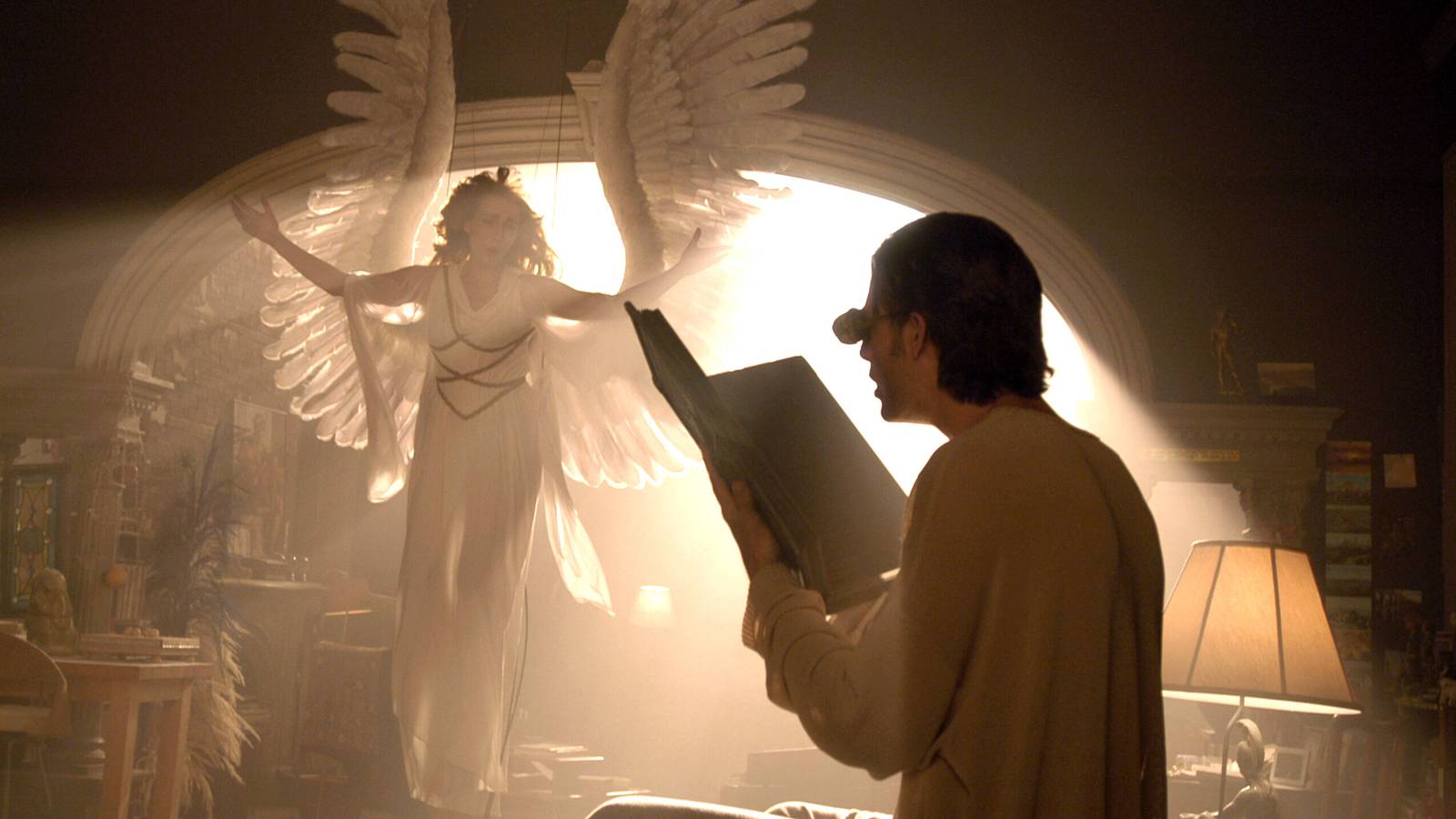
Nichols, known for his work on films like The Graduate and Who's Afraid of Virginia Woolf?, brought a theatrical sensibility to the project. He was joined by visual effects pioneer Richard Edlund, whose work on Star Wars helped bring the angelic visions to life. The result was a series that felt cinematic in scope while remaining deeply rooted in its stage origins. It was a delicate balance, but one that paid off spectacularly.
When Angels in America premiered in 2003, it was an immediate critical and awards juggernaut. At the 2004 Emmys, it swept all seven major categories in the miniseries field, including writing, directing, and all four acting awards—a feat that has rarely been matched since. It also dominated the Golden Globes, SAG Awards, and GLAAD Media Awards, and its soundtrack won a Grammy. The series was not just a triumph for HBO; it was a validation of the miniseries format itself.
Before Angels in America, miniseries were often seen as a lesser form of storytelling. But this production proved that they could be the ideal vehicle for complex, literary adaptations that couldn't be squeezed into a two-hour film. It paved the way for future prestige limited series, from John Adams to more recent hits. The format's ability to tell a complete story without the risk of cancellation made it a safe haven for ambitious creators, and Angels in America was the gold standard.
More than two decades later, the series remains a touchstone. Its exploration of identity, faith, and mortality in the shadow of AIDS is as powerful now as it was then. The performances are still hailed as some of the best in television history, and its influence can be seen in everything from the most flawless miniseries of the past 15 years to the ongoing evolution of the format. For those who haven't seen it, Angels in America is essential viewing—a reminder of what television can achieve when it dares to be ambitious.
In a landscape where streaming services are constantly vying for attention with big-budget series, Angels in America stands as a testament to the power of thoughtful, patient storytelling. It wasn't just a miniseries; it was a cultural event that changed how we think about television. And it remains, without question, one of the greatest achievements in the medium's history.