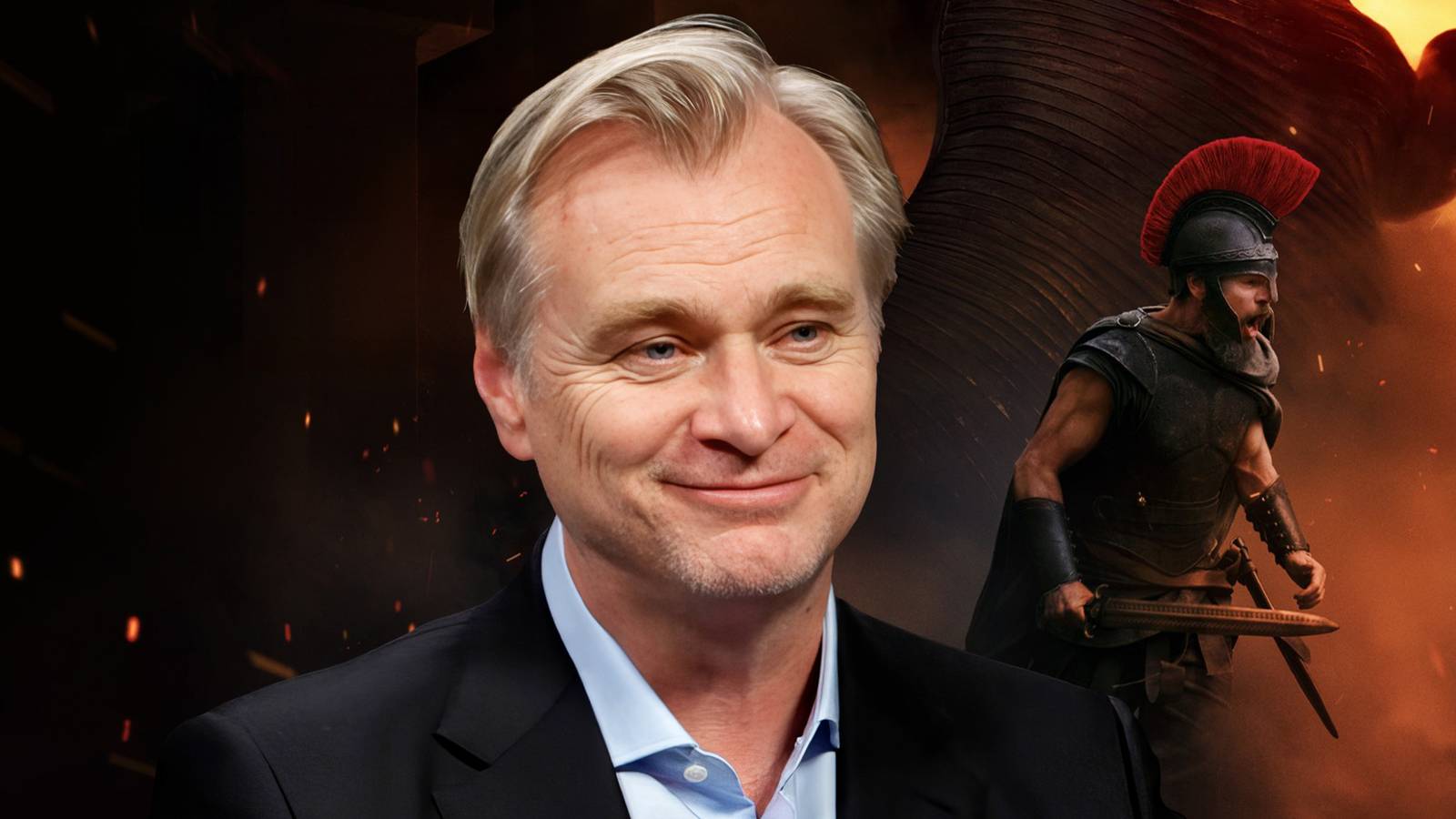
Christopher Nolan's upcoming epic The Odyssey is set to redefine large-format filmmaking once again, but the journey to this cinematic milestone began with a single lens—one that the director modified for The Dark Knight nearly two decades ago. In a recent interview with Collider, Nolan opened up about how that custom piece of equipment became a coveted tool for filmmakers like J.J. Abrams and Zack Snyder, and how it ultimately shaped the visual language of his latest project.
Starring Matt Damon as Odysseus, alongside Anne Hathaway, Tom Holland, Zendaya, Lupita Nyong'o, Robert Pattinson, and a stellar ensemble, The Odyssey retells Homer's ancient Greek saga entirely in IMAX 70mm. Clocking in at 2 hours and 52 minutes, the film promises to immerse audiences in Odysseus's decade-long voyage home with unprecedented intimacy and scale.
The Lens That Started It All
Nolan revealed that for The Dark Knight, he and his team modified a vintage Hasselblad medium-format stills camera lens to work with an IMAX movie camera. The result was a T2 lens capable of shooting in low light, ideal for aerial city shots where artificial lighting wasn't feasible. At the time, it was the only such lens in existence, leading to friendly competition among directors. “I used to have filmmakers, from J.J. Abrams and Zack Snyder, fighting over it and wanting to borrow it for different films,” Nolan recalled. “We still use it to this day.”
That lens, along with subsequent collaborations between IMAX and Panavision, expanded the toolkit for filmmakers—and laid the groundwork for The Odyssey. Nolan and cinematographer Hoyte van Hoytema relied primarily on 50mm and 80mm lenses for the new film, choosing to move the camera rather than swap glass. “On a giant IMAX screen, the proscenium kind of disappears,” Nolan explained. “You’re really trying to just move the camera in such a way that the audience feels the proximity to the action.”
Editing for the IMAX Frame
Nolan also discussed how The Dark Knight taught him to adapt his editing style for IMAX. Early on, the format came with a thick rulebook of limitations, but Nolan and his collaborators—first Wally Pfister, then van Hoytema—learned to push boundaries. “We looked at The Dark Knight very particularly—‘Are we going to need to shoot alternate takes or different formats?’—but over time, we realized the IMAX frame is more versatile than people think,” he said. For The Odyssey, the team focused on protecting action for the full 240-degree frame, keeping compositions centered to maintain immersion.
The director also paid tribute to the late David Keighley, whom he called “the longest-serving IMAX employee.” Keighley was instrumental in preserving IMAX and film stock, ensuring that lenses and production techniques continued to evolve. Nolan’s partnership with Keighley helped transform IMAX from a niche format into a cornerstone of modern blockbuster cinema.
With The Odyssey, Nolan continues to push the format’s limits, blending high-intensity action with intimate close-ups. Fans eager for more behind-the-scenes insights can explore other epic journeys, like why some argue Spider-Man 2 still swings higher than The Dark Knight, or check out Taylor Sheridan's revelations about Kevin Costner's Yellowstone exit. For those craving more Nolan-style storytelling, Prime Video's 'The Outlaws' offers a modern crime classic.
As The Odyssey prepares to sail into theaters, one thing is clear: Nolan’s journey with IMAX—from a single modified lens to a full-scale epic—has forever changed how we experience stories on the big screen.